
Fermenting Beer with Wyeast 1728 Scottish Ale Yeast
Published: December 13, 2025 at 9:58:25 PM UTC
Wyeast 1728 Scottish Ale Yeast is a top pick for brewers aiming for authentic Scottish and English malt flavors. Brewers opt for this strain for restrained ester production and a focus on malt character.
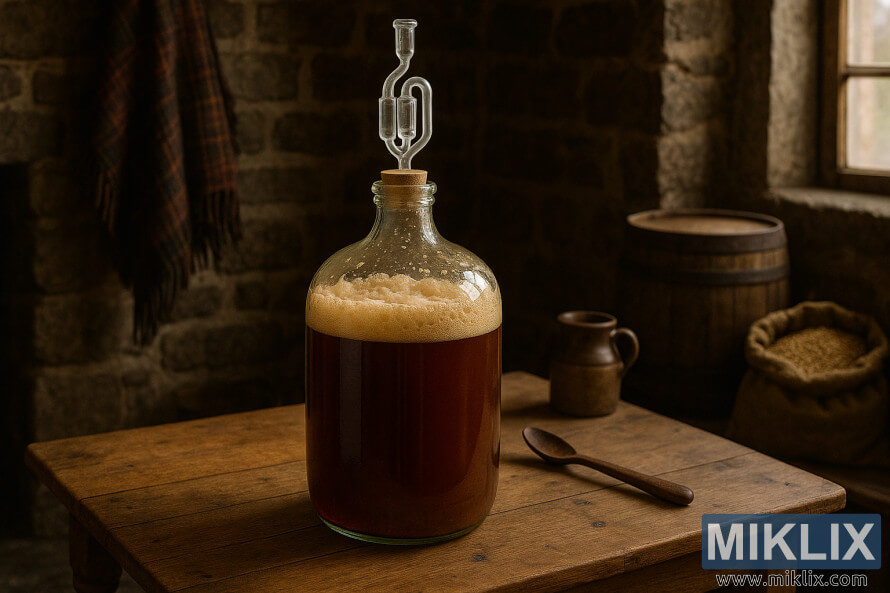
Click or tap the image for more information and higher resolutions.
Key Takeaways
- Wyeast 1728 Scottish Ale Yeast favors malt-driven profiles with restrained ester production.
- It is suitable for both extract and all-grain brewers seeking authentic Scottish ales.
- Retail support and guarantees can help new brewers, but focus on pitching and temperature control for best results.
- Expect dependable attenuation and clean fermentation when managed within recommended temps.
- This Wyeast 1728 product review will cover performance, troubleshooting, and recipe matches to guide your brew day decisions.
Overview of Wyeast 1728 Scottish Ale Yeast
Wyeast Laboratories offers strain 1728 as a top choice for traditional Scottish ales and robust dark beers. The Wyeast 1728 overview details its origin, common uses, and how it arrives to brewers in a ready-to-activate smack-pack.
Scottish Ale yeast specifications highlight moderate attenuation and a clean, malt-forward profile. This profile is ideal for Light 60 through Export 80 recipes. Retail listings often mention the variety of styles this strain can handle, from Strong Scotch Ale to Old Ale and wood-aged beers.
The Wyeast 1728 cell count in a standard pack is roughly 100 billion cells. This makes it convenient for many homebrew batches. The cell count supports typical pitching without a large starter for average-strength beers.
Packaging is through Wyeast smack-packs sold by hobby and craft suppliers. Product pages usually include user reviews, Q&A, and seller guarantees. Shipping promotions are occasionally offered.
- Typical styles: Scottish Light 60, Scottish Heavy 70, Scottish Export 80.
- Broader uses: Baltic Porter, Russian Imperial Stout, Braggot, Imperial IPA.
- Retail notes: available in smack-packs with variable vendor support and review sections.
The yeast accepts mash-forward recipes well and performs predictably across a range of British and strong ale styles.
Flavor profile and aroma characteristics
Wyeast 1728's flavor profile is malty and rounded, perfect for traditional Scottish ales. It's known for its balanced ester production. This allows toasted, caramel, and biscuit malts to shine, without being overpowered by fruitiness.
The aroma of Scottish ales brewed with this strain is subtle and true to form. It evokes the feeling of a cozy pub rather than the bright, fruity notes of British farmhouse ales. The yeast produces gentle malty esters that enhance darker malts and light roasting. This results in beers with a warm, malt-forward character.
Choose Wyeast 1728 for recipes where the malt bill should be the star. It adds depth to Strong Scotch Ale and Scottish Export without dominating. When combined with oak aging or rich adjuncts, it brings complexity without overwhelming other flavors.
- Profile: malty, rounded, low fruitiness
- Aroma: traditional Scottish ale aroma with soft esters
- Best use: malt-forward recipes, darker malts, wood-aged beers
Brewers have found that bottled beers made with Wyeast 1728 match the style of pub-style Scottish ales. The malty esters it produces add character but are subtle enough to let malt complexity be the main focus.
Fermentation performance and attenuation
Wyeast 1728 attenuation is listed by the manufacturer at 69–73%, yet real batches can vary. In practice, the yeast can push a beer drier than specs suggest. A 2.5-gallon Strong Scotch Ale fermented near 68°F reached 76% attenuation in two days. It finished at 77% despite a mash temperature around 155–158°F.
This example highlights fermentation performance that is fast and vigorous. Expect a robust, sometimes explosive, primary fermentation. For brewers wanting predictable results, plan for strong activity and monitor gravity frequently during the first three days.
Scottish ale attenuation trends toward the middle of the spectrum with Wyeast 1728, but higher values are possible. This depends on pitch rate, oxygenation, and mash profile. If you aim for a fuller body, raise mash temps or limit fermentable sugars. If you want a leaner finish, use a lower mash temp and ensure a healthy starter.
Clarity can lag behind attenuation. The cited batch stayed hazy after three weeks in the fermenter and cleared only after a fourth week. Allow extended conditioning when visual clarity matters, even if gravity readings show fermentation is complete.
- Manufacturer range: 69–73% (typical guideline for Wyeast 1728 attenuation)
- Real-world note: rapid fermentation can drive attenuation above published values
- Practical tip: control mash and pitching to influence Scottish ale attenuation
Temperature range and recommended pitching temps
The Wyeast 1728 temperature range is specified as 55–75°F. However, homebrewers should view this as a guideline rather than a strict target. Temperatures at the higher end can lead to rapid activity and an increase in ester production.
To achieve consistent results, aim for a pitching temperature of Wyeast 1728 in the mid-range, around 60–68°F. A recent homebrewing experiment fermented at 68°F. It showed rapid progress through the active stages, shortening the fermentation period but also boosting the beer's attenuative vigor.
When brewing Scottish ales, it's common to keep fermentation temperatures cooler. This helps preserve the malt character and limits ester production. For a malt-forward, traditional taste, aim to keep the beer at 55–64°F during primary fermentation.
When brewing warmer ales, it's crucial to monitor fermentation closely. Wyeast 1728 can ferment up to 75°F. Therefore, it's essential to have a thermometer on the fermenter and use cooling methods if fermentation appears to be getting out of control.
- Pitching temperature Wyeast 1728: aim 60–68°F for balance.
- Wyeast 1728 temperature range: use 55–75°F with caution at the top end.
- Fermentation temps Scottish ale: favor lower to mid-range for traditional flavors.
Adjust the pitch rate and starter size according to your planned pitching temperature and beer gravity. Cooler pitches result in a slower onset and cleaner flavors. Warmer pitches, on the other hand, speed up fermentation and can enhance fruity esters.
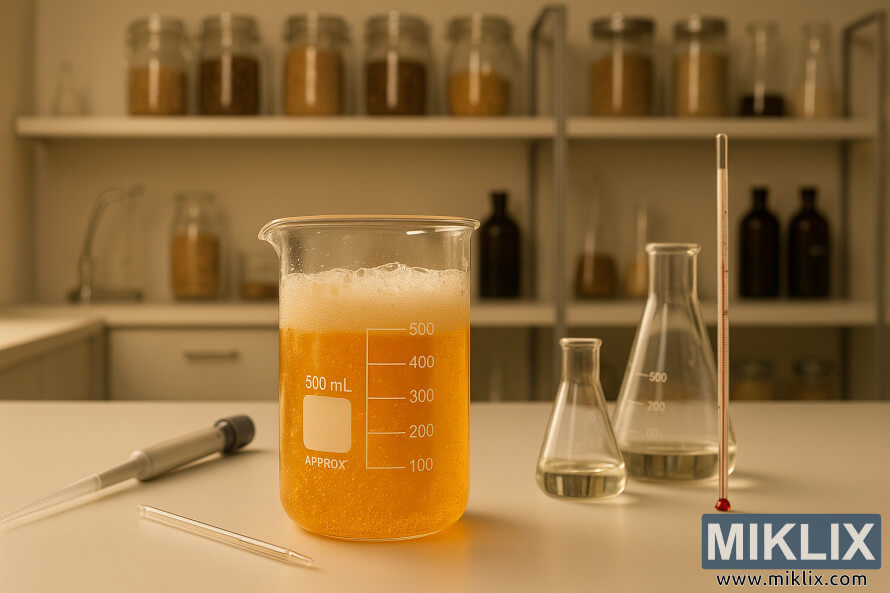
Click or tap the image for more information and higher resolutions.
Alcohol tolerance and suitable high-gravity beers
Wyeast 1728's alcohol tolerance is often cited at 12% ABV. However, it's crucial to view this as a practical limit rather than a goal. As the yeast approaches this limit, fermentation slows, potentially leading to off-flavors or a stuck fermentation.
This strain excels with high OG styles. It's particularly well-suited for Strong Scotch Ale, Old Ale, American Barleywine, and Russian Imperial Stout. When fermentation is clean, expect a rich malt character and minimal esters.
Its tolerance for strong Scotch Ales makes it a preferred choice for these robust brews. To reach the upper limit, increase the yeast amount and use a healthy starter. Adequate oxygenation of the wort at pitching is also essential for a strong start.
- Pitching: scale yeast quantity for OG and expected attenuation.
- Nutrients: staggered nutrient additions help avoid starvation late in fermentation.
- Temperature control: keep within recommended ranges to limit fusel formation.
For beers near the tolerance limit, extended conditioning is necessary. Consider rousing the yeast or adding more yeast late in fermentation to rescue a sluggish fermentation. Always check the gravity before packaging to avoid overcarbonation or bottle bombs.
Flocculation and yeast behavior during conditioning
Wyeast 1728 flocculation rates are listed as high, aiding yeast settling when fermentation slows. This strain tends to compact near the bottom, leaving clearer beer above the trub layer.
Brewers note that wort can remain hazy for weeks, despite the high flocculation. Cloudiness is common through week three, with notable clearing by week four. Patience is key for both visual clarity and flavor maturation.
Extended in-fermenter conditioning time is crucial for Scottish ale yeast. Allowing three to four weeks or more of conditioning enhances clarity and smoothens malt character. This is especially true for darker or malt-forward recipes.
Simple steps can aid yeast settling. Cold-conditioning and avoiding excessive rousing during transfers are beneficial. These practices help preserve the delicate esters that define the style.
- High flocculation: promotes yeast settling but not instant clarity.
- Expect initial haze: clearing may take 3–4+ weeks.
- Conditioning time Scottish ale yeast: plan longer in-fermenter rests for best results.
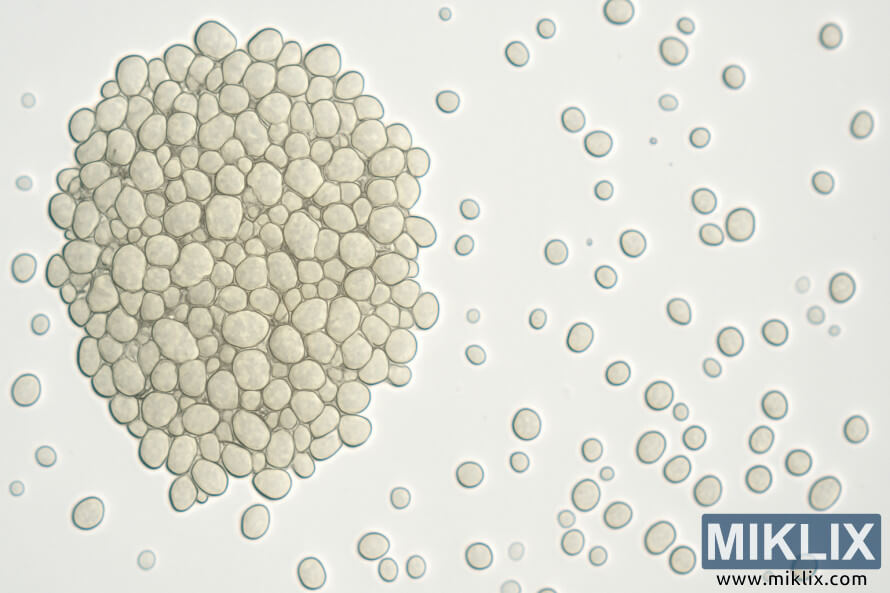
Click or tap the image for more information and higher resolutions.
Pitching rates, starters, and smack-pack use
Understanding the Wyeast 1728 pitching rate is crucial for planning batch size and gravity. A single Wyeast smack pack contains approximately 100 billion cells. This amount is usually sufficient for a 2.5-gallon batch without the need for a starter.
However, for 5-gallon beers or high-gravity recipes, a higher target is necessary. Brewers should aim for the published pitching tables, focusing on cells per million per milliliter. For a strong, clean fermentation, consider preparing a starter or using multiple packs.
Following Wyeast's directions for smack pack usage is straightforward. Activate the pack at room temperature, wait for the air pocket to expand, and pitch at peak activity. This method reduces lag time and promotes healthy yeast growth.
- Small batches (2.5 gal): single smack pack often adequate.
- Standard 5-gal ales: consider making a starter for Wyeast 1728 or two packs.
- High-OG beers: plan larger starters or multiple packs to hit target pitching rates.
When creating a starter for Wyeast 1728, match the starter size to the gravity and fermenter volume. Use clean, aerated wort and keep the starter at room temperature until it becomes vigorous. A well-prepared starter can shorten lag and enhance attenuation.
Practical tips include rehydrating yeast when necessary, sanitizing all starter equipment, and measuring gravity. These steps enhance consistency and help achieve the desired Wyeast 1728 pitching rate for healthy fermentation.
Pairing yeast with mash schedules and fermentation plans
Align your mash schedule with the flavor profile you aim for with Wyeast 1728. A mash temperature between 155–158°F enhances dextrin production, leading to a richer body. This body complements the malt-forward taste that many brewers desire with this yeast.
To achieve higher attenuation, consider lowering the mash temperature to 150–152°F. Increasing mash time or adding base malt can also boost fermentability. These adjustments help refine the beer's mouthfeel and sweetness, optimizing the mash schedule pairing with Wyeast 1728.
Design your fermentation plan to leverage the yeast's strengths. A gradual temperature increase from the low 60s to the mid 60s Fahrenheit promotes clean ester development. Subsequent steady conditioning allows flavors to meld together. Include oxygenation at pitching and nutrient support for sustained yeast activity in your fermentation plan for Scottish ale yeast.
For a maltier, sweeter finish, combine a higher mash temperature with a restrained fermentation profile. Conversely, a drier finish can be achieved with a more fermentable mash and increased attenuation through oxygen and nutrients. Documenting your mash schedule pairing with Wyeast 1728 variations will help you refine your techniques.
Allow three to four weeks for conditioning to settle yeast and clarify the beer. High flocculation will help clear the beer, showcasing the balance achieved through mash and fermentation choices. A well-planned approach ensures consistent results when pairing mash schedule pairing with your fermentation plan for Scottish ale yeast.
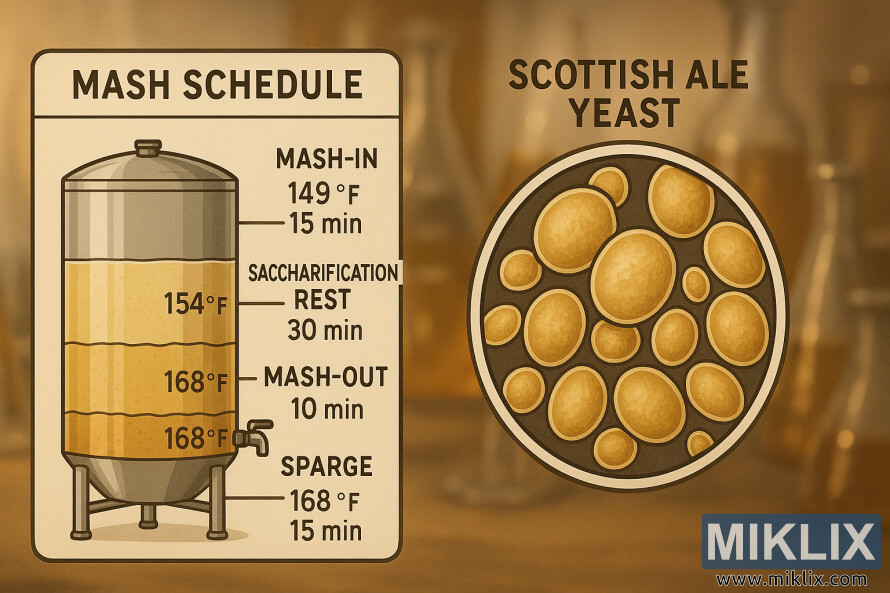
Click or tap the image for more information and higher resolutions.
Recipe ideas and ideal beer styles
Wyeast 1728 excels in malt-forward styles. It's perfect for Scottish Light 60, Scottish Heavy 70, and Scottish Export 80. These beers showcase toasted bread, caramel, and gentle fruit esters. Amber and brown malty beers benefit from its soft, rounded finish.
Creating a Strong Scotch Ale requires rich base malts like Maris Otter or English pale ale malt. Crystal malts add caramel sweetness, while roasted malt enhances depth. Wyeast 1728 fermentation supports higher gravities, ensuring a smooth profile.
- Scottish ale recipe: target a restrained hop bill and let malt complexity lead.
- Old Ale and barleywine variants: aim for high original gravity; Wyeast 1728 tolerates stronger beers up to robust ABV levels.
- Wood-aged malty beers: use the yeast to provide a steady malt backbone that won’t fight oak or spirit character.
For recipe ideas, balance base malts with specialty malts in small amounts. Keep hopping moderate to low for traditional Scottish styles. When brewing Imperial or Baltic variants, increase hopping and adjuncts carefully so the yeast’s malt-forward accent remains central.
- Strong Scotch Ale concept: Maris Otter, light crystal, small roast, low noble hop additions, ferment with Wyeast 1728.
- High-OG old ale: pale and Munich base, richer crystal, delayed fermentation temperature ramp to finish cleanly.
- Wood-aged variant: brew a malty Strong Scotch, transfer to oak, age slowly to meld flavors.
Experiment with mash schedules that promote dextrin retention for body. Match fermentation plans to the style: steady, moderate temperatures keep ester production restrained while allowing enough attenuation for drier finishes when desired. Use recipes Wyeast 1728 as a starting point and tweak grain bills to taste.
Keep hops as a supporting player and let the yeast and malts tell the story. A well-crafted Scottish ale recipe paired with Wyeast 1728 rewards patience and yields classic, drinkable results.
Common issues and troubleshooting fermentation
Wyeast 1728 fermentation begins with vigor. It's crucial to monitor the krausen and temperatures to prevent blowoffs and harsh esters. Be prepared with a fermenter headspace and an airlock when fermentation activity peaks.
Cloudiness can linger for weeks post-primary fermentation. For yeast clarity issues, extend conditioning for at least four weeks. Cold-crashing before packaging aids in settling suspended yeast, enhancing visual clarity.
Some batches exhibit higher-than-expected attenuation, finishing drier than intended. To achieve a fuller body, consider raising mash temperatures or reducing oxygenation. Adjust pitching rates to temper fermentation strength.
High-gravity beers require careful handling to avoid stuck fermentation. Use a starter or multiple Wyeast packs, ensure thorough oxygenation, and add yeast nutrient for a complete ferment.
- Keep fermentation temps within the recommended range for consistent esters and attenuation.
- Use a healthy starter to reduce lag time and minimize risk of stuck fermentation fixes.
- For persistent haze, try longer conditioning and gentle fining or filtration if clarity is critical.
If fermentation stalls, troubleshoot with gentle warming, a nutrient feed, and careful rousing of the yeast. If these steps fail, consider pitching an active culture of a compatible Saccharomyces strain as a last resort to complete attenuation.
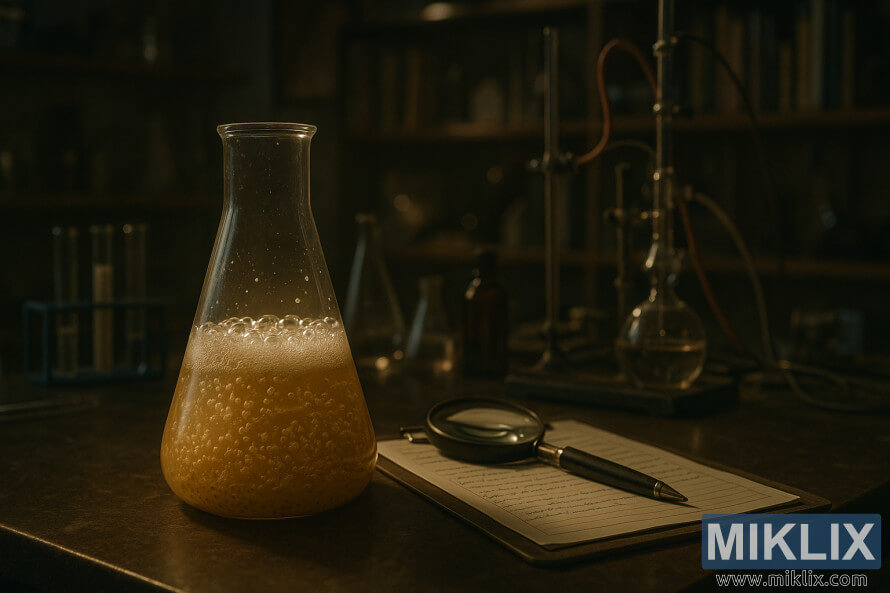
Click or tap the image for more information and higher resolutions.
Packaging considerations: bottling, conditioning, and aging
Prepare for a patient approach. Allow at least 3–4 weeks in the fermenter for clarity and flavor maturation before bottling Wyeast 1728 beers. Monitor gravity over several days to ensure stability. This step reduces the risk of overcarbonation and preserves the malt balance.
High-gravity ales require extra time. When conditioning Scottish ale, leave robust beers on the yeast longer. This allows residual sugars to clean up and flavors to round out. Use a cold crash or gentle racking to enhance clarity before packaging.
Choose carbonation levels that suit the style. Target moderate carbonation for Scottish ales and related malt-forward beers. Proper priming sugar or measured CO2 helps present the malt character without creating a fizzy impression.
Aging rewards patience. Aging Strong Scotch Ale in bottles or wood will deepen color and meld flavors over months. The malt-supporting profile of Wyeast 1728 beers helps them develop complexity with cellaring.
- Confirm terminal gravity before bottling to avoid carbonation swings.
- Conditioning Scottish ale: rest on yeast for extended secondary or bulk age when needed.
- Aging Strong Scotch Ale: plan for months of bottle or barrel time for best results.
- Match carbonation to style: moderate for malt-forward ales.
Handle bottles with care during the initial weeks of carbonation. Store conditioned bottles upright in a cool, dark place to allow sediment to settle. Label dates and gravity so you can track progress while aging and make informed decisions on cellaring time.
Where to buy, product support, and user reviews
You can purchase Wyeast 1728 from authorized distributors, local homebrew shops, and major online retailers. Product pages at these retailers often feature detailed Q&A sections and user ratings. These resources are invaluable for making informed purchase decisions.
Wyeast support offers strain data sheets and practical usage notes for 1728. Retailers also share shipping policies, satisfaction guarantees, and occasional free shipping promotions. These details can impact the total cost and delivery speed of your purchase.
Reviews from homebrewers praise Wyeast 1728 for its ability to recreate traditional Scottish ales. One brewer noted that fermenting a Strong Scotch Ale with this yeast resulted in vigorous activity. They observed visible white yeast clumps during peak fermentation and a clear beer after about four weeks.
- Availability: stocked by most homebrew shops and online sellers.
- Documentation: Wyeast support pages list pitching rates, temperature ranges, and attenuation.
- User feedback: common notes include high flocculation and a malt-forward profile.
Reading multiple Wyeast 1728 reviews can provide a comprehensive view of its performance across different beer styles and gravity levels. Look for feedback on fermentation vigor, flavor fidelity to Scottish profiles, and the yeast's behavior during conditioning.
When selecting where to buy Wyeast 1728, it's crucial to check return policies and freshness dates. If you encounter any issues, don't hesitate to reach out to Wyeast support or your retailer. Many sellers are willing to help troubleshoot or replace products under warranty.
Conclusion
Wyeast 1728 stands out as a dependable choice for traditional Scottish ales and other malt-focused beers. It offers strong fermentation, high flocculation, and real-world attenuation that often surpasses the published ranges. Fermented in the mid-range of its suggested temperatures, it produces a clean malt character with minimal esters.
Choosing Scottish ale yeast for your brew requires careful planning. Pitch the right amount—use a starter or multiple packs for high-OG or large volumes. Ferment between 55–75°F to manage ester levels. Allow for extended conditioning to enhance clarity and allow the malt profile to mature. Vigorous fermentations demand proper headspace and blowoff arrangements.
For those aiming to brew the best Scottish ale, Wyeast 1728 is a prime selection. It balances dependability with traditional flavor. Purchase from trusted sources, follow standard yeast care practices, and adjust pitch and temperature to align with your recipe. This ensures consistent, high-quality results.
Further Reading
If you enjoyed this post, you may also like these suggestions:
- Fermenting Beer with White Labs WLP351 Bavarian Weizen Ale Yeast
- Fermenting Beer with CellarScience German Yeast
- Fermenting Beer with Wyeast 1332 Northwest Ale Yeast