
Hops in Beer Brewing: Hallertau Blanc
Published: December 8, 2025 at 8:04:46 PM UTC
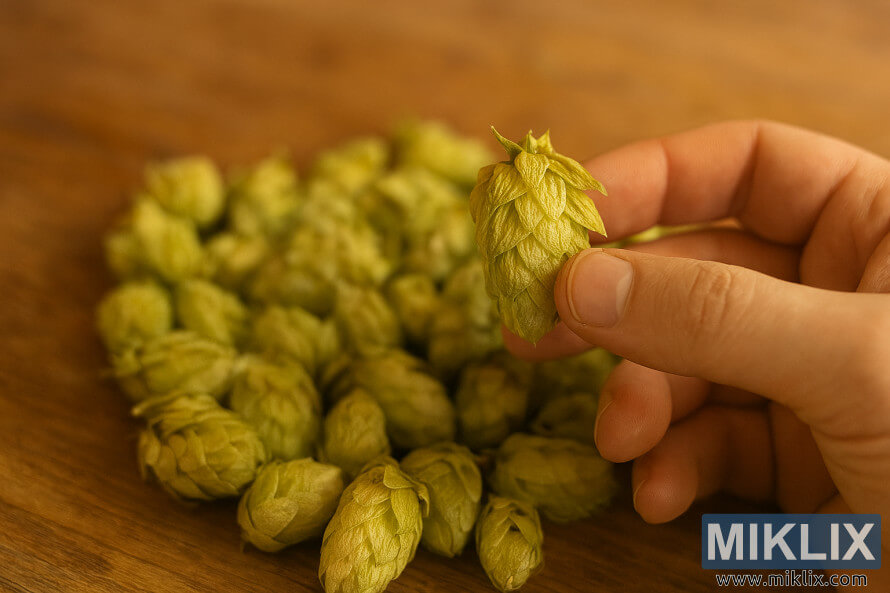
Hallertau Blanc is a modern German aroma hop that has quickly become popular among craft brewers and homebrewers. It stands out in the world of hops, adding bright tropical and grape-like flavors. These characteristics make it ideal for late kettle additions and dry hopping.
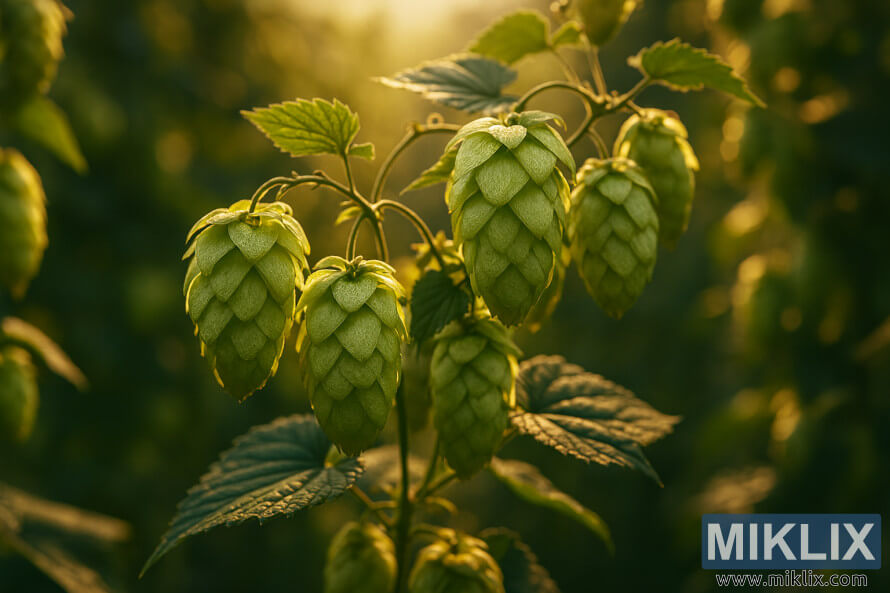
Click or tap the image for more information and higher resolutions.
Available widely in pellet form, Hallertau Blanc hops are commonly sold in 1 oz packages. You can find them through hop suppliers and online marketplaces like Amazon. Retail descriptions often suggest it for aroma-forward beers. They also highlight customer reviews and satisfaction guarantees.
This article will guide brewers through the origins, sensory character, brewing values, and practical techniques for using Hallertau Blanc. You can expect clear advice on dry hopping, recipe ideas, pairing suggestions, substitutions, and where to source authentic German aroma hops for your next batch.
Key Takeaways
- Hallertau Blanc is a German aroma hop prized for tropical and white-wine notes.
- It performs best as a late addition or in dry hopping for craft beer hops.
- Commonly available as pellets in small packages for homebrewers.
- Widely sold by hop suppliers and marketplaces with customer reviews.
- This guide covers origins, brewing use, pairing, and sourcing tips.
What is Hallertau Blanc hops
Hallertau Blanc is a German aroma hop, introduced in 2012. It's known for its bright, fruity character. The variety, with cultivar ID 2007/19/8 and international code HBC, has its roots at the Hop Research Center Hüll. This center holds the trademark and ownership rights.
The Hallertau Blanc's lineage combines Cascade as the female parent with Huell as the male. This blend results in a unique mix of New World citrus and classic German floral notes. Brewers often use it for late additions and dry hopping, valuing its aroma over bittering.
In Germany, the harvest season for Hallertau Blanc typically starts late August and extends into September. Each season's crop characteristics can vary, impacting alpha acids and aroma intensity. Understanding the origin of Hallertau Blanc is essential for brewers planning their recipes.
Hallertau Blanc excels as an aroma hop, performing best in whirlpool, late boil, and dry hop stages. Its heritage and genetics are why it adds tropical, white grape, and citrus notes without overpowering bitterness.
Flavor and aroma profile of Hallertau Blanc
Hallertau Blanc's flavor is a blend of traditional noble spice and modern tropical hops. It starts with bright pineapple hops, reminiscent of white wine, and crisp white grape notes that evoke Sauvignon Blanc.
The aroma of Hallertau Blanc is often marked by pronounced gooseberry hop notes, cutting through the malt. Used lightly, it brings fruity hops and floral winey tones to pale ales and lagers.
Dry hopping levels significantly alter the sensory experience. Low-to-moderate contact emphasizes pineapple hops, passion fruit, and lemongrass without any vegetal backnotes.
High dry-hop rates, on the other hand, can introduce grassy or spinach-like impressions. Some brewers find stronger gooseberry hop notes and herbal edges with longer contact times.
- Use restraint for winey, fruity hops and softer Hallertau Blanc flavor.
- Push rates cautiously if you want bold gooseberry hop notes or experimental vegetal character.
- Pair with neutral malts to keep the Hallertau Blanc aroma front and center.
Testing small batches and varying contact time provides the clearest insight into Hallertau Blanc's behavior in your recipe. This approach allows you to emphasize tropical pineapple hops or the sharper gooseberry hop notes, depending on your style goals.
Brewing characteristics and ideal usage
Hallertau Blanc is mainly an aroma hop. It's best used in late additions to bring out tropical and wine-like esters. Long boils can strip away the volatile oils, reducing the bright fruit character brewers love.
When brewing with Hallertau Blanc, use short kettle boils for bittering. Prioritize whirlpool additions or steeping at 170–180°F to extract flavor without losing aromatics. Late additions at five to ten minutes and whirlpool contact times of 15–30 minutes are effective.
Dry hopping is the best way to get a strong perfume. Start with moderate amounts to avoid vegetal or herbal notes. Timing and restraint are key when using Hallertau Blanc.
- Try low to moderate FWH cautiously; first wort hopping can add perceived bitterness and green flavors if overused.
- Combine whirlpool Hallertau Blanc with a brief, cool rest to retain delicate oils.
- For dry hopping, aim for gentle contact and good circulation to maximize aroma pickup.
Brewers' experiences vary. Some achieve clean-lager or blonde ales with fruity and grape-like tones. Others find the hop shy if rates or timing are off. Match Hallertau Blanc brewing choices to the yeast profile to let hop aromatics shine.
Choose clean, neutral ale or lager yeasts to emphasize tropical and wine-like notes. Adjust late hop additions, whirlpool Hallertau Blanc timing, and dry hop rates in small steps. This will help you learn how to use Hallertau Blanc in each recipe.
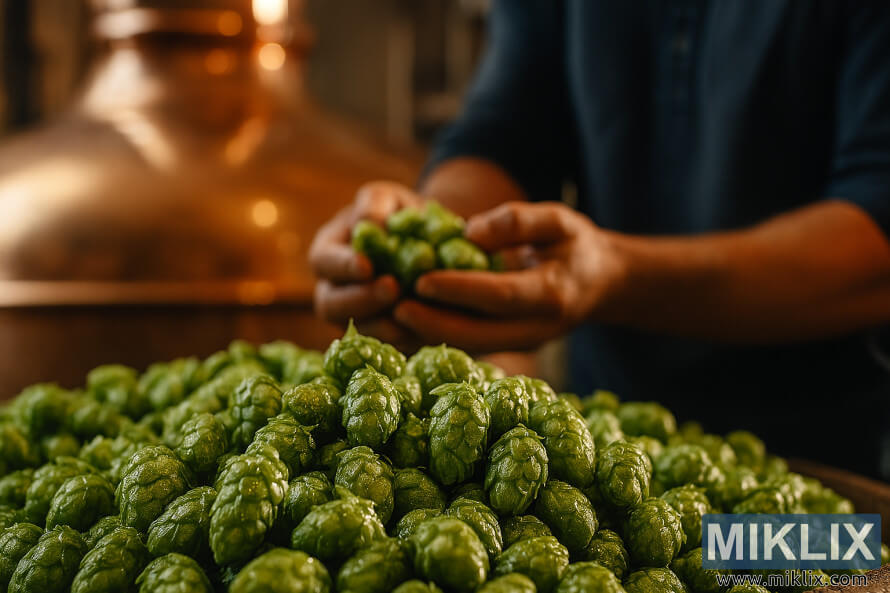
Click or tap the image for more information and higher resolutions.
Essential brewing values and oil composition
Hallertau Blanc offers a balanced mix of bitterness and aroma. Its alpha acids range from 9–12%, averaging 10.5%. This balance allows brewers to achieve the right bitterness without overwhelming the hop's delicate character.
Beta acids in Hallertau Blanc vary from 4.0–7.0%, averaging 5.5%. These acids do not contribute to bitterness in fresh beer. Instead, they enhance shelf stability and aroma retention over time. This is important to consider when planning for long-term aging.
The alpha:beta ratio of Hallertau Blanc ranges from 1:1 to 3:1, averaging 2:1. Co-humulone, a component of alpha acids, makes up 22–35%, averaging 28.5%. This lower co-humulone content contributes to a smoother bitterness, aligning with Hallertau Blanc's character.
- Total oil content: 0.8–2.2 mL/100g, averaging 1.5 mL/100g. This categorizes Hallertau Blanc as a moderate-oil aroma hop.
- Myrcene dominates the Hallertau Blanc oil profile at about 50–75% (avg 62.5%), contributing resinous, citrus, and fruity notes.
- Humulene typically appears at 0–3% (avg 1.5%), giving subtle woody and spicy tones.
- Caryophyllene is small, 0–2% (avg 1%), supplying peppery and herbal facets.
- Farnesene sits near 0–1% (avg 0.5%), adding fresh, green, and floral hints.
- Remaining terpenes — β-pinene, linalool, geraniol, selinene and others — make up roughly 19–50% and shape tropical and white-grape nuances.
These proportions explain why Hallertau Blanc yields tropical fruit and white-wine notes when used in aroma additions. Excessive hopping or high-temperature contact can push green, vegetal edges, an outcome linked to hop chemistry Hallertau Blanc and oil volatilization.
When choosing dosages, factor in Hallertau Blanc alpha acids and Hallertau Blanc beta acids for bittering and stability, and use the Hallertau Blanc oil profile to guide late additions, whirlpool hops, and dry hopping for clean tropical character.
How to dry hop with Hallertau Blanc
Dry hopping with Hallertau Blanc brings out its pineapple, passion fruit, white grape, and lemongrass notes. It's essential to use techniques that preserve these volatile esters. Cold-conditioning and a clean, neutral yeast are key to allowing the hop's character to shine.
Begin with moderate quantities of Hallertau Blanc. Brewers have found that excessive amounts, such as 1 oz/gal, can introduce vegetal or spinach-like flavors. High levels may also bring out green or gooseberry notes, overpowering the tropical fruit aromas.
Use conservative dry hop rates for Hallertau Blanc as a starting point. Many brewers have found success by using less than half of an initially heavy experimental rate. This approach helps preserve the bright, wine-like top notes.
Controlling the contact time is critical to avoid grassy extraction. Short contact times of 48–96 hours at cold temperatures tend to favor fruit-forward aromatics. Longer contact times or larger hop masses can increase vegetal compounds.
- Staged additions: divide the total dry hop into small doses over several days to layer aroma and limit harsh green tones.
- Single short addition: one measured dose for 48–72 hours for a clean tropical profile.
- Cold soak: drop temperature before adding hops to slow extraction of chlorophyll and polyphenols.
Regardless of the method, keep detailed records. Note the dry hopping techniques, dry hop rates, contact time, and fermentation temperature. Small adjustments can lead to predictable aromatic results.
Hallertau Blanc in specific beer styles
Hallertau Blanc is versatile, appearing in various beer styles. It enhances IPAs and pale ales with white-grape and tropical flavors, thanks to late additions or dry hopping. In lighter beers, it introduces a delicate wine-like aroma, complementing the malt without overpowering it.
For a Hallertau Blanc IPA, blend it with Mosaic or Citra to intensify tropical notes and add complexity. Moderate bitterness and heavy late kettle or dry-hop additions are key to preserving the hop's fruit-forward esters.
In crafting a Hallertau Blanc pale ale, keep hopping levels in check. Opt for a clean malt bill and a neutral ale yeast to ensure the grape and citrus notes shine through. Single-variety tests are essential to find the perfect aroma balance without harshness.
Hallertau Blanc wheat beer benefits from a gentle approach. Its floral and winey characteristics complement the wheat's bready profile and clove-like phenolics from traditional German or Belgian yeast strains. Light dry hopping enhances the beer without obscuring the yeast's character.
Belgian ales and Brett-forward beers gain depth from Hallertau Blanc's vinous traits. It's perfect for creating complex fruit and funk interactions when fermentation introduces phenolic or Brettanomyces notes. Low hopping rates focus on fermentation-driven aromatics.
Hallertau Blanc is also suitable for crushable summer blondes and pilsners when used sparingly. A single-variety blonde lager with gentle hopping and a clean lager yeast can highlight the hop's subtle fruit and wine-like qualities in a refreshing package.
- Style fits: IPA, pale ale, Belgian ale, wheat beer, Brett beers
- Pairings: Mosaic, Citra for IPAs; neutral yeast for pale ales; phenolic yeast for Belgian styles
- Use: late additions and dry hop for aroma; restrained kettle hopping for delicate beers
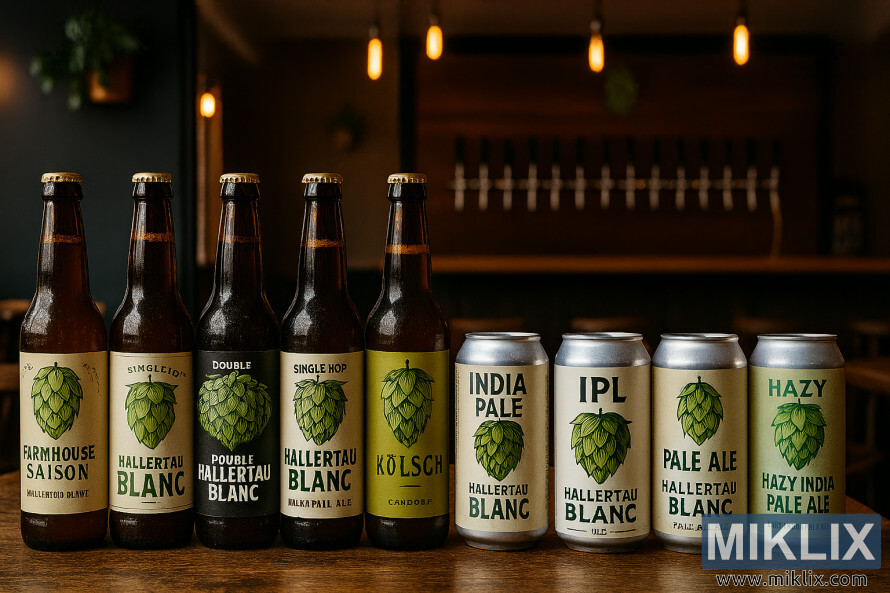
Click or tap the image for more information and higher resolutions.
Pairing Hallertau Blanc with yeasts and fermentation choices
Hallertau Blanc shines with clean, neutral ale yeasts. Safale US-05, Wyeast 1056, and White Labs WLP001 highlight its fruit and sauvignon-blanc-like qualities. Brewers often note crisp citrus, white grape, and subtle tropical flavors.
Lager yeasts offer a unique canvas. A cool fermentation of Hallertau Blanc results in delicate, wine-like lagers and pilsners. It's essential to manage fermentation temperature and flocculation for clarity without losing hop aroma.
Yeasts with strong esters or phenolics alter the balance. Belgian strains or Brettanomyces add complexity to experimental beers. Yet, they might overshadow the hop's fruit character. Use them for a hybrid effect only.
Vegetal notes often come from yeast choice and fermentation. Cleaner fermentations minimize green edges, letting the hop's fruit and wine traits shine. Healthy yeast and temperature monitoring are key to avoiding unwanted vegetal notes.
- Best yeast for Hallertau Blanc when clarity is desired: US-05, WLP001, Wyeast 1056.
- Best yeast for complexity: Belgian saison strains, Brettanomyces in small amounts.
- Lager options: clean lager strains with a proper diacetyl rest.
Fermentation practices are as critical as the yeast strain. Maintain tight temperature control, perform a diacetyl rest for lagers, and time dry hopping after primary attenuation. These steps ensure Hallertau Blanc fermentation showcases its signature fruit and wine-like layers.
Recipe examples and hop schedules using Hallertau Blanc
Below are practical Hallertau Blanc recipes and hop schedules to test its grape and white-wine notes. Start conservative and adjust after tasting.
- Light Blonde Ale (single-hop): Use a mild malt bill with Pilsner and Vienna malts. Add 25–40% of total hops as first-wort hops (FWH) to build a soft bitterness. Place a late kettle or whirlpool addition at 10–20 minutes or whirlpool at 170–180°F for 15–30 minutes to capture fruit esters without losing volatile oils.
- Single-hop IPL (India Pale Lager): Mash clean, ferment cool with a lager strain, then dry hop lightly. Brewers reported vegetal notes when dry hopping heavy; reduce to 0.25–0.5 oz/gal and split additions over 48–96 hours to preserve bright fruit aromas.
- All-Hallertau Blanc mixed approach: Try equal parts FWH and whirlpool additions for balanced fruit and structure. Keep theoretical IBUs near 35–45 to allow hop character to shine without masking delicate esters.
Suggested Hallertau Blanc hop schedule options for 5-gallon batches follow simple, adjustable patterns. Scale rates to your batch size and desired intensity.
- Conservative aroma: 0.25 oz/gal whirlpool at 170–180°F for 20 minutes; dry hop 0.25 oz/gal split over two additions after primary.
- Balanced fruit: 0.2 oz/gal FWH, 0.2 oz/gal whirlpool (15–30 minutes), dry hop 0.3–0.4 oz/gal single or staged.
- Pronounced character: 0.3–0.4 oz/gal whirlpool plus staged dry hop totaling 0.5 oz/gal over 48–96 hours. Monitor for vegetal notes and scale back if needed.
For dry hopping, use the Hallertau Blanc dry hop schedule that favors staged, moderate additions. Staging preserves fresh grape-like esters and reduces grassy compounds.
Record each trial, noting malt, yeast, temperature, and precise Hallertau Blanc hop schedule and dry hop timing. Sensory feedback will guide rate adjustments for future Hallertau Blanc recipes.
Common issues and how to avoid them
Hallertau Blanc problems often arise from overuse or improper handling. Brewers frequently encounter a spinach-like, vegetal character when they dry-hop excessively or for too long. It's essential to manage additions carefully to preserve the hop's vibrant fruit and floral notes.
Implementing staged dry-hop additions and shorter contact times can help. Late kettle or whirlpool additions, along with cold-side dry hopping, enhance aroma without extracting harsh vegetal compounds. Avoid excessive first-wort hopping or very long boils to prevent muting delicate layers.
Pellet quality and storage are critical. Old, oxidized pellets lose volatile oils, leading to flat or herbal notes. Opt for fresh hops from trusted suppliers and store them frozen in vacuum-sealed bags to minimize degradation-related issues.
Yeast selection and fermentation management significantly influence perceived hop character. Clean, neutral strains like US-05 or Wyeast 1056 allow Hallertau Blanc aromatics to stand out. Strong esters or high fermentation temperatures can obscure hop complexity, leaving the beer feeling under-aromatic.
If vegetal character appears, patience is key. Many brewers find that Hallertau Blanc vegetal notes diminish with conditioning, revealing tropical and citrus facets. Waiting allows a leafy impression to transform into balanced fruitiness.
To steer clear of vegetal hops in your final product, avoid excessive charges. Never approach extreme rates like 1 oz/gal without testing smaller batches first. Start with modest hop levels, adjust contact times, and focus on late additions to capture the variety's best qualities.
Quick checklist to limit Hallertau Blanc problems:
- Use restrained dry-hop rates and staged additions.
- Favor late-kettle, whirlpool, or cold-side hopping over long boils.
- Source fresh pellets and store them cold and sealed.
- Choose clean yeast strains and controlled fermentations.
- Age the beer if vegetal notes appear; recheck after conditioning.
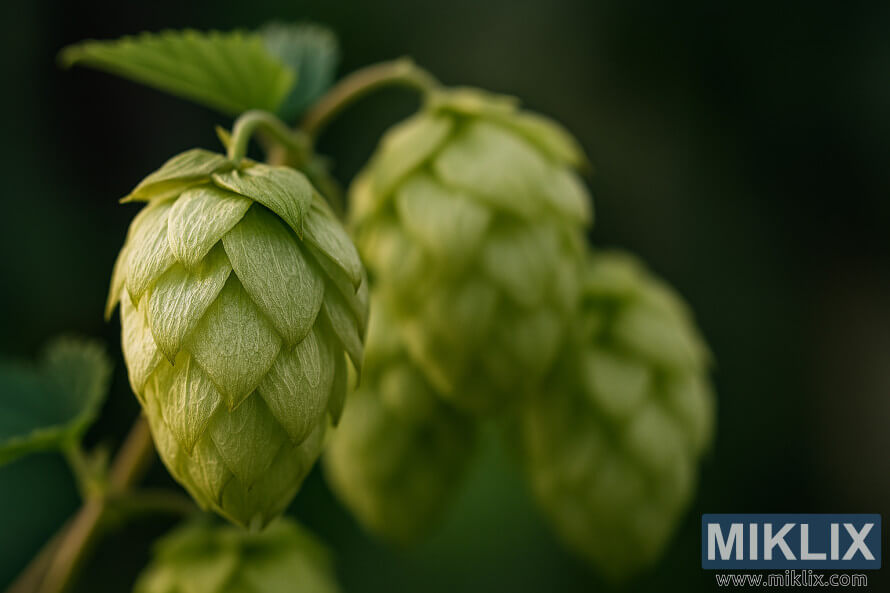
Click or tap the image for more information and higher resolutions.
Substitutions and complementary hop varieties
When Hallertau Blanc is hard to find, brewers look for substitutes that share its white-wine and grape-like flavors. Nelson Sauvin is often the first choice. It has a sauvignon-blanc taste that matches the bright, vinous quality brewers aim for.
Enigma is another popular substitute for Hallertau Blanc. It offers strong fruit-forward notes and unique aromas, reminiscent of peaches, red grapes, or tropical fruits. Swapping hops may slightly alter the dankness and green notes.
To enhance Hallertau Blanc’s flavor, pair it with hops like Mosaic or Citra. Mosaic adds complex tropical layers and berry tones. Citra enhances citrus and tropical brightness, making the white-wine nuance more pronounced.
- Nelson Sauvin — close white-wine character, great as a direct substitute.
- Enigma — fruit-forward alternative with bold aromatics.
- Mosaic — complementary for texture and tropical depth.
- Citra — complementary for citrus lift and clarity.
Combining substitutes? Try a small amount of Nelson Sauvin or Enigma with Mosaic or Citra. This blend keeps Hallertau Blanc’s vinous essence while adding tropical and citrus notes. Adjust dry-hop weights to taste and watch for changes in bitterness and cleanness.
Use Hallertau Blanc alternatives thoughtfully and test in small batches first. A direct swap rarely replicates the exact flavor, but these options help maintain the white-wine nuance and broaden the aromatic spectrum in modern ales.
Purchasing Hallertau Blanc: formats and availability
Hallertau Blanc is widely available in the United States through homebrew retailers and major suppliers. It can be purchased as whole cones or more commonly as pellet hops. This format is preferred for its ease of dosing and storage.
Online hop shops frequently offer Hallertau Blanc pellets in small packages, ideal for hobbyists. The standard package size is Hallertau Blanc 1 oz. This size is perfect for test batches and adding to single recipes.
Product pages from retailers like MoreBeer, Northern Brewer, and Yakima Valley Homebrew often include reviews, Q&A, and shipping details. These resources help clarify Hallertau Blanc availability before you make a purchase.
It's important to note that there is no lupulin powder version available from major processors like Yakima Chief Hops, BarthHaas, or Hopsteiner for this variety. If you need concentrated forms such as Cryo or Lupomax, they are currently unavailable for Hallertau Blanc.
- Check inventory across multiple suppliers to compare harvest-year notes and pricing.
- Look for product guarantees and free shipping thresholds that can lower total cost.
- Consider ordering Hallertau Blanc pellets in Hallertau Blanc 1 oz packs to test aroma and flavor before buying larger quantities.
Availability can fluctuate with the harvest year and supplier stock. If you need hops for a specific brew day, order early. Confirm estimated delivery dates to avoid last-minute surprises when buying Hallertau Blanc.
Cost considerations and sourcing tips for homebrewers
Hallertau Blanc prices and costs differ based on supplier, package size, and harvest year. Small 1 oz pellet packets are ideal for single 5-gallon batches. On the other hand, bulk 1 lb bags offer a lower unit cost for frequent brewers.
When searching for Hallertau Blanc, always check the harvest date on the package. Fresh hops retain their vibrant citrus and white grape notes. In contrast, old hops may have muted or off aromas, even if they were cheaper.
- Compare local homebrew shops like Northern Brewer or MoreBeer with online retailers for Hallertau Blanc price differences.
- Look for clear harvest dates and vacuum-sealed packaging to judge freshness.
- Watch for promotions and free-shipping thresholds to reduce shipping impact on Hallertau Blanc cost.
Storage is as critical as the purchase itself. Vacuum-seal and freeze pellets immediately to preserve oils. Proper storage ensures the aroma remains true to style and safeguards your investment in sourcing Hallertau Blanc.
There is no lupulin powder variant for this cultivar, so expect pellets only. Pellet quality can vary, so it's wise to read customer reviews before ordering. Reviews provide insights into consistency, packaging care, and flavor retention, which impact the long-term value of Hallertau Blanc.
- Check harvest year and seller reputation before committing.
- Buy 1 oz packets to test new suppliers, then move to bulk if satisfied.
- Use buying hops tips: combine orders to meet free-shipping limits and avoid many small shipments.
For reliable sourcing of Hallertau Blanc, prefer reputable suppliers who list harvest dates and offer clear return policies. These steps help manage Hallertau Blanc cost while ensuring quality for your next batch.
Click or tap the image for more information and higher resolutions.
Hop pairing with malt and adjuncts
Hallertau Blanc exhibits crisp white-wine and tropical aromas, which shine when the malt bill is light. For pairing Hallertau Blanc with malt, opt for pilsner, pale ale, or light wheat malts. This ensures the hop aromatics remain prominent.
In crafting crushable summer ales and blondes, keep specialty malts to a minimum. A small amount of Vienna or Munich can introduce warmth. Yet, avoid heavy roasted or crystal malts, as they can overpower fruit and grape notes.
- Use flaked oats or light wheat to add mouthfeel without hiding aroma.
- Add rice or light cane sugar to dry the finish and lift winey hop tones.
- Consider small amounts of candi sugar in Belgian styles to create interplay with esters.
When selecting Hallertau Blanc adjuncts, consider texture and brightness. Light adjuncts help maintain clarity of aroma while adding body and drinkability.
Fruit adjuncts can enhance tropical characters. White grape must or passion fruit can accentuate these notes when used sparingly. Always test small batches to avoid vegetal clashes.
In mixed-fermentation beers with Brettanomyces or Belgian yeast, a richer malt backbone is essential. It balances funk and esters. Try darker sugars or candi to build complexity and support the hop's wine-like qualities.
Brewers aiming to pair hops with grains will find Hallertau Blanc highly versatile. Match grain choices to your target style, ensuring malt flavors complement the beer. Let the hop's aroma drive the beer's character.
Research and breeders: who owns Hallertau Blanc
Hallertau Blanc was developed through a focused German breeding effort at the Hop Research Center Hüll. The program aimed to blend New World aromatic traits from a Cascade parent with traditional German characteristics from a Huell male.
The Hallertau Blanc breeder, Hop Research Center Hüll, recorded the cultivar under the identifier 2007/19/8. The variety reached public release in 2012 and then moved into commercial propagation by growers across Germany.
Hallertau Blanc ownership remains with Hop Research Center Hüll. The institute maintains trademark and cultivar rights while licensed growers produce annual harvests late in the season, typically from the end of August into September.
Growers and brewers value the variety for its citrus and tropical aromatics paired with a German hop backbone. No major lupulin-format processors have listed a Hallertau Blanc lupulin powder as of current supplier data, so whole cone and pellet forms remain the common commercial formats.
- Breeding origin: German program combining Cascade and Huell genetics.
- Cultivar ID: 2007/19/8; public release in 2012.
- Legal status: Hallertau Blanc ownership held by Hop Research Center Hüll.
- Availability: Propagated by German growers; harvested late summer.
Conclusion
Hallertau Blanc summary: This modern German aroma hop introduces distinct pineapple, gooseberry, white grape, lemongrass, and passion fruit notes. It's perfect for late additions and dry hopping. Its clean profile, less dank, makes it ideal for beers where wine-like and tropical flavors should dominate.
When using Hallertau Blanc hops, aim for late kettle additions and short, controlled dry-hop contact. This preserves volatile oils and prevents vegetal off-notes. With alpha acids around 9–12% and total oils near 0.8–2.2 mL/100g, brewers have flexibility. Yet, they must exercise restraint in dosing and choose the right yeast and malt to highlight the hop's qualities.
Choosing Hallertau Blanc requires comparing harvest years and purchasing pellets from trusted suppliers. Store them frozen. If Hallertau Blanc is too expensive or hard to find, consider Nelson Sauvin or Enigma as alternatives. Pairing them with Mosaic or Citra can add complexity. With careful technique and sourcing, brewers can unlock the bright, expressive traits of Hallertau Blanc.
Further Reading
If you enjoyed this post, you may also like these suggestions: