
A Complete Guide to Growing Olives at Home Successfully
Published: December 31, 2025 at 12:38:22 AM UTC
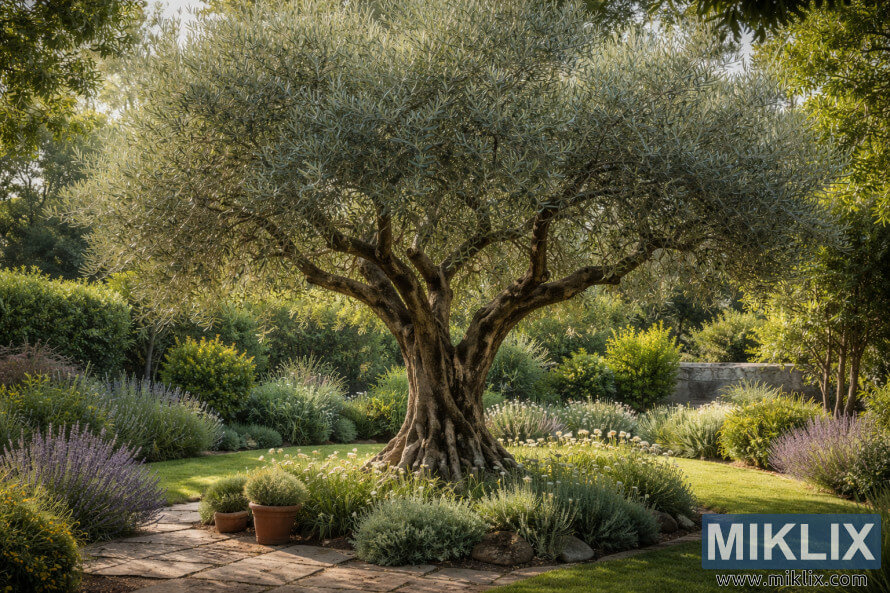
Olive trees bring a touch of Mediterranean charm to any garden while offering the reward of homegrown olives. With their silvery-green foliage and gnarled trunks, these ancient trees aren't just beautiful—they're surprisingly adaptable to home cultivation.
Click or tap the image for more information and higher resolutions.
Whether you have a spacious garden or just a sunny balcony, growing olives at home is an achievable and rewarding project for gardeners of all experience levels.
The History and Benefits of Home Olive Cultivation
Olive trees have been cultivated for thousands of years across the Mediterranean region. These resilient trees can live for centuries—some ancient specimens are over 2,000 years old and still producing fruit! Beyond their impressive longevity, olive trees offer multiple benefits for home gardeners:
- Drought-tolerant and low-maintenance once established
- Evergreen foliage provides year-round visual interest
- Produces edible fruit that can be cured for eating or pressed for oil
- Adapts well to container growing for space-limited gardens
- Creates a Mediterranean aesthetic in any garden setting
- Naturally pest-resistant compared to many fruit trees
Whether you're interested in harvesting olives or simply want an attractive ornamental tree, growing olives at home connects you to an ancient agricultural tradition while adding beauty to your garden space.
Best Olive Varieties for Home Cultivation
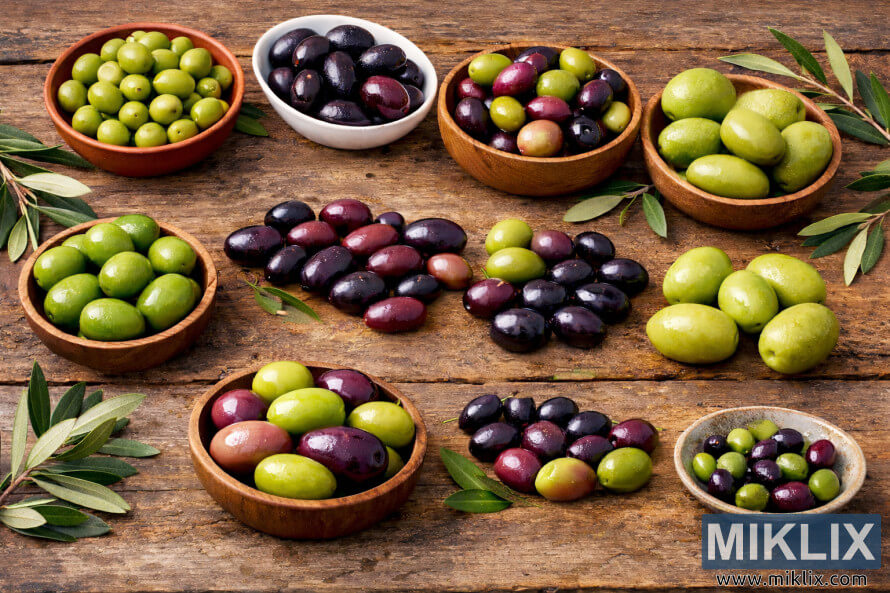
Choosing the right olive variety is crucial for success when growing olives at home. Some varieties are better suited for oil production, while others make excellent table olives. Consider your climate, available space, and what you hope to harvest when selecting varieties.
Click or tap the image for more information and higher resolutions.
| Variety | Best Use | Hardiness | Size | Special Features |
| Arbequina | Oil & Table | Zone 8-10 | 12-15 ft (smaller in containers) | Self-fertile, early bearing, excellent for beginners |
| Frantoio | Oil | Zone 7-10 | 15-20 ft | Cold-hardy, fruity oil, faster growing |
| Mission | Oil & Table | Zone 8-10 | 15-18 ft | Drought-tolerant, distinctive flavor |
| Manzanilla | Table | Zone 8-10 | 20-30 ft | Large fruit, easy pit removal |
| Leccino | Oil | Zone 8-9 | 25-30 ft | Wind-resistant, consistent producer |
Climate and Growing Zone Requirements
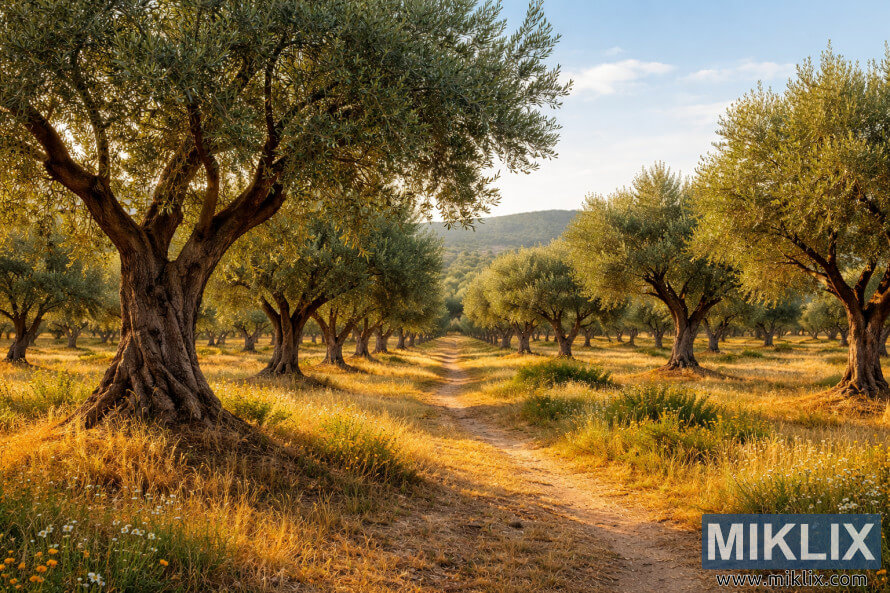
Olive trees thrive in Mediterranean-like climates with hot, dry summers and mild winters. While they're traditionally associated with warm regions, several varieties can adapt to cooler climates with proper care.
Ideal Growing Conditions
- USDA Zones: 7-10 (some varieties can survive in Zone 7 with protection)
- Temperature: Tolerates heat well; mature trees can survive brief periods down to 15-20°F
- Sunlight: Full sun (minimum 6-8 hours daily)
- Humidity: Prefers dry conditions; excessive humidity can promote disease
Cold Climate Tip: In zones 6 or colder, grow olive trees in containers that can be moved indoors or to protected areas during winter. Choose cold-hardy varieties like Frantoio or Arbequina for the best results.
Click or tap the image for more information and higher resolutions.
Chill Hours and Flowering
Olive trees need a period of winter temperatures below 50°F to induce flowering. Most varieties require 200-300 chill hours for proper fruit set. Without this cool period, trees may grow beautifully but fail to produce fruit—an important consideration for indoor growers.
Step-by-Step Planting Instructions
Whether you're planting in the ground or in containers, proper planting techniques are essential for establishing healthy olive trees. Follow these guidelines for the best results when growing olives at home.
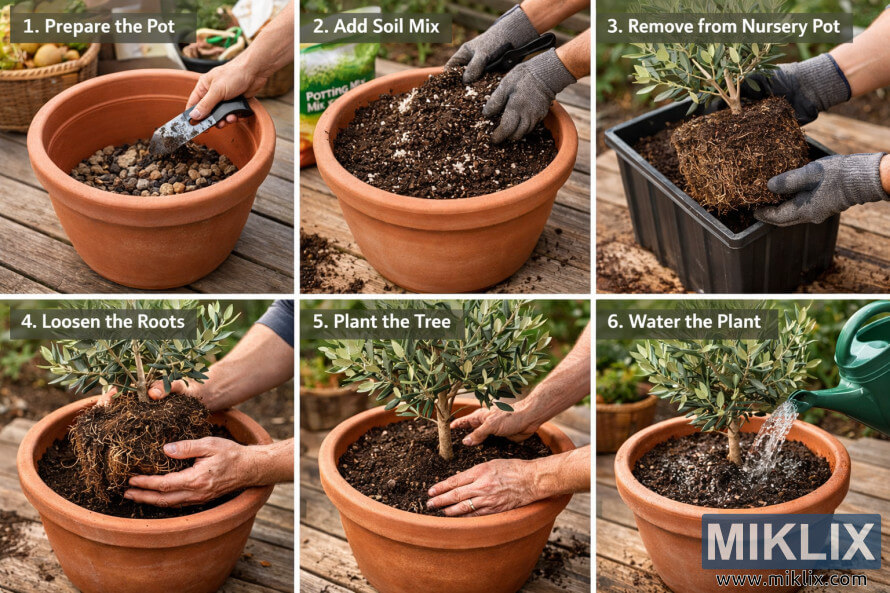
Container Planting
- Select a container at least 18-24 inches wide and deep with drainage holes
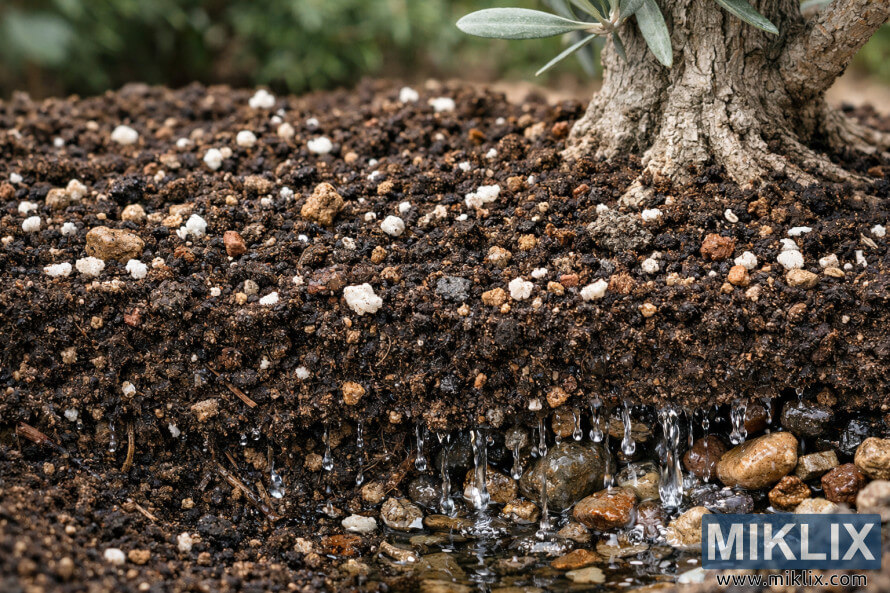
- Use a well-draining potting mix with added perlite or sand
- Place a layer of gravel at the bottom for improved drainage
- Position the tree so the top of the root ball sits slightly above the soil line
- Fill around the roots, tamping gently to remove air pockets
- Water thoroughly after planting
- Place in a sunny location protected from strong winds
Click or tap the image for more information and higher resolutions.
Ground Planting
- Choose a location with full sun and excellent drainage
- Dig a hole twice as wide as the root ball but only as deep
- Amend heavy soil with compost and sand to improve drainage
- Position the tree at the same depth it was in its nursery container
- Backfill with soil, firming gently around the roots
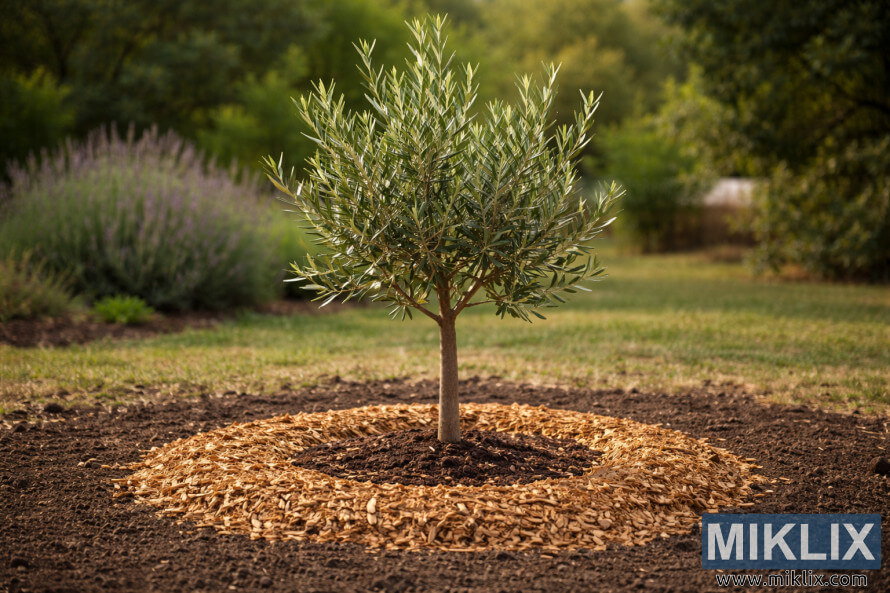
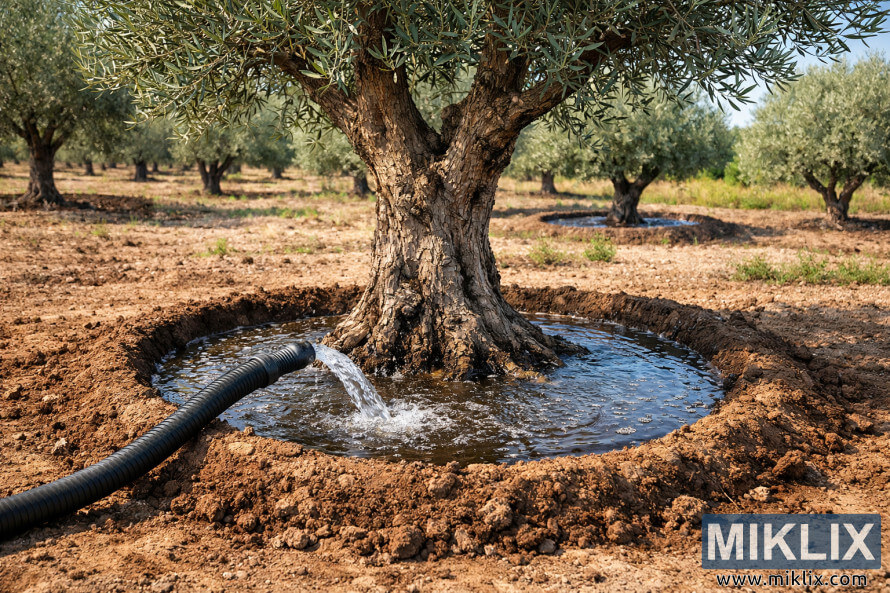
- Create a watering basin around the tree
- Water deeply and apply 2-3 inches of mulch, keeping it away from the trunk
Spacing Guide: For in-ground planting, space standard olive trees 15-20 feet apart. Dwarf varieties can be spaced 8-10 feet apart. In containers, allow enough space for air circulation around each tree.
Click or tap the image for more information and higher resolutions.
Soil Preparation and Drainage Requirements
Olive trees are remarkably adaptable to poor soil conditions but absolutely require good drainage. In their native Mediterranean habitat, they often grow in rocky, alkaline soil with minimal organic matter.
Ideal Soil Characteristics
- pH Level: 5.5-8.5 (slightly acidic to alkaline)
- Texture: Well-draining loam or sandy loam
- Drainage: Excellent drainage is essential—olive roots cannot tolerate standing water
- Fertility: Moderate fertility; overly rich soil can reduce fruit production
Click or tap the image for more information and higher resolutions.
Soil Preparation Tips
For container growing, use a mix of:
- 60% high-quality potting soil
- 20% perlite or pumice
- 20% coarse sand
- Optional: Add a small amount of lime for alkalinity if your soil is acidic
For ground planting in heavy soil:
- Incorporate sand and compost to improve drainage
- Consider planting on a slight mound if your soil tends to retain water
- Add gypsum to break up clay soils
- Test soil pH and amend accordingly
Warning: Poor drainage is the number one killer of olive trees. If your soil retains water for more than a few hours after heavy rain, take extra steps to improve drainage or consider raised bed or container growing instead.
Watering and Fertilization Schedule
Olive trees are drought-tolerant once established, but proper watering and fertilization during the first few years are crucial for developing a strong root system and healthy growth.
Watering Guidelines
| Tree Age | Container Trees | Ground-Planted Trees | Seasonal Adjustments |
| First Year | Check weekly; water when top 2" of soil is dry | Weekly deep watering (2.5 gallons) | More frequent in summer, less in winter |
| 2-3 Years | Check every 7-10 days | Every 10-14 days during growing season | Reduce by 50% during dormant season |
| Established (4+ Years) | When top 3" of soil is dry | Monthly deep watering in dry periods | May need no supplemental water in rainy seasons |
Click or tap the image for more information and higher resolutions.
Fertilization Schedule
Olive trees have modest fertilizer needs. Over-fertilization can lead to excessive vegetative growth at the expense of fruit production.
- Young Trees (1-3 years): Apply a balanced slow-release fertilizer (such as 10-10-10) in early spring and mid-summer
- Mature Trees: One application of balanced fertilizer in early spring before new growth
- Container Trees: Use half-strength liquid fertilizer monthly during the growing season (March-August)
- Organic Options: Compost, worm castings, or organic olive tree fertilizer work well
Pro Tip: Always water thoroughly before and after applying fertilizer to prevent root burn. Stop fertilizing in late summer to allow the tree to harden off before winter.
Pruning and Maintenance Techniques
Proper pruning is essential for maintaining the health, shape, and productivity of your olive trees. While olive trees don't require heavy pruning, regular maintenance helps improve air circulation, sunlight penetration, and fruit production.
When to Prune
- Major Pruning: Late winter to early spring, before new growth begins
- Maintenance Pruning: Throughout the growing season to remove water sprouts and suckers
- Avoid: Pruning during flower or fruit development
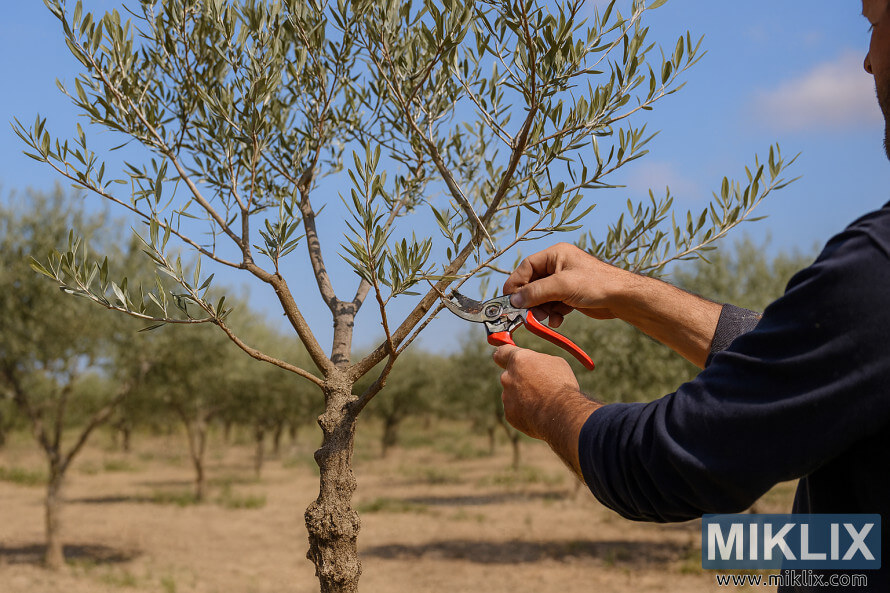
Basic Pruning Steps
- Remove dead, damaged, or diseased branches first
- Eliminate crossing or rubbing branches
- Thin out dense areas to improve air circulation
- Remove any suckers growing from the base of the tree
- Maintain an open center or vase shape for better sunlight penetration
- Limit height by cutting back the tallest branches if needed
Click or tap the image for more information and higher resolutions.
Shaping Young Trees
For young olive trees, focus on establishing a strong framework:
- Select 3-5 main scaffold branches emerging from the trunk
- Space these branches evenly around the trunk
- Remove competing leaders to maintain a single trunk or desired multi-trunk form
- Prune lightly to encourage outward rather than upward growth
Container Tree Maintenance: For potted olive trees, regular pruning helps maintain a manageable size. Prune more frequently but less intensively, focusing on maintaining the desired shape and size while preserving enough foliage for photosynthesis.
Pest and Disease Management
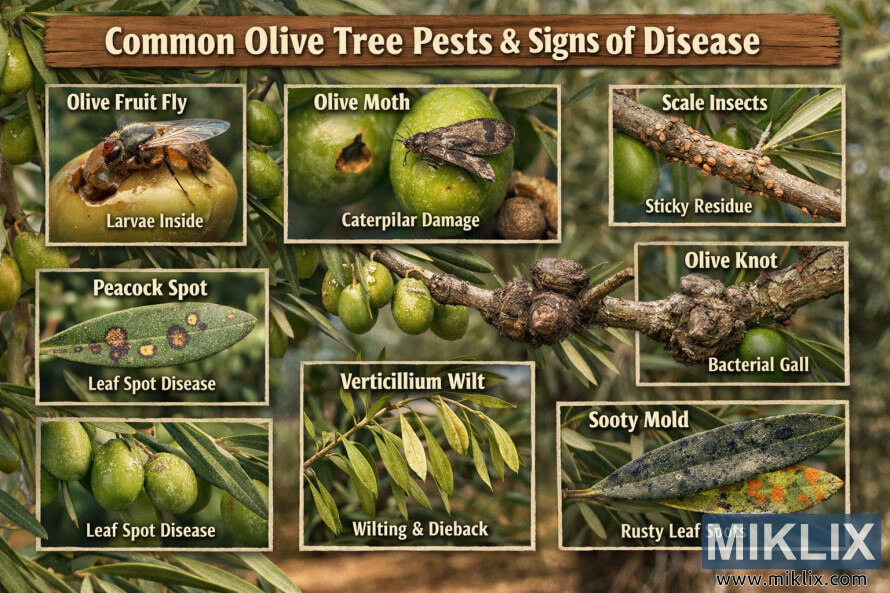
Olive trees are naturally resistant to many pests and diseases, making them relatively low-maintenance compared to other fruit trees. However, they can still face certain challenges, especially in humid environments or when stressed.
Common Pests
| Pest | Signs | Treatment |
| Olive Fruit Fly | Small holes in fruit, premature fruit drop | Sticky traps, harvest promptly, organic spinosad sprays |
| Scale Insects | Small bumps on stems and leaves, sticky honeydew | Horticultural oil, neem oil, insecticidal soap |
| Spider Mites | Fine webbing, stippled leaves, bronzing | Increase humidity, insecticidal soap, predatory mites |
Common Diseases
| Disease | Symptoms | Prevention/Treatment |
| Olive Knot | Rough, tumor-like growths on branches | Prune in dry weather, sterilize tools, copper-based fungicides |
| Peacock Spot | Dark circular spots on leaves | Improve air circulation, copper fungicide in fall and spring |
| Root Rot | Yellowing leaves, wilting, stunted growth | Improve drainage, avoid overwatering, fungicides rarely effective |
Click or tap the image for more information and higher resolutions.
Preventative Measures
- Maintain good air circulation through proper spacing and pruning
- Avoid overhead watering to keep foliage dry
- Remove fallen fruit and leaves promptly
- Ensure proper drainage to prevent root issues
- Maintain tree vigor through proper watering and fertilization
Important: Always identify the specific pest or disease before treating. Many issues can be managed with organic methods, preserving beneficial insects and avoiding unnecessary chemical use.
Harvesting Timeline and Methods
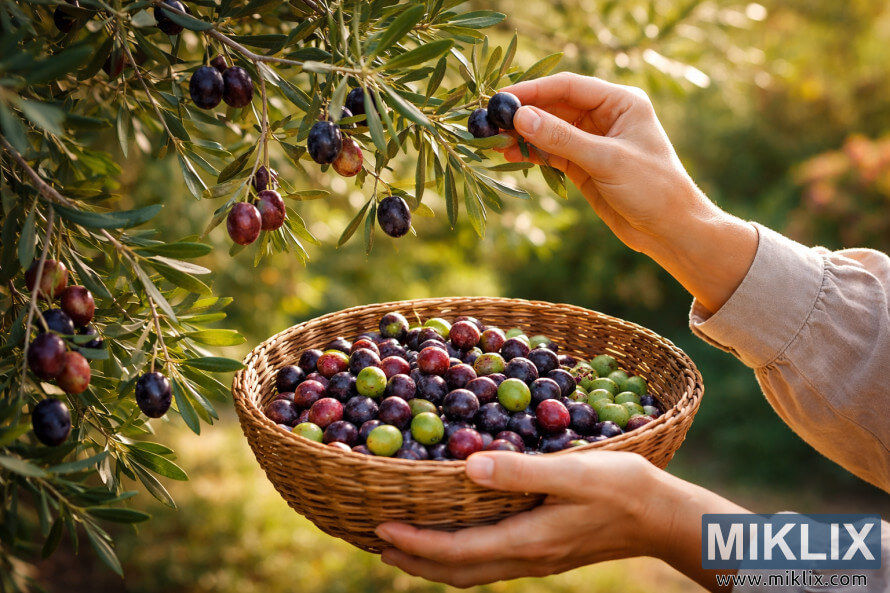
Harvesting olives at the right time is crucial for flavor development and processing success. The harvesting period typically occurs in late fall to early winter, depending on your climate and the olive variety.
Click or tap the image for more information and higher resolutions.
When to Harvest
- Green Olives: Harvest when full-sized but still firm and green (September-October)
- Black Olives: Harvest when fully ripened and turned black (November-January)
- Oil Production: Harvest when olives are turning from green to purple (higher oil content)
Harvesting Methods
- Hand Picking: Best for table olives to avoid bruising
- Raking: Gently rake branches to release ripe fruit onto tarps below
- Beating: Tap branches with a stick to dislodge ripe fruit (for oil production)
Harvesting Tip: Fresh olives are extremely bitter and inedible straight from the tree. They must be processed before eating. Harvest in the morning when temperatures are cooler for best quality.
Expected Yields
Yield varies greatly depending on tree age, size, and growing conditions:
- Young trees (3-5 years): 5-10 pounds of fruit
- Mature container trees: 10-20 pounds annually
- Mature in-ground trees: 35-100+ pounds annually
Note: Many olive varieties are alternate bearing, producing heavily one year followed by a lighter crop the next. Proper pruning and thinning can help balance production.
Processing Olives for Eating
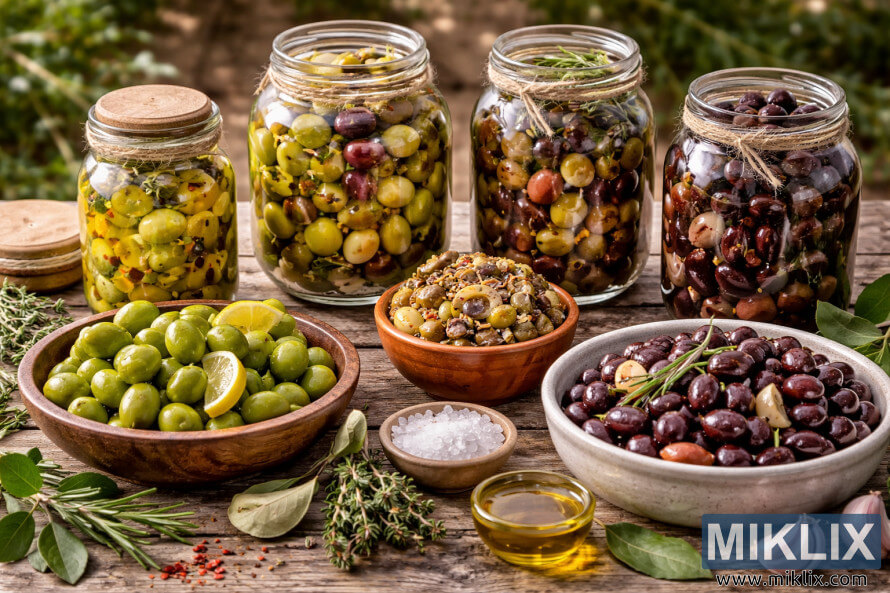
Fresh olives contain oleuropein, a bitter compound that makes them inedible straight from the tree. Processing removes this bitterness and preserves the olives for consumption. Here are several methods for curing olives at home.
Click or tap the image for more information and higher resolutions.
Basic Curing Methods
Water Curing
Best for: Beginners, faster results
- Slit or crack each olive
- Soak in fresh water, changing daily
- Continue for 7-10 days until bitterness reduces
- Transfer to finishing brine
Brine Curing
Best for: Traditional flavor, whole olives
- Prepare brine (1 cup salt per gallon of water)
- Submerge olives completely
- Ferment for 4-6 weeks, checking regularly
- Transfer to finishing brine with flavorings
Dry Salt Curing
Best for: Wrinkled, intensely flavored olives
- Layer olives with coarse salt
- Shake daily to redistribute salt
- Continue for 4-6 weeks until shriveled
- Rinse and store in olive oil with herbs
Finishing Your Olives
After the initial curing process, enhance flavor with a finishing brine:
- Basic Brine: 1/4 cup salt dissolved in 4 cups water
- Add flavorings: bay leaves, garlic, lemon, oregano, chili, vinegar
- Store in sterilized jars, keeping olives submerged
- Refrigerate for up to 6 months
Safety Note: Home-cured olives are not shelf-stable unless properly fermented or acidified. Always refrigerate your finished olives and watch for signs of spoilage.
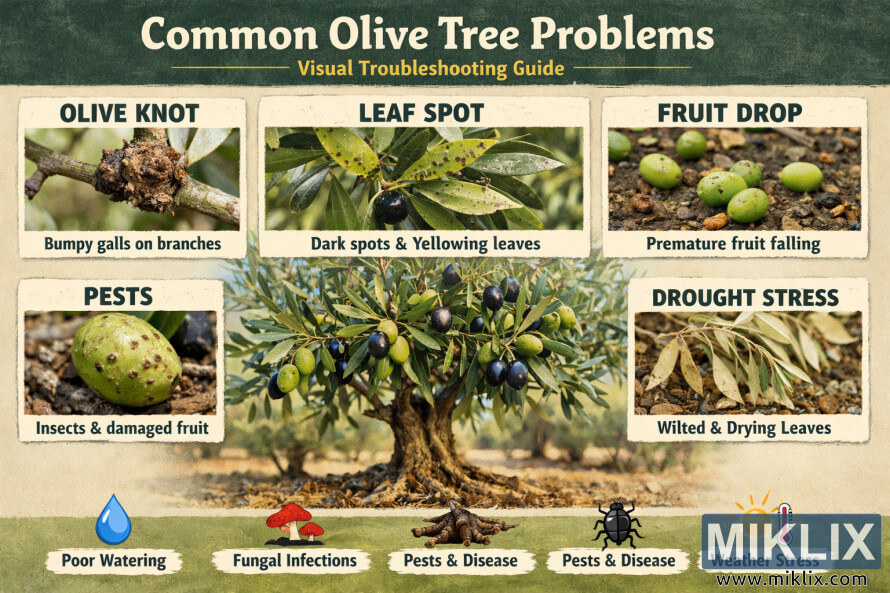
Common Challenges and Troubleshooting
Even experienced gardeners face challenges when growing olives at home. Here are solutions to common problems you might encounter.
My olive tree isn't producing fruit
Several factors can affect fruiting:
- Tree age: Most trees need 3-5 years before fruiting
- Insufficient chill hours: Trees need winter temperatures below 50°F
- Lack of pollination: Some varieties need cross-pollination
- Over-fertilization: Too much nitrogen promotes leaves over fruit
- Improper pruning: Removing too much one-year-old wood
Solution: Ensure proper winter cooling, consider adding a pollinator variety, reduce nitrogen fertilizer, and adjust pruning practices.
Yellowing or dropping leaves
Leaf problems often indicate watering issues:
- Overwatering: Yellowing leaves, soggy soil
- Underwatering: Crisp, dry leaves that drop
- Nutrient deficiency: Yellowing between leaf veins
- Pest infestation: Check undersides of leaves
Solution: Adjust watering schedule, improve drainage, apply appropriate fertilizer, or treat for pests if present.
Winter damage in cold climates
Cold damage appears as:
- Blackened leaf tips or entire leaves
- Split bark on branches
- Dieback of younger branches
Solution: For container trees, move indoors or to protected areas when temperatures drop below 25°F. For in-ground trees, wrap the trunk with burlap, apply mulch around the base, and consider wind protection. Prune damaged areas in spring after danger of frost has passed.
Poor growth or stunted appearance
Stunted growth may indicate:
- Insufficient sunlight: Trees need 6+ hours of direct sun
- Root binding: Container too small for root system
- Poor soil conditions: Compacted or nutrient-poor soil
- Pest or disease issues: Check for signs of infestation
Solution: Relocate to a sunnier spot, repot into a larger container, amend soil with compost, or treat for specific pest/disease issues.
Click or tap the image for more information and higher resolutions.
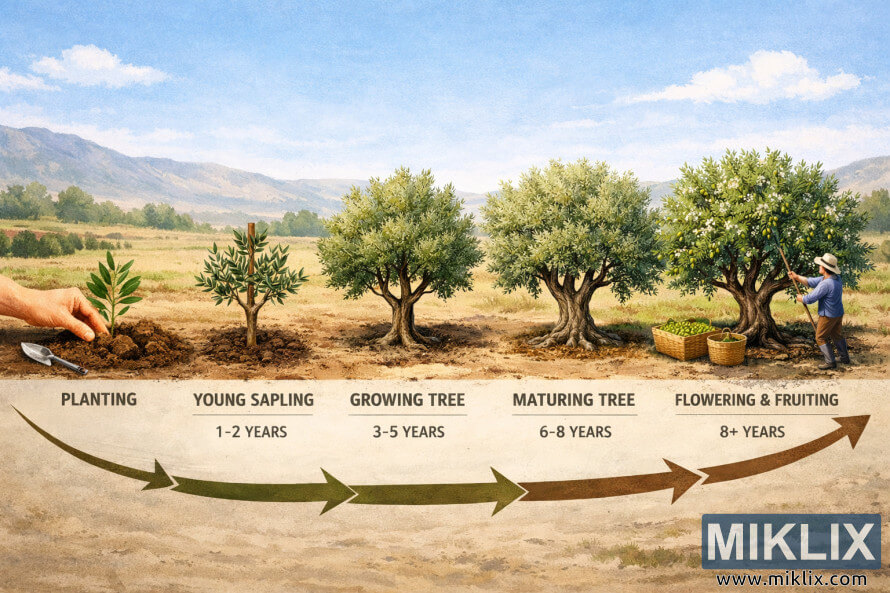
Expected Timeline from Planting to First Harvest
Growing olives at home requires patience, but the reward of your first harvest makes the wait worthwhile. Understanding the typical timeline helps set realistic expectations.
| Timeline | Development Stage | What to Expect | Care Focus |
| Year 1 | Establishment | Minimal new growth as tree establishes roots | Regular watering, protection from extreme elements |
| Years 2-3 | Vegetative Growth | Increased foliage, branch development | Formative pruning, balanced fertilization |
| Years 3-5 | First Flowering/Fruiting | First flowers and small fruit set (may drop) | Pollination, consistent watering during fruit development |
| Years 5-7 | First Significant Harvest | Increasing fruit production | Maintenance pruning, harvest techniques |
| Years 7+ | Maturity | Full production capacity | Consistent maintenance, managing alternate bearing |
Accelerating the Timeline: Start with larger, 2-3 year old trees from a reputable nursery rather than seedlings. Choose self-fertile, early-bearing varieties like Arbequina for faster results. Optimal growing conditions can also speed up the timeline to first harvest.
Click or tap the image for more information and higher resolutions.
Conclusion: Enjoying Your Home Olive Harvest
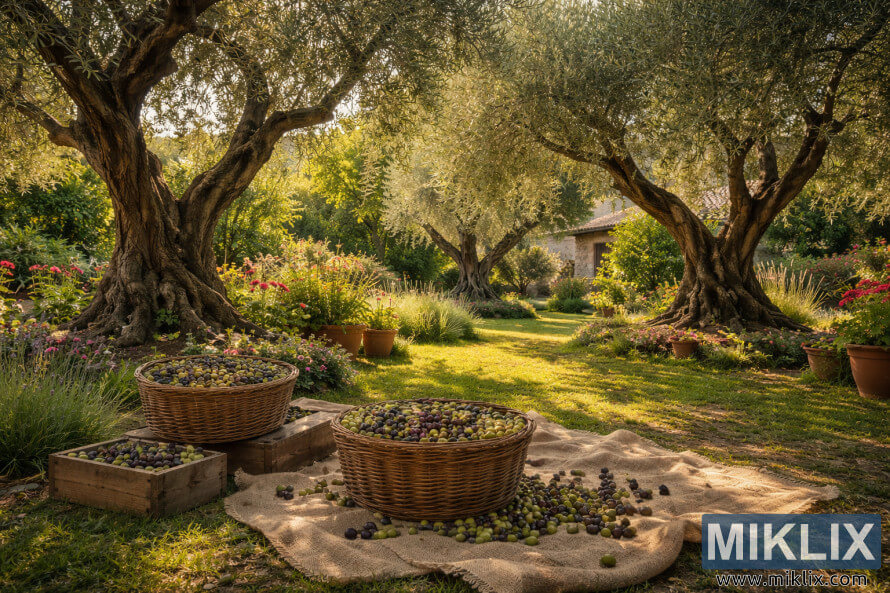
Growing olives at home connects you to an ancient agricultural tradition while providing beautiful trees and delicious harvests. With proper care and patience, your olive trees can become a centerpiece of your garden and kitchen for decades to come.
Remember that olive trees improve with age—their gnarled trunks and silvery foliage become more characterful over time, and production typically increases for many years. Whether you're growing for ornamental purposes, table olives, or pressing your own small-batch olive oil, these resilient trees offer multiple rewards for the home gardener.
Click or tap the image for more information and higher resolutions.
Further Reading
If you enjoyed this post, you may also like these suggestions:
- A Guide to Growing Bok Choy in Your Own Garden
- A Guide to the Best Beet Varieties to Grow in Your Own Garden
- Growing Raspberries: A Guide to Juicy Homegrown Berries