
A Guide to Growing Your Own Cucumbers From Seed to Harvest
Published: January 7, 2026 at 9:49:44 PM UTC
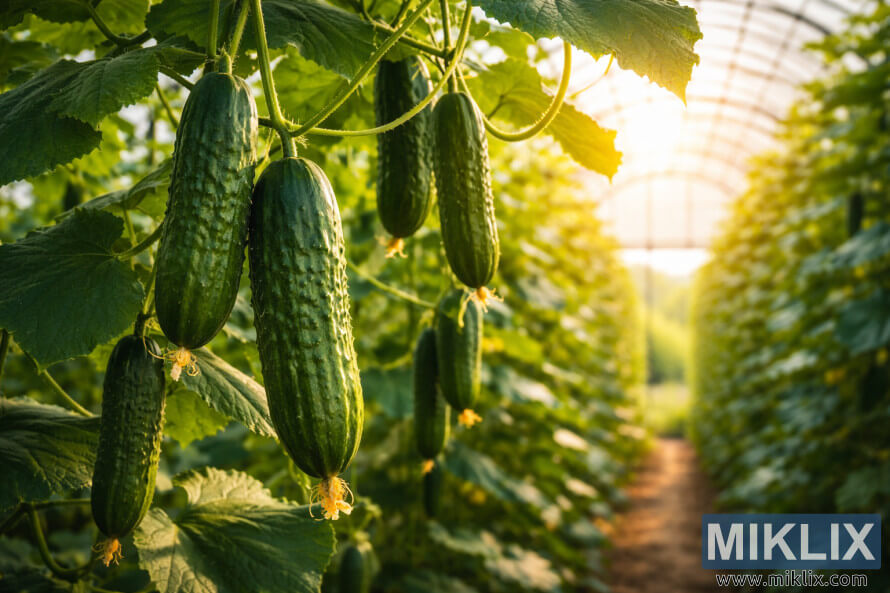
Growing your own cucumbers delivers a satisfaction that store-bought varieties simply can't match. These crisp, refreshing vegetables are not only delicious in salads and sandwiches but also perfect for pickling.
Click or tap the image for more information and higher resolutions.
With their relatively quick growth cycle and generous yields, cucumbers reward gardeners with abundant harvests throughout the growing season. Whether you have a spacious backyard garden or just a few containers on your patio, cucumbers can thrive with the right care. This comprehensive guide will walk you through everything you need to know to successfully grow your own cucumbers from seed to harvest.
Best Cucumber Varieties for Home Gardens
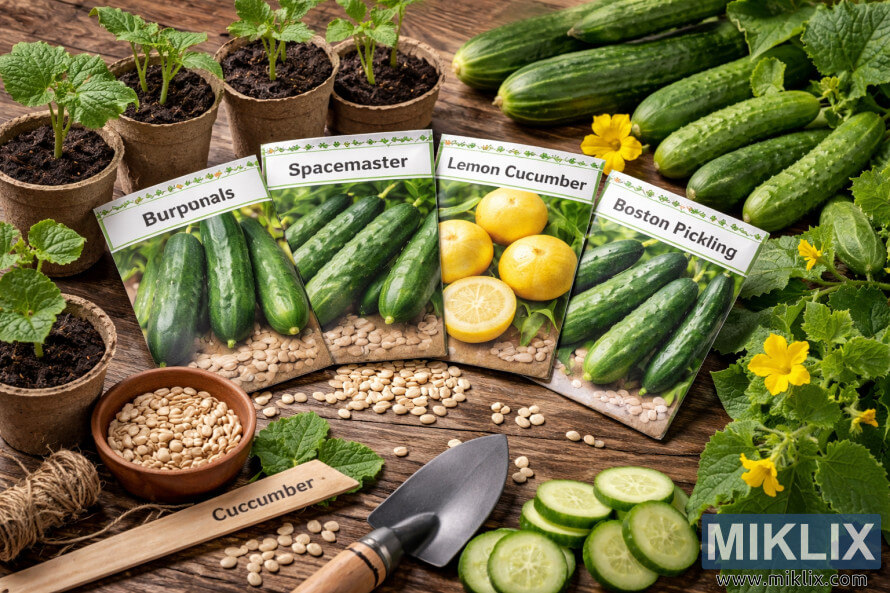
Different cucumber varieties suitable for home gardens: slicing (left) and pickling (right)
Choosing the right cucumber variety is essential for a successful harvest. Cucumbers generally fall into two main categories: slicing and pickling types. Understanding the differences will help you select varieties that best suit your needs and growing conditions.
Slicing Cucumbers
Slicing cucumbers are grown primarily for fresh eating. They typically produce longer, smoother fruits with thinner skin and fewer seeds. These varieties are perfect for salads, sandwiches, and snacking.
Marketmore 76 - Disease-resistant variety that produces dark green, 8-9 inch fruits. Matures in 68 days.
Straight Eight - Classic variety yielding 8-inch straight, dark green cucumbers. Matures in 58 days.
Sweet Success - Seedless hybrid that produces 12-14 inch fruits with no bitterness. Matures in 54 days.
Burpless - As the name suggests, these varieties contain less of the compound that causes digestive discomfort. Armenian cucumbers fall into this category.
Diva - Seedless, thin-skinned variety with excellent flavor. Resistant to multiple diseases. Matures in 58 days.
Pickling Cucumbers
Pickling cucumbers are shorter and thicker with bumpy skin and solid interiors. These characteristics help them maintain crispness during the pickling process.
Boston Pickling - Heirloom variety producing 3-6 inch fruits with black spines. Matures in 55 days.
Calypso - Hybrid variety with excellent disease resistance. Produces uniform fruits ideal for pickling. Matures in 52 days.
County Fair - Disease-resistant variety that produces blocky 3-inch fruits. Matures in 52 days.
Bush Pickle - Compact plants ideal for containers or small gardens. Produces 4-5 inch fruits. Matures in 48 days.
Space-Saving Varieties
If you're gardening in a limited space, consider these compact or bush varieties:
Spacemaster - Compact vines (2-3 feet) that produce 7-8 inch slicing cucumbers.
Salad Bush Hybrid - Award-winning variety that grows just 2 feet tall and wide. Perfect for containers. Matures in 57 days.
Bush Champion - Compact plants producing full-sized 8-10 inch fruits. Good for containers and small gardens.
Click or tap the image for more information and higher resolutions.
Step-by-Step Planting Instructions
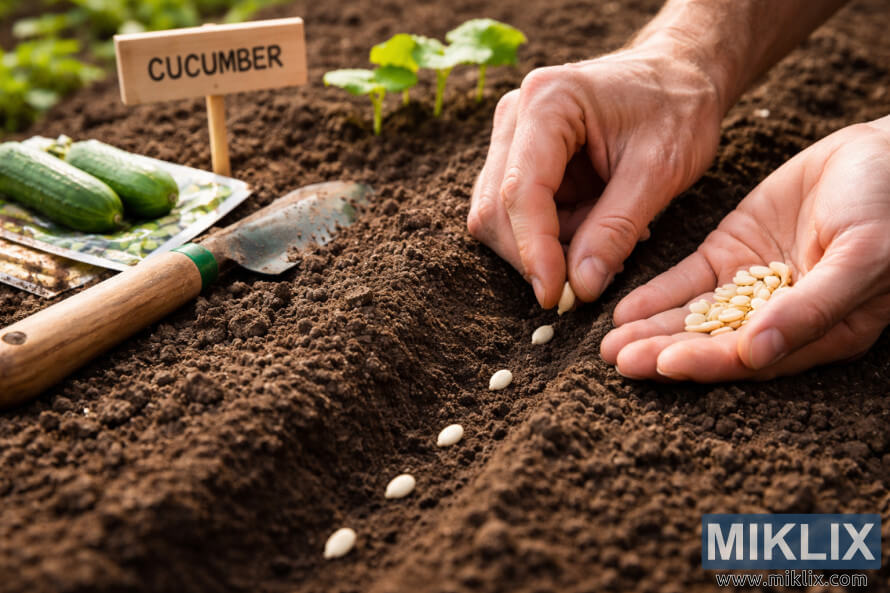
Planting cucumber seeds at the proper depth and spacing
Cucumbers are warm-season crops that require temperatures between 75-85°F (24-29°C) for optimal growth. Timing your planting correctly is crucial for a successful harvest.
When to Plant
Plant cucumbers only after all danger of frost has passed and soil temperatures have reached at least 65°F (18°C). In most regions, this means planting:
- 2-3 weeks after the last spring frost date
- When daytime temperatures consistently reach 70°F (21°C)
- When nighttime temperatures stay above 50°F (10°C)
Starting Seeds Indoors
For an earlier harvest, start cucumber seeds indoors 2-3 weeks before your last frost date:
Use biodegradable peat pots or pellets to minimize root disturbance during transplanting.
Plant seeds 1/2 to 1 inch deep in seed-starting mix.
Maintain soil temperature between 70-90°F (21-32°C) for optimal germination.
Provide 14-16 hours of light once seedlings emerge.
Harden off seedlings by gradually exposing them to outdoor conditions for 7-10 days before transplanting.
Direct Seeding Outdoors
Cucumbers can also be directly seeded into the garden after all danger of frost has passed:
Plant seeds 1 inch deep in groups of 4-6 seeds, creating "hills" spaced 4-5 feet apart.
For row planting, sow seeds 6-8 inches apart in rows that are 3-5 feet apart.
Keep soil consistently moist until germination occurs (usually within 7-10 days).
Once seedlings develop their first true leaves, thin to the strongest 2-3 plants per hill or space plants 12 inches apart in rows.
Transplanting Seedlings
When transplanting cucumber seedlings into the garden:
Wait until seedlings have 2-3 true leaves and outdoor temperatures are warm.
Space transplants 12-18 inches apart for bush varieties or 24-36 inches apart for vining types.
Plant at the same depth as they were growing in their containers.
Water thoroughly after transplanting and apply a layer of mulch around plants.
If using biodegradable pots, tear off the rim that sits above the soil line to prevent wicking moisture away from the roots.
Click or tap the image for more information and higher resolutions.
Soil Preparation and Sunlight Requirements
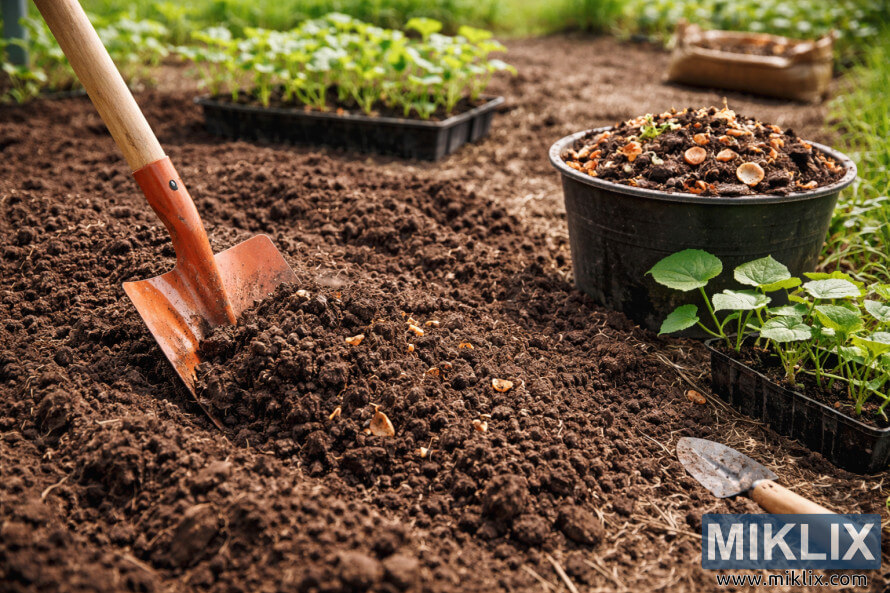
Preparing nutrient-rich soil with organic matter for cucumber planting
Cucumbers thrive in fertile, well-drained soil with plenty of organic matter. Proper soil preparation is essential for healthy plants and abundant harvests.
Soil Requirements
The ideal soil for growing cucumbers has these characteristics:
pH Level: Slightly acidic to neutral (6.0-6.8)
Texture: Loose, well-drained loam
Organic Matter: Rich in compost or well-rotted manure
Temperature: At least 65°F (18°C) for planting
Preparing Garden Soil
Follow these steps to prepare your garden soil for cucumbers:
Test your soil pH and nutrient levels (contact your local extension office for testing services).
Remove weeds, rocks, and debris from the planting area.
Incorporate 2-4 inches of compost or aged manure into the top 8-10 inches of soil.
If soil is heavy clay, add additional organic matter and consider raised beds for better drainage.
For sandy soils, add extra compost to improve water retention.
Apply a balanced fertilizer (such as 5-10-10) at a rate of 3 pounds per 100 square feet.
Sunlight Requirements
Cucumbers are sun-loving plants that require:
Full Sun: Minimum of 6-8 hours of direct sunlight daily
Orientation: Plant rows north to south for maximum sun exposure
Protection: In extremely hot climates, light afternoon shade can be beneficial
Container Soil Mix
If growing cucumbers in containers, create a high-quality potting mix:
- 1 part quality potting soil
- 1 part compost
- 1 part perlite or vermiculite for drainage
A slow-release balanced fertilizer according to package directions
Pro Tip: Warming the soil before planting can give your cucumbers a head start. Cover the planting area with black plastic for 1-2 weeks before planting to raise soil temperature by 3-5 degrees.
Click or tap the image for more information and higher resolutions.
Watering and Fertilization Schedule
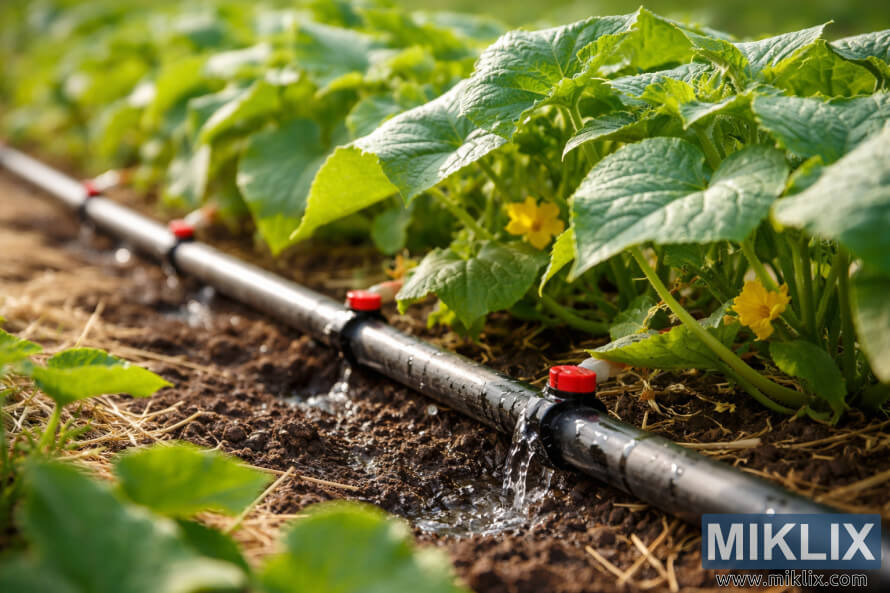
Drip irrigation provides consistent moisture directly to cucumber plant roots
Consistent watering and proper fertilization are crucial for cucumber plants to produce tender, flavorful fruits. Cucumbers contain approximately 95% water, making adequate moisture essential for optimal growth and fruit development.
Watering Guidelines
Follow these watering practices for healthy cucumber plants:
Amount: Provide 1-2 inches of water per week, adjusted for rainfall
Frequency: Water deeply 1-2 times per week rather than frequent shallow watering
Timing: Water in the morning to allow foliage to dry before evening
Method: Use drip irrigation or soaker hoses to keep foliage dry and reduce disease
Consistency: Maintain even soil moisture—inconsistent watering leads to bitter fruits and poor development
Water Stress Signs: Wilting leaves, yellowing foliage, curved fruits, and bitter taste are all indicators that your cucumber plants need more consistent watering.
Fertilization Schedule
Cucumbers are heavy feeders that benefit from regular fertilization throughout the growing season:
| Growth Stage | Fertilizer Type | Application Rate | Frequency |
| Before Planting | Balanced (5-10-10) | 3 lbs per 100 sq ft | Once during soil preparation |
| When Vines Begin to Run | Nitrogen-rich (21-0-0) | 1 lb per 100 sq ft | Once |
| When First Flowers Appear | Balanced Water-soluble | Per package directions | Every 2-3 weeks |
| During Fruiting | Low-nitrogen, High-potassium | Per package directions | Every 3-4 weeks |
Fertilizer Application Tips
For best results when fertilizing cucumber plants:
Apply side dressings of fertilizer 6 inches away from plant stems
Water thoroughly after applying dry fertilizers
Avoid high-nitrogen fertilizers during fruiting, which promotes excessive leaf growth at the expense of fruit production
Consider using organic alternatives like compost tea, fish emulsion, or well-rotted manure
Apply a layer of compost mid-season as a natural fertilizer boost
Caution: Over-fertilizing can lead to lush foliage but poor fruit production. Always follow package directions and err on the side of less rather than more when applying fertilizers.
Click or tap the image for more information and higher resolutions.
Trellising and Support Systems
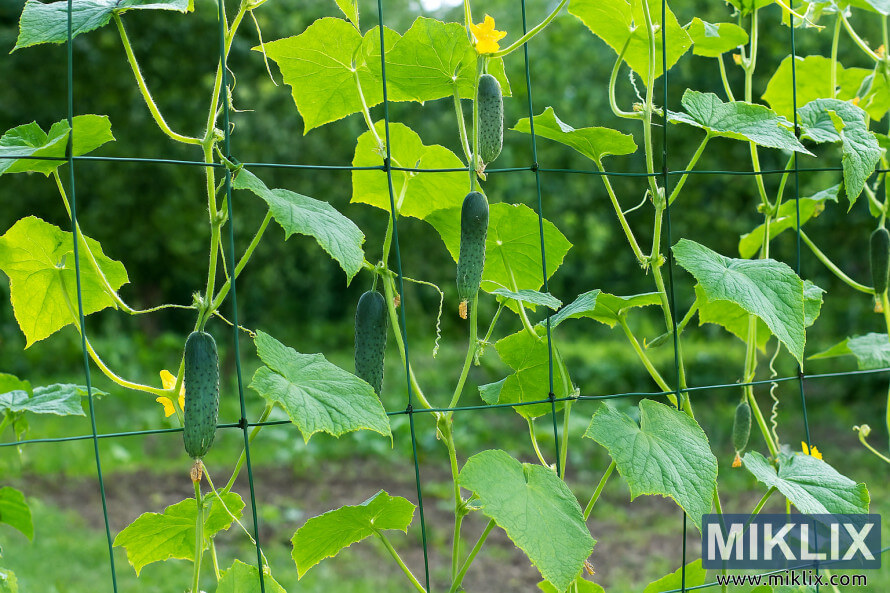
Cucumber vines thriving on a vertical trellis system
While cucumber plants can sprawl along the ground, training them to grow vertically on trellises or other support systems offers numerous benefits. Vertical growing saves space, improves air circulation, reduces disease pressure, makes harvesting easier, and produces straighter, cleaner fruits.
Trellis Options
Consider these effective trellising methods for your cucumber plants:
A-Frame Trellis
Two panels leaned together to form an A-shape. Plants grow up both sides, maximizing space. Ideal for garden rows or beds.
Fence Panel Trellis
Repurposed wire fencing or cattle panels secured to posts. Durable and can support heavy cucumber loads. Works well for long rows.
String Trellis
Vertical strings attached to a horizontal support. Inexpensive and customizable. Best for lightweight vines and protected areas.
Netting Trellis
Plastic or nylon netting stretched between supports. Easy to install and store. Good for smaller gardens and lighter cucumber varieties.
Support for Bush Varieties
Even compact bush varieties benefit from some support:
Tomato Cages: Small tomato cages provide adequate support for bush cucumber varieties
Low Fencing: 2-3 foot fencing can help keep plants upright
Stake Rings: Metal rings with stakes can contain and support bush varieties
Training Cucumber Vines
Follow these steps to properly train cucumber vines on supports:
Install your chosen support system before or shortly after planting to avoid root damage.
When vines reach 6-8 inches in length, gently guide them toward the support structure.
Cucumber plants have tendrils that will naturally grab onto supports, but initial guidance helps.
For string or netting systems, you may need to loosely tie vines to the support until tendrils take hold.
Check plants weekly and redirect any wayward vines back to the support.
For heavy fruit varieties, consider using cloth strips or plant ties to support fruit-laden branches.
Click or tap the image for more information and higher resolutions.
Common Pests and Diseases with Organic Solutions
Click or tap the image for more information and higher resolutions.
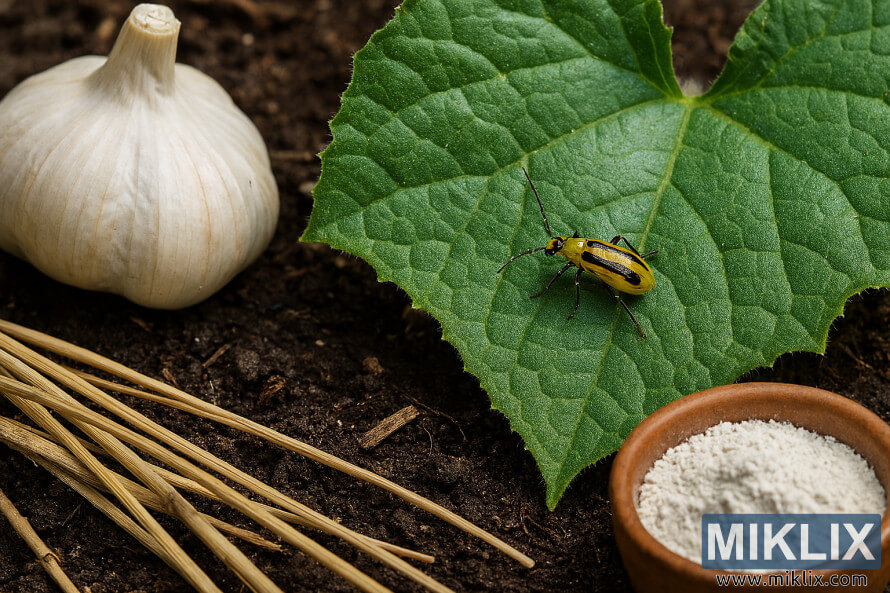
Cucumber beetle damage and organic control methods
Cucumbers can face several pest and disease challenges during the growing season. Identifying problems early and implementing organic control methods can help maintain healthy plants and abundant harvests.
Common Cucumber Pests
Cucumber Beetles
Yellow and black striped or spotted beetles that feed on leaves, stems, and flowers. Can transmit bacterial wilt.
Treatment options:
- Row covers until flowering
- Yellow sticky traps
- Neem oil spray
- Introduce beneficial insects like ladybugs
Aphids
Small green, black, or white insects clustered on undersides of leaves. Causes curled, distorted leaves and sticky residue.
Treatment options:
- Strong spray of water to dislodge
- Insecticidal soap
- Neem oil
- Ladybugs and lacewings as predators
Spider Mites
Tiny specks on leaves, fine webbing, and yellowing foliage. More common in hot, dry conditions.
Treatment options:
- Regular misting of plants
- Insecticidal soap
- Neem oil
- Predatory mites
Squash Bugs
Gray-brown, flat-backed bugs that suck plant juices. Causes wilting and yellow spots on leaves.
Treatment options:
- Hand-pick and destroy eggs and adults
- Diatomaceous earth around plants
- Trap crops like squash
- Row covers until flowering
Common Cucumber Diseases
Powdery Mildew
White powdery spots on leaves that spread to cover entire surfaces. Reduces photosynthesis and yield.
Treatment options:
- Milk spray (1:9 ratio of milk to water)
- Baking soda spray (1 tbsp per gallon of water with a few drops of soap)
- Neem oil
- Proper spacing for air circulation
Bacterial Wilt
Sudden wilting of vines that doesn't recover with watering. Transmitted by cucumber beetles.
Treatment options:
- Control cucumber beetles
- Remove and destroy infected plants
- Plant resistant varieties
- Rotate crops
Downy Mildew
Yellow angular spots on upper leaf surfaces with fuzzy gray-purple growth underneath.
- Copper fungicides (organic approved)
- Proper spacing
- Morning watering to allow leaves to dry
- Remove infected leaves
Angular Leaf Spot
Water-soaked angular spots on leaves that turn brown and may drop out, leaving holes.
Treatment options:
- Copper-based fungicides
- Avoid overhead watering
- Crop rotation
- Remove plant debris at season's end
Preventive Measures
Implement these practices to minimize pest and disease problems:
- Practice crop rotation, avoiding planting cucumbers in the same location for 3-4 years
- Choose disease-resistant varieties when available
- Use row covers until flowering to protect young plants
- Plant companion plants like marigolds, nasturtiums, and radishes to repel pests
- Maintain proper spacing for good air circulation
- Water at the base of plants, keeping foliage dry
- Remove and destroy diseased plant material promptly
- Clean garden tools between uses to prevent disease spread
Harvesting Tips and Timing Indicators
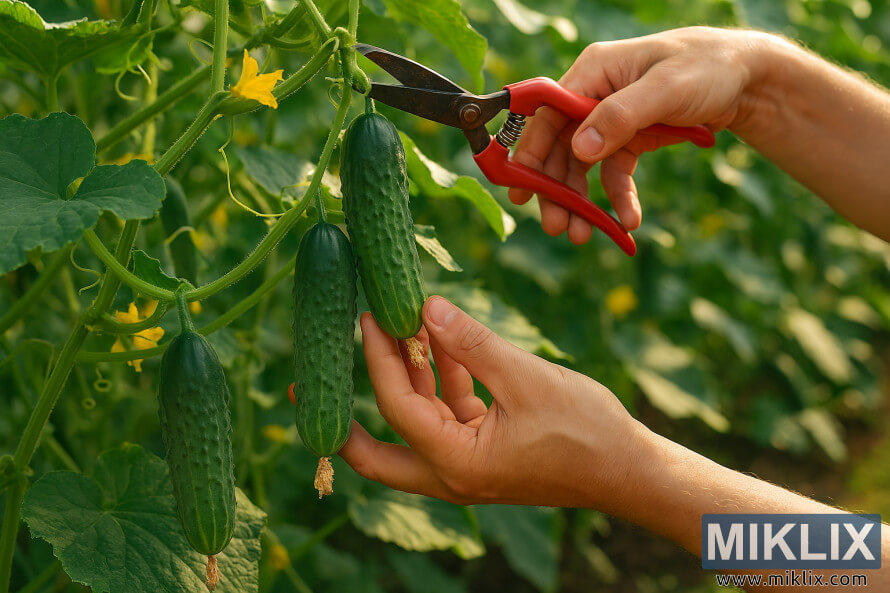
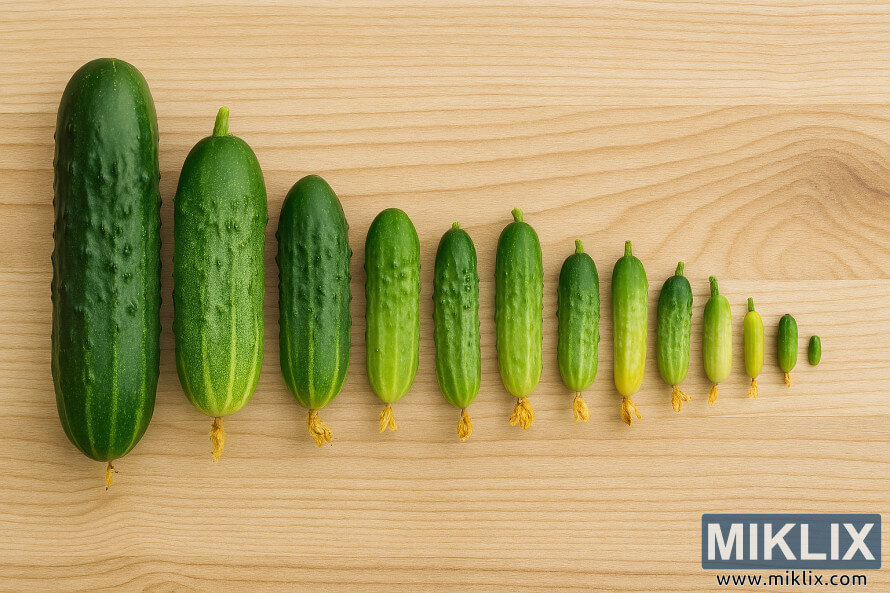
Properly harvesting cucumbers by cutting rather than pulling from the vine
Knowing when and how to harvest cucumbers is crucial for optimal flavor and continued production. Cucumbers grow quickly and should be harvested regularly to encourage the plant to produce more fruits.
When to Harvest
Harvest timing depends on the cucumber variety and intended use:
| Cucumber Type | Optimal Size | Visual Indicators | Days from Flowering |
| Slicing | 6-8 inches long | Firm, dark green, smooth skin | 10-14 days |
| Pickling (Gherkins) | 2-4 inches long | Firm, bumpy skin, no yellowing | 4-7 days |
| Burpless/English | 10-12 inches long | Slender, dark green, no bulging | 12-15 days |
| Lemon Cucumber | 2-3 inches diameter | Pale yellow color, round shape | 7-8 days |
Important: Do not allow cucumbers to over-mature on the vine. Overripe cucumbers develop seeds that harden, skin that toughens, and flesh that becomes bitter. Additionally, leaving mature cucumbers on the vine signals the plant to slow down production.
How to Harvest
Follow these techniques for proper cucumber harvesting:
Use clean, sharp scissors or pruning shears to cut the cucumber from the vine.
Leave a short stem (about 1/4 inch) attached to the cucumber.
Avoid pulling or twisting fruits off the vine, which can damage the plant.
Harvest in the morning when temperatures are cooler for the crispest cucumbers.
Handle gently to avoid bruising the delicate skin.
Check plants every 1-2 days during peak production season.
Click or tap the image for more information and higher resolutions.
Maximizing Harvest
To encourage continued production throughout the growing season:
Harvest regularly, even if you must discard or compost excess cucumbers
Keep plants well-watered, especially during fruiting
Apply a side dressing of compost mid-season
Remove any damaged or diseased fruits immediately
Consider succession planting (starting new plants every 2-3 weeks) for continuous harvest
Click or tap the image for more information and higher resolutions.
Storage and Preservation Methods
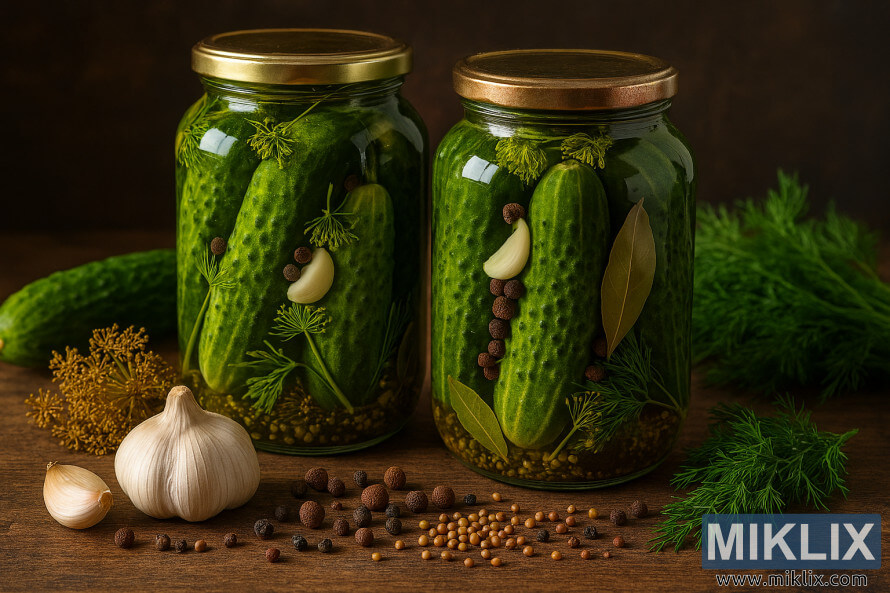
Homemade pickled cucumbers in various styles: dill, bread and butter, and spears
After harvesting your cucumbers, proper storage and preservation methods will help you enjoy your harvest for longer periods. Fresh cucumbers have a relatively short shelf life, but with the right techniques, you can extend their usefulness.
Fresh Storage
For short-term storage of fresh cucumbers:
Refrigeration: Store unwashed cucumbers in the refrigerator crisper drawer at 45-50°F (7-10°C)
Wrapping: Wrap cucumbers individually in paper towels or place in a perforated plastic bag to maintain humidity without excess moisture
Isolation: Keep cucumbers away from ethylene-producing fruits like tomatoes, bananas, and melons, which accelerate spoilage
Duration: Properly stored cucumbers will last 7-10 days in the refrigerator
Partial Use: For cut cucumbers, cover the exposed end with plastic wrap and use within 1-2 days
Pickling Methods
Pickling is the most popular way to preserve cucumbers for long-term storage:
Quick Refrigerator Pickles
No canning required; store in refrigerator for up to 2 months:
Wash and slice cucumbers (spears, chips, or whole for small pickling varieties).
Pack into clean jars with desired seasonings (dill, garlic, peppercorns, etc.).
Bring vinegar, water, salt, and sugar (if desired) to a boil.
Pour hot brine over cucumbers, leaving 1/2 inch headspace.
Seal with lids and refrigerate for at least 24 hours before eating.
Water Bath Canning
For shelf-stable pickles that last 1-2 years:
Prepare cucumbers and brine as for refrigerator pickles.
Use proper canning jars, new lids, and rings.
Process filled jars in a boiling water bath (10 minutes for pints, 15 minutes for quarts).
Remove jars and allow to cool undisturbed for 24 hours.
Check seals and store in a cool, dark place.
Freezing Cucumbers
While not ideal due to texture changes, cucumbers can be frozen for specific uses:
Cucumber Slices: Freeze in a single layer on a baking sheet, then transfer to freezer bags (best used in smoothies or cooked dishes)
Cucumber Puree: Blend cucumbers and freeze in ice cube trays for adding to smoothies or cold soups
Infused Water Cubes: Freeze cucumber slices in water in ice cube trays for flavored drinks
Dehydration
Dehydrated cucumber chips make a crunchy, healthy snack:
Slice cucumbers 1/8 to 1/4 inch thick.
Optional: Soak in salt water for 1-2 hours for extra crispness, then pat dry.
Arrange in a single layer on dehydrator trays.
Dehydrate at 135°F (57°C) for 6-8 hours until crisp.
Store in airtight containers for up to 6 months.
Click or tap the image for more information and higher resolutions.
Troubleshooting Common Growing Problems
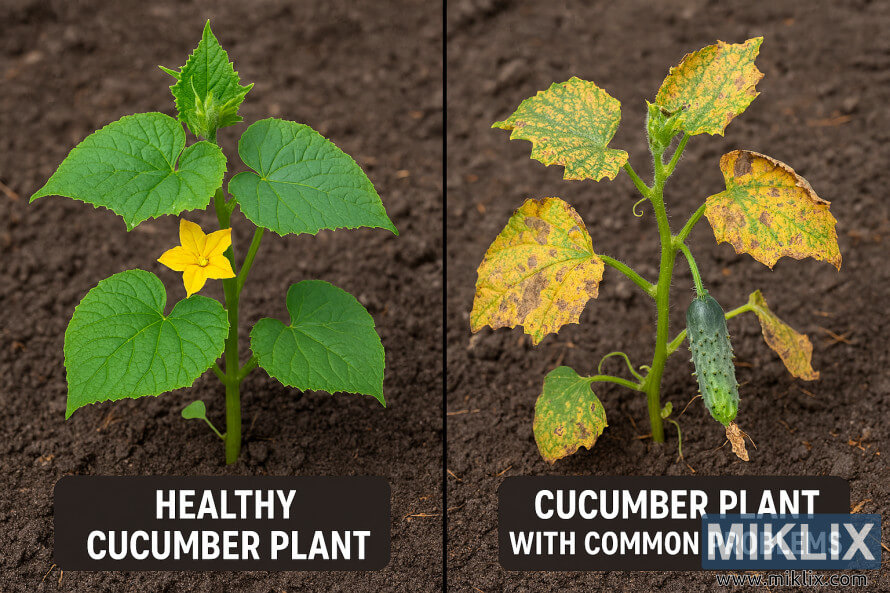
Visual comparison: healthy cucumber plant (left) vs. plant with common issues (right)
Even experienced gardeners occasionally encounter challenges when growing cucumbers. Identifying and addressing problems early can help save your crop and improve future harvests.
Why are my cucumber plants flowering but not producing fruit?
This common issue has several possible causes:
- Poor Pollination: Cucumbers require insect pollination. If pollinators are scarce, try hand-pollinating by transferring pollen from male flowers (those without a small cucumber behind them) to female flowers using a small brush.
- Temperature Extremes: Temperatures above 90°F (32°C) or below 55°F (13°C) can interfere with pollination and fruit set. Provide shade during extreme heat.
- Nitrogen Overload: Too much nitrogen fertilizer promotes lush foliage at the expense of fruit production. Switch to a lower-nitrogen, higher-phosphorus fertilizer.
- Timing: Male flowers typically appear 1-2 weeks before female flowers. Be patient and continue proper care.
Why are my cucumber fruits bitter?
Bitterness in cucumbers is caused by compounds called cucurbitacins, which increase under stress conditions:
- Water Stress: Inconsistent watering is the most common cause. Maintain even soil moisture.
- Heat Stress: Prolonged high temperatures can increase bitterness. Provide afternoon shade in hot climates.
- Variety: Some varieties are naturally more bitter than others. Try "burpless" varieties for less bitterness.
- Harvesting: Overripe cucumbers tend to be more bitter. Harvest at the appropriate size.
Note: Bitterness is usually concentrated in the stem end and skin. Peeling and removing the stem end often helps.
Why are my cucumber fruits misshapen or curved?
Several factors can cause irregular cucumber shapes:
- Poor Pollination: Incomplete pollination leads to partially developed fruits. Encourage pollinators or hand-pollinate.
- Inconsistent Watering: Fluctuations in soil moisture cause uneven growth. Water consistently.
- Nutrient Deficiencies: Particularly calcium or boron deficiencies. Consider a balanced fertilizer or soil test.
- Crowding: Cucumbers need space to develop properly. Thin plants and provide adequate spacing.
- Growing Position: Cucumbers that grow against the ground or obstacles may curve. Trellising helps produce straighter fruits.
Why are my cucumber leaves turning yellow?
Yellowing leaves (chlorosis) can indicate several issues:
- Nutrient Deficiencies: Particularly nitrogen, magnesium, or iron. Apply appropriate fertilizer based on symptoms.
- Overwatering: Soggy soil leads to root problems and yellowing leaves. Ensure proper drainage.
- Disease: Downy mildew, bacterial wilt, or cucumber mosaic virus can cause yellowing. Identify the specific disease for proper treatment.
- Pest Damage: Spider mites and aphids can cause yellowing. Check leaf undersides for pests.
- Natural Aging: Lower leaves naturally yellow as plants mature. Not a concern if only affecting older, lower leaves.
Why are my cucumber seedlings dying shortly after emergence?
Seedling failure is often due to:
- Damping Off: A fungal disease that causes stems to collapse at soil level. Prevent with proper air circulation, avoid overwatering, and use sterile seed-starting mix.
- Cold Soil/Air: Cucumbers need warm conditions to thrive. Wait until soil temperatures reach at least 65°F (18°C).
- Pest Damage: Cutworms, slugs, or cucumber beetles may attack young seedlings. Use protective collars around stems and appropriate organic controls.
- Excessive Fertilizer: Too much fertilizer can burn seedlings. Use a diluted solution for young plants.
Garden Journal Tip: Keep a garden journal to track planting dates, varieties, weather conditions, and any problems encountered. This information is invaluable for improving your cucumber growing success in future seasons.
Click or tap the image for more information and higher resolutions.
Conclusion
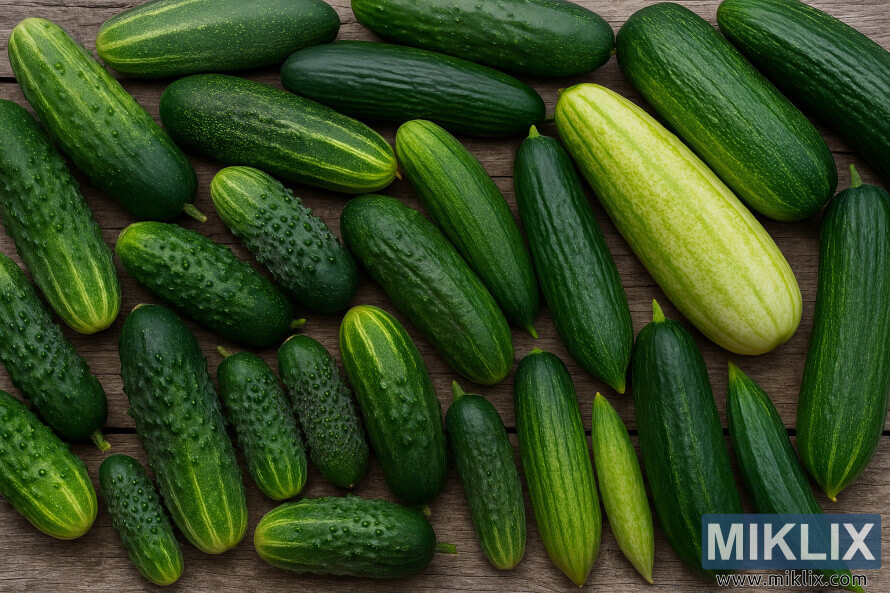
A rewarding harvest of homegrown cucumbers
Growing your own cucumbers is a rewarding experience that provides fresh, flavorful produce throughout the growing season. By following the guidelines in this comprehensive guide—from selecting the right varieties to proper planting, care, and harvesting techniques—you'll be well-equipped to grow a successful cucumber crop in your home garden.
Remember that gardening is both a science and an art. Each growing season brings new learning opportunities and chances to refine your techniques. Don't be discouraged by occasional setbacks; instead, view them as valuable lessons that will make you a more skilled gardener.
With their relatively quick growth cycle and generous yields, cucumbers are an excellent choice for both beginning and experienced gardeners. Whether you're enjoying them fresh in salads, making homemade pickles, or sharing your abundant harvest with friends and neighbors, homegrown cucumbers offer a taste of summer that simply can't be matched by store-bought varieties.
Click or tap the image for more information and higher resolutions.
Further Reading
If you enjoyed this post, you may also like these suggestions:
- Complete Guide to Growing Your Own Quince Trees
- A Complete Guide to Growing Cauliflower in Your Home Garden
- A Complete Guide to Growing Peas in Your Own Garden