
Fermenting Beer with Wyeast 1217-PC West Coast IPA Yeast
Published: December 8, 2025 at 8:03:01 PM UTC
The guide and review provides practical, hands-on guidance for fermenting with Wyeast 1217-PC West Coast IPA Yeast. It's for brewers seeking a clean, expressive base for bright American hops.
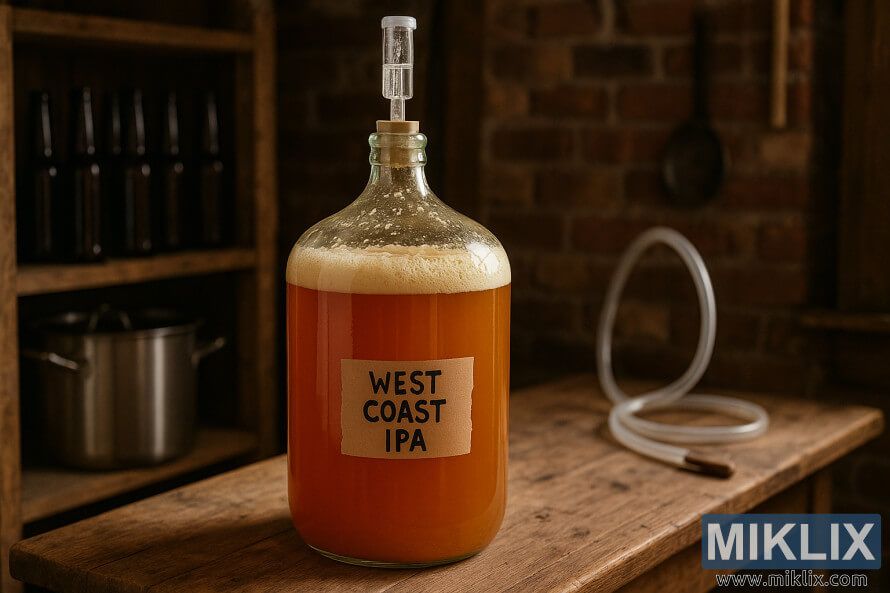
Click or tap the image for more information and higher resolutions.
Key Takeaways
- Wyeast 1217-PC West Coast IPA Yeast is prized for a clean fermentation profile that highlights hops.
- Data sources include a HomeBrewCon 2023 recipe and official Wyeast strain specs for reliability.
- Fermenting with Wyeast 1217 favors controlled temperature and proper pitching to limit ester formation.
- This Wyeast 1217 review emphasizes starter preparation and rapid krausen as common observations.
- The article will offer step-by-step practices for pitching, dry hopping, and yeast harvesting.
Why Wyeast 1217-PC West Coast IPA Yeast is a Go-To Strain for IPAs
Wyeast 1217 is a top choice for West Coast-style ales. Its thorough attenuation and reliable temperature tolerance are key. These traits make it a go-to for achieving crisp, dry finishes.
The strain's neutral profile allows hops to take center stage. This clean backdrop enhances citrus, resin, and pine notes. It prevents yeast esters from overpowering the delicate hop aromas.
- Predictable attenuation ensures the desired dryness in West Coast ales.
- Medium-high flocculation contributes to clarity and drinkability.
- Strong fermentation vigor leads to rapid activity, with many homebrewers seeing vigorous krausen within hours.
For those seeking the best yeast for IPA, Wyeast 1217 is often recommended. It's ideal for American pale ales and IPAs. It offers a balanced presence with subtle fruitiness at warmer temperatures, adaptable to various recipes.
Practicality is crucial in the brewery and at home. Wyeast 1217's consistent performance and clean flavor make it a smart choice. It's perfect for achieving hop clarity and forward aroma in a modern West Coast IPA.
Profile and Key Characteristics of the Yeast Strain
The Saccharomyces cerevisiae 1217 strain is known for its clean, neutral fermentation. It's ideal for hop-forward ales, making it a favorite for West Coast IPAs and similar styles. Brewers appreciate its consistent performance.
This strain has a typical attenuation and flocculation of 73–80% with medium-high flocculation. This balance results in a dry finish and clear beer after fermentation.
It has an alcohol tolerance near 10% ABV, suitable for most single-batch IPA recipes. The yeast characteristics enhance hop and malt flavors, avoiding strong yeast notes.
At cooler temperatures, the strain produces minimal esters, ensuring a crisp beer. Warmer temperatures introduce mild esters that complement American hops without overpowering them.
In practical use, a single 1.5L starter can rapidly produce a krausen within hours. It reaches the predicted final gravity quickly, showing good viability and consistent attenuation with a starter.
- Species: Saccharomyces cerevisiae
- Apparent attenuation and flocculation: 73–80% with medium-high settling
- Alcohol tolerance: ~10% ABV
- Flavor impact: neutral base with mild esters at warmer temps
- Shipping note: keep liquid packs cold in transit to preserve viability
Optimal Fermentation Temperature Range and Performance
The recommended fermentation temperature for Wyeast 1217 is between 62-74°F (17-23°C). This range is crucial for achieving balanced attenuation and controlled ester production. It's a sweet spot that brewers aim for.
To start, cool the wort to a low temperature. Then, aerate it and pitch the yeast at about 62°F. Next, set your cellar or controller to 64°F. Once the gravity drops to around 1.023, increase the temperature to about 70°F. This method helps avoid diacetyl and keeps fruity esters in check.
At cooler temperatures, the yeast remains neutral. This enhances hop bitterness and aroma. Brewers aiming for a clean, classic West Coast IPA flavor will find the ideal temperature in the low 60s.
Warmer temperatures introduce mild esters, adding a subtle fruitiness to the beer. This is perfect for hazier or more modern IPAs. Use the upper end of the range for a touch of yeast-derived flavor, but avoid temperatures above the 70s to maintain restraint.
Community feedback highlights the yeast's fast start when a healthy starter is used. Active fermentation can start within hours. Under optimal conditions, it can reach terminal gravity in about 48 hours. This shows the strain's vigor when kept within the best fermentation temperatures for 1217.
- Pitch: 62°F into a well-oxygenated wort.
- Initial setpoint: 64°F for active growth.
- Ramp: increase to 70°F when gravity ≈ 1.023.
- Target range: follow temperature tolerance 62-74°F for control.
Preparing and Hydrating Wyeast 1217-PC West Coast IPA Yeast
Keep liquid yeast cold during transit and storage. Use cold packs when shipping or moving cultures to preserve viability. Good liquid yeast preparation begins long before pitch day.
For higher gravity beers, consider making a starter for 1217. A 1.5 L starter can wake Wyeast 1217 quickly; many homebrewers see vigorous activity within a day. For a 5.5-gallon batch at 1.065 OG, a robust starter or a fresh propagated pack improves cell counts and helps hit a target finish near 1.010.
Follow gentle yeast handling when moving yeast from the starter to your wort. Warm the starter or slurry slowly to the intended pitch temperature to avoid thermal shock. Target 62°F for typical West Coast schedules and bring cultures up incrementally.
- Maintain the cold chain until you are ready to start your starter or rehydrate.
- Use clean, oxygenated wort or a stir plate when making a starter for 1217 to maximize growth.
- Allow yeast to rest and settle before decanting most of the starter wort for pitching.
Remember that rehydration applies mainly to dry strains. For Wyeast 1217, liquid yeast preparation with a starter gives better performance than simple rehydration. Proper yeast handling and measured starter sizes reduce lag time and support consistent attenuation and flavor development.
Pitching Rates and Aeration Best Practices
Before brewing, ensure you have the right yeast cell counts. For a 5.5-gallon batch at 1.065 OG, you might need to increase starter size or use multiple Wyeast 1217 packs. This is to hit the recommended million cells/mL/°P. Proper pitching rate Wyeast 1217 reduces lag, promotes clean ester profiles, and helps reach expected attenuation of 73–80%.
Aeration for IPA is as crucial as the pitch itself. Aerate the wort thoroughly just before pitching to supply oxygen for yeast reproduction. Aim to pitch at the target temperature after aeration—an example is aerate and pitch at 62°F with a setpoint of 64°F.
Choose an aeration method that fits your setup. Homebrewers can use vigorous shaking, rolling, or splashing for adequate dissolved oxygen. For precise control, feed pure oxygen through a diffusion stone to reach target ppm quickly. Proper oxygen for yeast eases early growth and lowers risk of H2S and diacetyl.
- Match pitching rate Wyeast 1217 to gravity and volume; boost starter size for high OG beers.
- Measure yeast cell counts when possible; err on the side of slightly higher counts for strong ales.
- Perform aeration for IPA right before pitching to maximize dissolved oxygen available to cells.
Pitch timing ties to temperature control. After aeration, pitch into wort held at your fermentation target to shorten lag and keep fermentation clean. Tight control of oxygen for yeast and yeast cell counts supports steady attenuation and minimizes off-flavors.
When starter or pack count is limited, stagger pitching or use oxygen supplementation to compensate. These steps stabilize fermentation and preserve hop clarity in modern West Coast IPA styles.
Fermentation Schedules and Temperature Ramping
Implement a detailed fermentation schedule Wyeast 1217 to manage attenuation and ester levels effectively. Begin by aerating the wort. Then, pitch at 62°F and set the fermenter controller to 64°F. This gentle start allows the yeast to settle in smoothly.
Monitor gravity levels, not days. Once gravity hits about 1.023, increase the setpoint to 70°F. This temperature ramping for IPA accelerates attenuation and aids in diacetyl removal. It also preserves the hop aroma from early fermentation.
At around 1.014, remove or harvest the yeast. Add the first dry hop charge and 13 ml ALDC. Wait until gravity nears 1.010 to introduce the second dry hop dose.
Post-second dry hop, allow 48 hours. Then, resuspend hops with CO2 or recirculate without oxygen. Perform a forced diacetyl test before pressurizing and cold crashing to 32°F. This confirms the diacetyl rest has completed its task.
- Pitch: 62°F, fermenter set to 64°F
- Step-up: raise to 70°F at 1.023 gravity
- Yeast handling: remove/harvest at ~1.014, add first dry hop
- Second dry hop: add at ~1.010, rouse 48 hours later
- Finish: forced diacetyl test, pressurize, crash to 32°F
HomeBrewCon 2023 reports highlight the rapid fermentation kinetics with a starter. Krausen can form in hours, and FG may arrive sooner than expected. Adjust the fermentation timeline based on gravity readings and yeast behavior.
The goal of this temperature ramp is to minimize diacetyl and expedite attenuation while maintaining a hop-forward profile. A well-planned fermentation schedule Wyeast 1217 with precise temperature control for IPA results in cleaner beer. It also ensures tighter control over the diacetyl rest window and overall fermentation timeline.
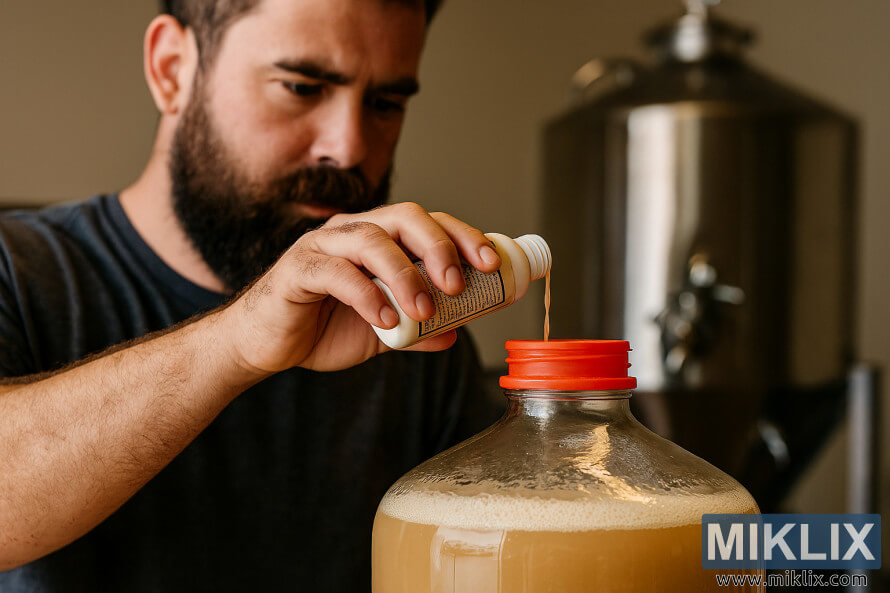
Click or tap the image for more information and higher resolutions.
Practical Example: Fermenting a Modern West Coast IPA Recipe
This HomeBrewCon IPA example is scaled to a 5.5 gallon IPA recipe. It has an original gravity of 1.065 and an estimated final gravity of 1.010. This results in about 7.4% ABV. The grain bill focuses on 11.75 lb Rahr North Star Pils, Vienna, and a touch of acidulated malt. This combination aims to hit a mash pH near 5.35.
For the boil, use 90 minutes and add 0.25 lb dextrose to enhance fermentability. Aim for a sulfate-forward water profile — Ca 50 / SO4 100 / Cl 50. This will sharpen hop bitterness and finish. Mash at 152°F for 60 minutes, then mash out at 167°F for ten minutes.
Hop timing follows the HomeBrewCon IPA schedule. Start with a first wort addition of Warrior hops. Follow with a Cascade Cryo whirlpool at 170°F, a small Dynaboost or Citra Cryo dip, and a two-step dry hop. The first charge has a short contact, while the second is a larger multi-varietal blend. Total IBUs in this West Coast IPA recipe are around 65, with an SRM near 4.4.
For yeast, a Wyeast 1217 recipe example blends well with Wyeast 1056. This combination offers extra attenuation and a clean ester profile. Hydrate and pitch according to Section 5. Aim for the pitching rates and aeration best practices outlined earlier.
Follow the fermentation schedule from Section 7 for a controlled profile. Start with cooler initial temps to preserve hop character. Then, gently ramp to finish attenuation. Perform a forced diacetyl test before adding pressure and cold-crashing to 32°F as the protocol suggests.
After fermentation, dose with Biofine if needed and carbonate to about 2.6 volumes using a carbonation stone in the fermenter. This process preserves clarity and keeps hop aromatics bright in the finished West Coast IPA recipe.
- Batch size: 5.5 gallon IPA recipe
- OG: 1.065 | Est FG: 1.010 | IBUs: 65
- Key hops: Warrior, Cascade Cryo, Citra, Mosaic, Simcoe (with cryo variants)
- Yeast note: Wyeast 1217 recipe example blended or solo works for a classic dry, crisp finish
Hop Strategy and Yeast Interaction for West Coast IPAs
Wyeast 1217’s neutral-to-mild ester profile allows hops to take center stage. Opt for bold American hops like Citra, Mosaic, and Simcoe, along with their Cryo versions. Incorporate cryo products in whirlpool or late additions to enhance aroma without adding vegetal mass.
Develop a hop plan that balances bitterness, flavor, and aroma. Begin with a first-wort addition for clean bitterness. Add Cascade Cryo in the whirlpool for mid-boil flavor. Finish with a dip-hop and a two-stage dry hop using Mosaic, Citra, Simcoe, and Cryo forms to layer intensity.
Plan fermentation to protect volatile hop oils. Keep temperatures cooler during early fermentation to preserve top notes. After gravity drops, warm up to finish attenuation and clean up fermentables while retaining hop character.
Time dry hopping to exploit yeast-hop interaction. Aggressive dry hopping while yeast is active promotes biotransformation, enhancing fruity and tropical esters. Target a portion of dry hopping around 1.014 and again near 1.010 to capture both biotransformation and peak hop aromatics when dry hopping with 1217.
- Use one early low-temp dry hop for biotransformation.
- Apply a second late dry hop for bright aroma and hop lift.
- Prefer Cryo hops for aroma saturation with less vegetal matter.
Handle hops to minimize oxidation and maximize oil extraction. After the second dry hop, resuspend hops about 48 hours later by rousing gently with CO2 or recirculating. This action mobilizes oils without introducing oxygen, improving extraction from dry hopping with 1217.
Monitor yeast activity and gravity closely. Adjust hop timing and contact length based on attenuation and sensory checks. Thoughtful hop selection and timing paired with controlled fermentation make hop strategy West Coast IPA recipes sing while leveraging yeast-hop interaction to its fullest.
Managing Fermentation by Gravity Readings and Actions
Start tracking gravity readings Wyeast 1217 from the beginning. This way, you can manage fermentation by gravity, not just by days. Take readings twice a day during active fermentation. This method helps you detect the gravity drop that signals when to adjust temperature or add hops.
When the specific gravity hits about 1.023, raise the fermenter to 70°F. This step accelerates attenuation and cleans up diacetyl. It encourages the yeast to finish stronger and prevents buttery off-flavors. Continue monitoring gravity after the temperature increase.
Remove or harvest yeast and add your first dry hop when gravity reaches roughly 1.014. This balance ensures optimal yeast activity and hop extraction without stressing the yeast too much. A second dry hop can be added when gravity falls to near 1.010 for a layered hop aroma.
Plan based on target attenuation. For instance, a beer with an OG of 1.065 and expected attenuation of 73–80% should aim for a FG around 1.010–1.014. The recipe example here targets 1.010 as the practical finish.
- Raise to 70°F at 1.023 to speed cleanup.
- First dry hop and yeast removal at ~1.014.
- Second dry hop at ~1.010.
Community brewers report that some batches hit 1.014 within 48 hours and tasted very clean straight from the fermenter. This feedback highlights the importance of managing fermentation by gravity and acting swiftly when targets are met.
Perform a forced diacetyl test before cold crashing to confirm VDK removal. Do not cold crash until diacetyl is acceptably low. Crashing too early can trap buttery flavors in the finished beer.
Keep a simple log of time, temperature, and readings. This record makes it easier to repeat successes with Wyeast 1217 and decide when to dry hop by gravity on future brews.
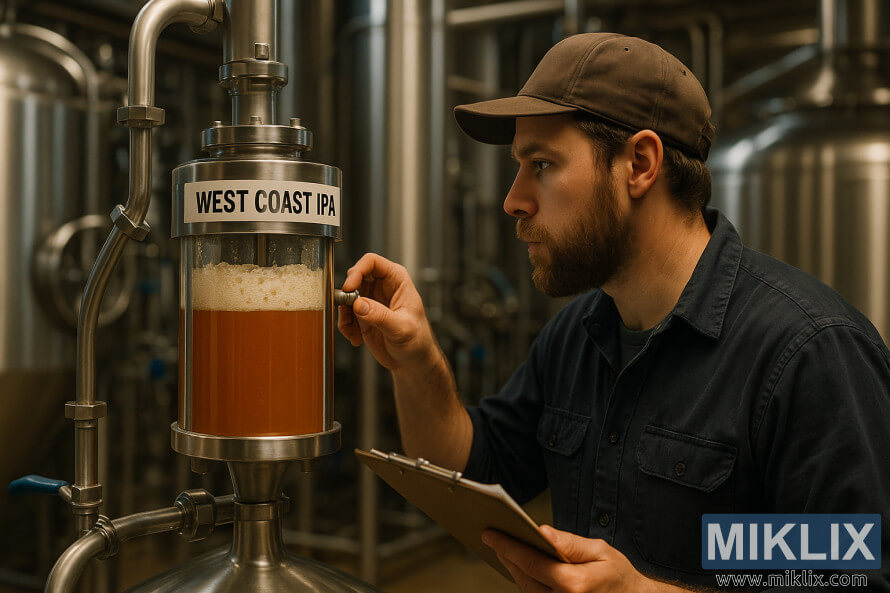
Click or tap the image for more information and higher resolutions.
Dry Hopping Workflow and Hop Contact Timing
Implement a two-stage dry hopping plan with 1217 to achieve a balance of fresh citrus and complex biotransformation. Begin the first addition when the gravity drops to around 1.014. Add 1.75 oz of Cascade Cryo and let it sit for 48 hours. This short contact time helps preserve the bright hop aromas and prevents vegetal flavors.
Once the gravity trends to about 1.010, proceed with the second addition. Incorporate 1.75 oz each of Mosaic, Mosaic Cryo, Citra, Citra Cryo, Simcoe, and Simcoe Cryo. This stage should last three days to maintain the clean, punchy profile characteristic of West Coast IPAs.
Timing is crucial for biotransformation. Plan the dry hop timing for West Coast IPA to overlap with the end of active fermentation. Introducing hops while yeast is still active converts hop precursors into new aroma compounds. This process enhances resinous, tropical, and floral notes.
Control the contact time for dry hops to prevent over-extraction. Aim for 2–3 days per addition. Longer contact times can lead to increased tannin and vegetal uptake. Shorter windows are essential to preserve volatile oils, which are key to a West Coast IPA's impact.
When resuspending hops, wait roughly 48 hours after the second dry hop. Use CO2 or gentle recirculation to rouse the hops. Avoid oxygen pickup by purging vessels and using closed transfer methods. Proper handling minimizes oxidation risk and preserves hop clarity.
Utilize an ordered checklist to execute the workflow efficiently:
- Monitor gravity toward 1.014 for Dry Hop #1.
- Add Cascade Cryo at 1.014 and hold 48 hours.
- Watch gravity to reach ~1.010 for Dry Hop #2.
- Add multiple varietals and hold three days.
- Rouse hops 48 hours after Dry Hop #2 using CO2 or closed recirculation.
Ensure oxygen is excluded during all transfers. Purge dry hop containers with CO2 and handle hop bags or screens inside keg or fermenter lids. These precautions help maintain hop intensity and preserve the clean yeast character that makes Wyeast 1217 ideal for West Coast IPAs.
Yeast Harvesting, Reusing, and Viability Considerations
Timing is crucial when harvesting Wyeast 1217. Aim to pull a slurry around gravity 1.014. This captures healthy cells before hop contact or late flocculation diminishes viability. Such timing ensures a cleaner, more active cake for collection.
Employ sanitary tools and maintain a cold chain to safeguard liquid cultures. Wyeast 1217 is particularly sensitive to temperature fluctuations and contamination risks escalate with careless handling. Always test a small sample for contamination before reusing yeast 1217 in a new batch.
Store harvested yeast in cold conditions and pitch it promptly for optimal results. Short-term refrigeration is key to preserving viability. For high-gravity beers, creating a starter from the harvested slurry can significantly boost cell counts, ensuring vigorous fermentation.
Flocculation behavior is essential for efficient collection. Medium to high flocculation allows for a clean cake, making harvesting from the fermenter more predictable and less messy.
- Best practice: remove yeast before heavy dry hopping to limit hop oil contact with the cake.
- If you plan to reuse yeast 1217 multiple times, monitor attenuation shifts and bacterial signs between generations.
- When in doubt, make a fresh starter rather than relying on a low-count slurry.
Monitor viability through simple counts or microscopy if accessible. Cell counts help determine the amount of slurry to pitch or the size of the starter needed. Accurate assessment is vital for maintaining fermentation schedules and beer quality.
Adhere to clean techniques and prompt handling to extend the life of harvested Wyeast 1217. Thoughtful timing, cold storage, and periodic cell mass rebuilding ensure high viability. This makes harvesting yeast from fermenter a reliable part of your brewing routine.
Carbonation, Finings, and Cold Crash Procedures
Begin with a forced diacetyl test to confirm low VDK before any temperature shift. Once the test shows no buttery off-flavors, pressurize the headspace to minimize oxygen pickup. This pressure helps protect the beer during the next steps.
- Drop the fermenter to 32°F for a controlled cold crash Wyeast 1217 routine. Cold crashing at this temperature encourages yeast and hop particulates to settle fast.
- After the crash, dose finings for clarity as directed by the manufacturer. Use measured Biofine usage to speed clearing without over-conditioning the beer.
- Follow the product dosing instructions closely. Excessive finings can strip delicate hop aroma or cause over-clarification.
For carbonation in-fermenter, aim for about 2.6 volumes of CO2 in the example recipe. Use a carbonation stone in the fermentation vessel to dissolve CO2 efficiently. In-fermenter carbonation preserves CO2 and lowers the risk of oxidation compared to transfer-based methods.
- Force diacetyl test → confirm low VDK.
- Pressurize headspace to protect against oxygen.
- Cold crash to 32°F to precipitate solids.
- Add finings for clarity, following Biofine usage directions.
- Carbonate in-fermenter to target volumes with a carb stone.
Monitor pressure and temperature during carbonation to avoid over-pressurizing the vessel. Gentle handling preserves the crisp profile typical of beers fermented with Wyeast 1217. It helps maintain clarity and aroma.
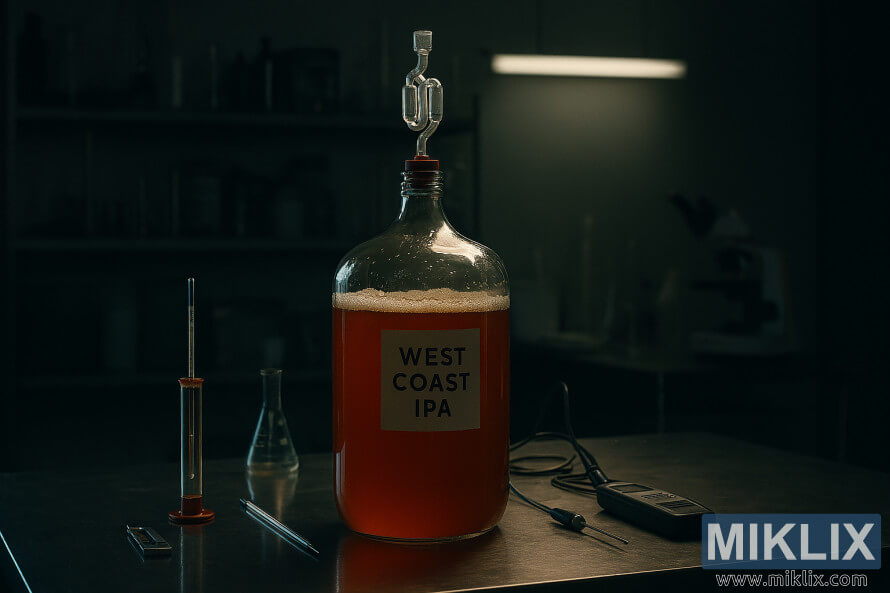
Click or tap the image for more information and higher resolutions.
Troubleshooting Common Fermentation Issues with 1217
Slow or stalled fermentations with Wyeast 1217 often trace back to cell count or oxygen. First, check your pitching rate. Consider making a starter or oxygenating the wort to revive fermentation.
Temperature is crucial. Maintain fermentation between 62–74°F and adhere to your ramp schedule. If gravity remains stagnant, gradually increase the temperature towards the middle of the range. This can encourage yeast to continue fermentation.
Off-flavors 1217, such as unwanted buttery notes, can occur. Perform a forced diacetyl test before making any decisions based on taste. If diacetyl is present, raise the fermentation temperature to around 70°F for a couple of days. This helps the yeast to clean up the compound.
High ester levels often result from fermenting at the top of the range. To achieve a cleaner profile, ferment at mid-60s. This is ideal when your recipe calls for subtle esters rather than fruity character.
- Contamination risks increase when harvesting and reusing yeast. Use sanitary techniques and fresh cold packs during transit for liquid cultures.
- Liquid yeast strains handle stress poorly after rough storage. If cells appear sluggish, create a healthy starter to boost viability.
- Rapid, vigorous fermentations are normal with a strong starter. Monitor krausen height and ensure sufficient headspace or use a blowoff tube to prevent mess.
Keep a daily log of gravity and temperatures. This log is invaluable for diagnosing problems and finding solutions if fermentation stalls. By combining proper diacetyl handling with correct pitching and aeration, you can minimize off-flavors 1217 and keep your brews on track.
HomebrewCon Example and Community Results
At San Diego HomeBrewCon 2023, Denny, Drew, and Kelsey McNair showcased a HomeBrewCon IPA. They used ingredients from BSG Handcraft, Yakima Chief Hops, and Wyeast Laboratories. The team combined Wyeast 1217-PC West Coast IPA with Wyeast 1056 for fermentation management.
A community report detailed a brewing contest example. One homebrewer started with a 1.5L starter of 1217 and saw a two-inch krausen in six hours. By midnight, the airlock was active, and gravity dropped to 1.014 after 48 hours, aligning with BeerSmith predictions.
These Wyeast 1217 community results highlight rapid activity and consistent attenuation with proper propagation. This predictability is crucial for tight schedules at festivals and competitions. Brewers using this strain reported clean hop expression and reliable ferment times for the event brew.
Event brewers planning a brewing contest example can use these observations to set pitching rates and timing. Fast-start behavior reduces risk when transport or mash windows are short. Community notes from San Diego HomeBrewCon 2023 make 1217 a practical choice for time-sensitive recipes.
Brewers should record starter size, pitch timing, and gravity readings to compare against community reports. Wyeast 1217 community results become more useful with consistent data. This shared reporting helps other brewers reproduce the HomeBrewCon IPA outcomes at home or in competition.
Comparisons to Other Ale Strains and When to Choose 1217
Brewers often compare ale strains, pitting Wyeast 1217 against classics like Wyeast 1056, White Labs WLP001, and SafAle US-05. These strains all offer a clean, neutral base that lets hops shine. The subtle variations in attenuation, flocculation, and dryness are crucial.
1217 vs 1056 reveals similarities in cleanliness and predictability. Wyeast 1217 tends towards medium-high flocculation and a reliable 73–80% attenuation range. In contrast, Wyeast 1056 and US-05 offer a slightly more neutral mouthfeel and ester profile. HomeBrewCon attendees have mixed 1217 with 1056 to achieve a balance between hop lift and body.
Opt for Wyeast 1217 for a drier finish that accentuates bitterness and hop aroma. It excels in pale ales, West Coast IPAs, and red ales. Its predictable attenuation and medium-high flocculation ensure clarity without sacrificing hop character.
For extremely neutral ale yeast comparisons, US-05 or 1056 are ideal. These strains are perfect when minimal ester expression is required or when aiming for an ultra-clean profile.
- When to choose Wyeast 1217: dry, crisp finish; medium-high flocculation; tolerance for stronger IPAs up to about 10% ABV.
- When to choose other strains: opt for 1056 or US-05 for slightly different neutral ester balance; select low-flocculating, ester-forward strains for hazy or New England styles.
To effectively compare ale strains, conduct side-by-side ferments with identical wort, pitching rates, and temperatures. This method highlights the practical differences in attenuation, flocculation, and hop showcase. Use these insights to decide if Wyeast 1217 is right for your next West Coast-style project.
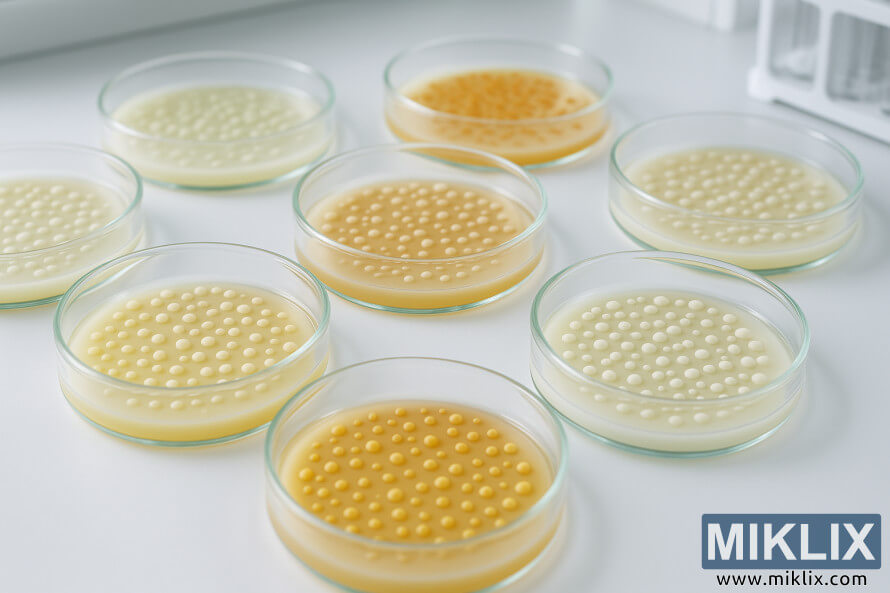
Click or tap the image for more information and higher resolutions.
Conclusion
Wyeast 1217 summary: This strain excels in hop-forward American ales, offering reliable attenuation of 73–80% with medium-high flocculation. It's perfect for brewers aiming at a clean, drinkable West Coast IPA. Its neutral-to-slightly-ester profile provides a strong canvas for modern hop varieties. Community results from events like HomebrewCon 2023 confirm its consistent performance with proper handling.
Best uses for 1217 include single- and double-dry-hopped West Coast and American IPAs. Clarity and hop expression are key. Practical takeaways include protecting the cold chain in shipping, making a starter for high-gravity batches, and aerating thoroughly. Pitch in the low-to-mid 60s F. Use gravity-based temperature ramping to finish attenuation and clear diacetyl.
West Coast IPA fermentation takeaways highlight the importance of process over tricks. Execute a two-stage short-contact dry-hop schedule. Harvest yeast before extended hop contact if reusing it. Cold crash plus fine before in-fermenter carbonation for best clarity. In short, 1217 rewards careful preparation with predictable, vigorous fermentations that let hops lead the beer.
Further Reading
If you enjoyed this post, you may also like these suggestions:
- Fermenting Beer with White Labs WLP850 Copenhagen Lager Yeast
- Fermenting Beer with White Labs WLP028 Edinburgh/Scottish Ale Yeast
- Fermenting Beer with Wyeast 3209-PC Oud Bruin Ale Yeast Blend