
How to Grow Arugula: A Complete Guide for Home Gardeners
Published: December 19, 2025 at 12:26:55 AM UTC
Arugula (also known as rocket) is one of the easiest and most rewarding leafy greens to grow in your home garden. With its distinctive peppery flavor and impressive nutritional profile, this fast-growing green can transform your salads, sandwiches, and cooked dishes.
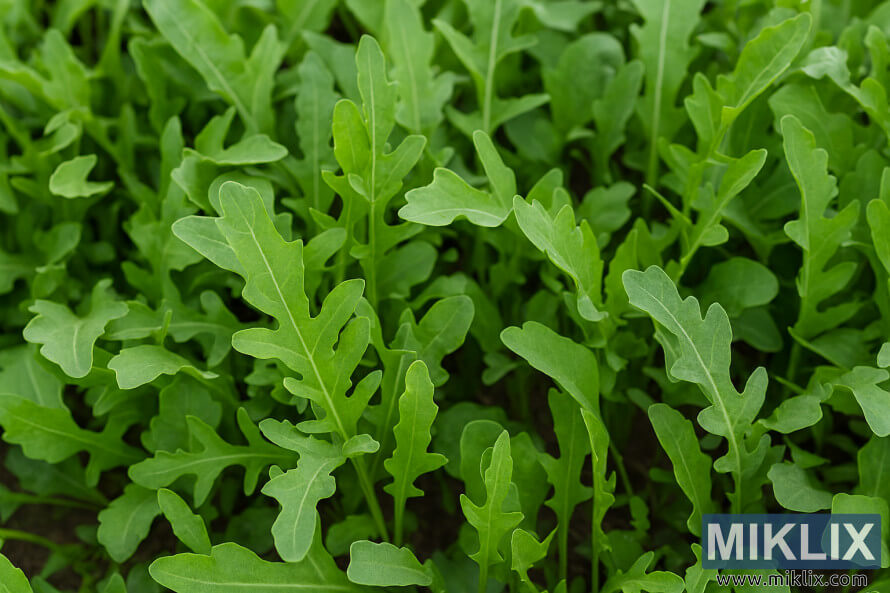
Click or tap the image for more information and higher resolutions.
Whether you're a beginner or experienced gardener, this comprehensive guide will walk you through everything you need to know about growing arugula successfully from seed to harvest.
What is Arugula?
Arugula (Eruca vesicaria) is a leafy green vegetable belonging to the Brassicaceae family, which includes other familiar garden plants like cabbage, kale, and broccoli. Native to the Mediterranean region, arugula has been cultivated for centuries for both its culinary uses and medicinal properties.
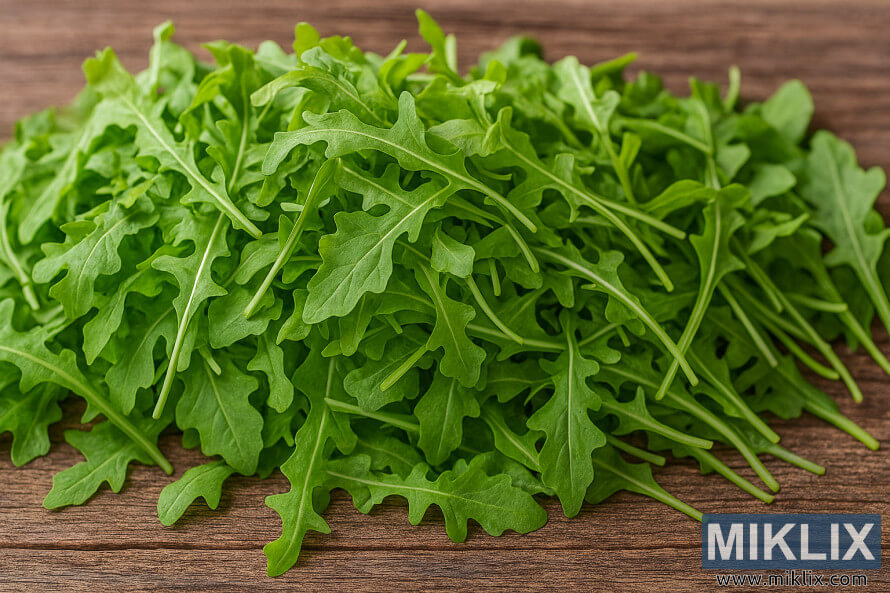
What makes arugula special is its distinctive flavor profile – a peppery, slightly nutty taste that adds character to any dish. The leaves are lobed, tender, and can be harvested when young for milder flavor or allowed to mature for a more robust taste.
Benefits of Growing Your Own Arugula
- Extremely fast growing – harvest in as little as 30 days
- Space-efficient – can be grown in beds, containers, or pots
- Cost-effective – one packet of seeds yields multiple harvests
- Nutritious – rich in vitamins A, K, and C, plus calcium and potassium
- Extended harvest – cut-and-come-again growing style
- Versatile in the kitchen – use in salads, sandwiches, pasta, and more
- Adaptable to different growing conditions
- Early spring or fall crop – thrives in cooler weather
- Low maintenance – minimal pest and disease issues
- Great companion plant in vegetable gardens
Ideal Growing Conditions for Arugula
Understanding the optimal growing conditions for arugula will set you up for success. While arugula is quite adaptable and forgiving, providing the right environment will ensure the best flavor and yield.
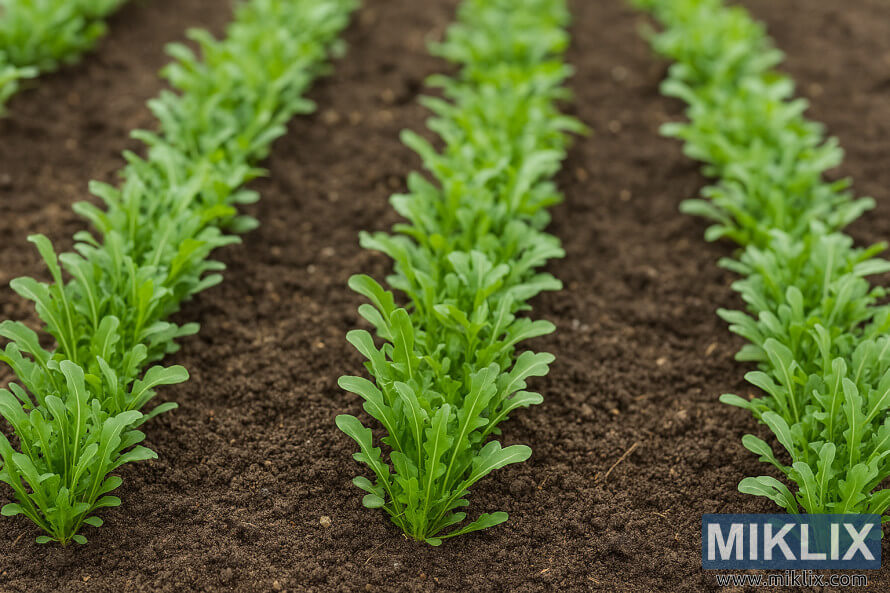
Click or tap the image for more information and higher resolutions.
Light & Temperature Requirements
Arugula grows best in full sun to partial shade, requiring at least 4-6 hours of direct sunlight daily. In warmer climates, providing afternoon shade will help prevent the plants from bolting (going to seed) too quickly.
As a cool-season crop, arugula thrives in temperatures between 45-65°F (7-18°C). It can tolerate light frost but will bolt and develop a stronger, more bitter flavor in hot weather above 80°F (27°C).
Pro Tip: In hot climates, grow arugula during fall, winter, and early spring. In cooler regions, you can grow it throughout summer with some afternoon shade protection.
Soil Requirements
Arugula prefers well-draining, loamy soil rich in organic matter with a pH between 6.0-7.0 (slightly acidic to neutral). While it can adapt to various soil types, ensuring good drainage is essential to prevent root rot.
Before planting, incorporate compost or aged manure into your soil to improve its structure and fertility. This will provide the nutrients arugula needs for healthy leaf production without requiring much additional fertilization.
Water & Humidity Needs
Consistent moisture is key for growing tender, flavorful arugula leaves. The soil should be kept evenly moist but not waterlogged. Aim to provide about 1-2 inches of water per week, adjusting based on your climate and soil conditions.
Water at the base of plants rather than overhead to reduce the risk of disease. A layer of light mulch can help retain soil moisture and suppress weeds.
How to Plant Arugula
Arugula is one of the easiest vegetables to grow from seed, making it perfect for beginner gardeners. Follow these simple steps to get your arugula garden started.
When to Plant Arugula
Timing is important for a successful arugula crop. As a cool-season vegetable, arugula grows best during spring and fall in most regions.
| Climate | Spring Planting | Fall Planting | Winter Growing |
| Cold (Zones 3-5) | 2-4 weeks before last frost | 6-8 weeks before first frost | Possible with protection |
| Moderate (Zones 6-7) | 3-5 weeks before last frost | 8-10 weeks before first frost | Yes, with minimal protection |
| Warm (Zones 8-10) | February-March | September-October | Yes, often without protection |
Planting Methods
Arugula is best grown directly from seed in your garden, as it has a delicate root system that doesn't transplant well. Here's how to plant it properly:
- Prepare your soil by removing weeds and rocks, then incorporate compost.
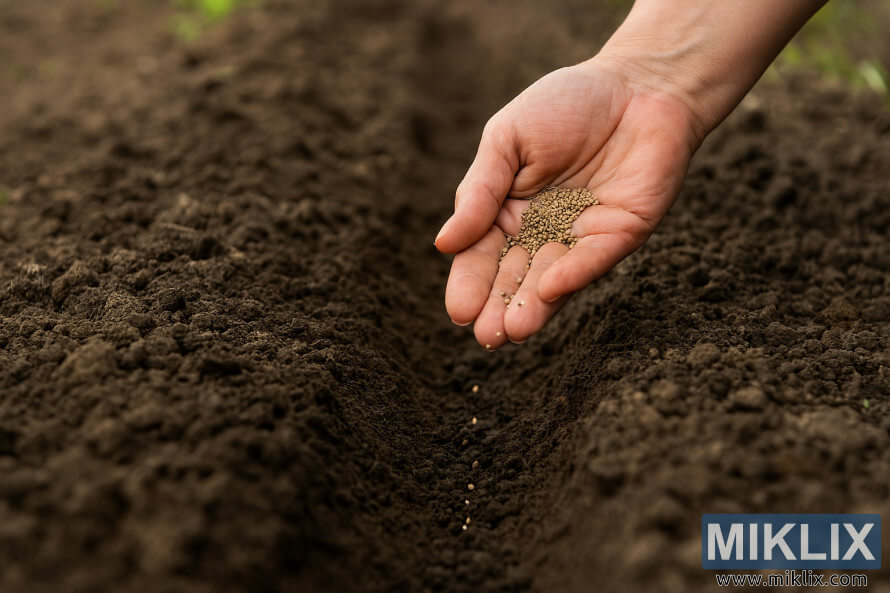
- Create shallow furrows about ¼ inch deep, spaced 6 inches apart.
- Sow seeds thinly along the furrows, about 1 inch apart.
- Cover lightly with soil – arugula seeds need light to germinate, so don't bury them too deep.
- Water gently using a fine spray to avoid displacing the tiny seeds.
- Keep the soil consistently moist until germination, which typically occurs in 5-7 days.
Click or tap the image for more information and higher resolutions.
Spacing and Container Growing
For garden beds, thin seedlings to 3-4 inches apart once they develop their first true leaves. If you're growing arugula for baby greens, you can space them more closely (1-2 inches).
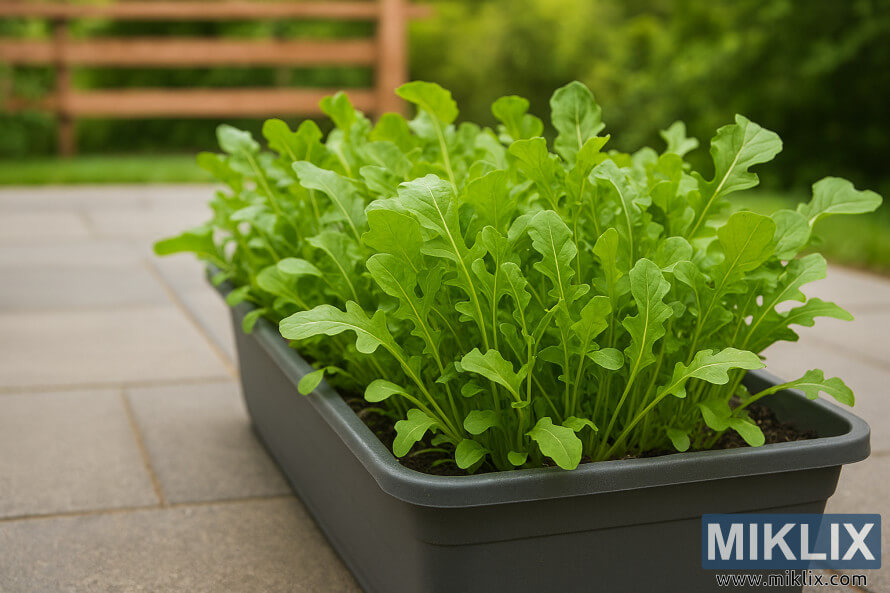
Arugula grows excellently in containers, making it perfect for patios, balconies, or small spaces:
- Choose a container at least 6 inches deep with drainage holes
- Fill with high-quality potting mix enriched with compost
- Sow seeds ¼ inch deep and 1 inch apart
- Thin to 3 inches apart or harvest every other plant as they grow
Click or tap the image for more information and higher resolutions.
Caring for Your Arugula Plants
Once your arugula seedlings are established, they require minimal maintenance. Following these care guidelines will help ensure a bountiful harvest of flavorful leaves.
Watering Schedule
Consistent moisture is crucial for growing tender, flavorful arugula. Water when the top inch of soil feels dry, aiming to keep the soil evenly moist but not waterlogged. In hot weather, you may need to water daily, while cooler conditions might require watering just 2-3 times per week.
Water at the base of plants rather than overhead to reduce disease risk. Morning watering is ideal, giving leaves time to dry before evening.
Fertilization Needs
Arugula is not a heavy feeder, especially if you've prepared your soil with compost before planting. For extended harvests, you can apply a balanced, water-soluble fertilizer diluted to half-strength every 3-4 weeks.
Alternatively, a light side-dressing of compost midway through the growing season can provide the nutrients needed for continued leaf production.
Weed Control & Mulching
Keep the area around your arugula plants free from weeds, which compete for nutrients and water. Hand pull weeds carefully to avoid disturbing arugula's shallow roots.
A thin layer of organic mulch (such as straw, dried grass clippings, or leaf mold) can help suppress weeds, retain soil moisture, and regulate soil temperature. Keep the mulch away from the plant stems to prevent rot.
Succession Planting for Continuous Harvest
For a continuous supply of fresh arugula throughout the growing season, sow new seeds every 2-3 weeks. This succession planting ensures you'll always have young, tender leaves available as older plants begin to bolt or become too strong-flavored.
Temperature Management: In hot weather, provide shade cloth or plant arugula in areas that receive afternoon shade. In cold weather, protect plants with row covers or cold frames to extend the growing season.
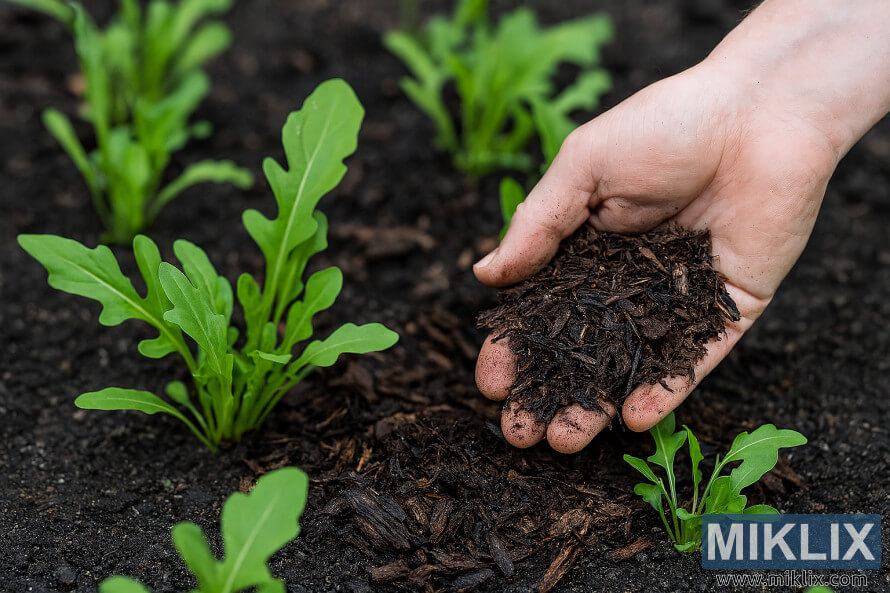
Click or tap the image for more information and higher resolutions.
Managing Pests and Diseases
While arugula is generally less susceptible to pests and diseases than many other vegetables, it can still face some challenges. Being aware of potential issues and addressing them promptly will help ensure a healthy crop.
Common Pests
The most common pests that affect arugula include:
Flea Beetles
These tiny black beetles create small holes in leaves. They're most active during warm weather and can significantly damage young plants.
Organic solutions: Row covers, diatomaceous earth, neem oil spray, or companion planting with mint or thyme.
Aphids
Small, soft-bodied insects that cluster on the undersides of leaves and stems, causing distortion and weakening plants.
Organic solutions: Strong water spray to dislodge, insecticidal soap, introducing ladybugs, or neem oil applications.
Cabbage Loopers
Green caterpillars that create irregular holes in leaves. They're the larvae of small white moths.
Organic solutions: Hand-picking, Bacillus thuringiensis (Bt) spray, or row covers to prevent egg-laying.
Slugs and Snails
These pests are particularly problematic in damp conditions and leave behind slime trails and irregular holes in leaves.
Organic solutions: Beer traps, copper tape barriers, diatomaceous earth, or hand-picking at night.
Common Diseases
Arugula can be affected by several diseases, particularly in humid conditions or with poor air circulation:
- Downy Mildew: Causes yellow patches on leaf tops and gray fuzzy growth underneath. Prevent with good air circulation, avoiding overhead watering, and fungicidal sprays if necessary.
- Damping Off: Causes seedlings to collapse at soil level. Prevent with sterile soil, proper spacing, and avoiding overwatering.
- Root Rot: Causes wilting despite moist soil. Prevent with well-draining soil and avoiding overwatering.
Prevention is Key: Many pest and disease issues can be prevented with proper spacing, good air circulation, crop rotation, and maintaining healthy soil. Inspect your plants regularly to catch problems early.
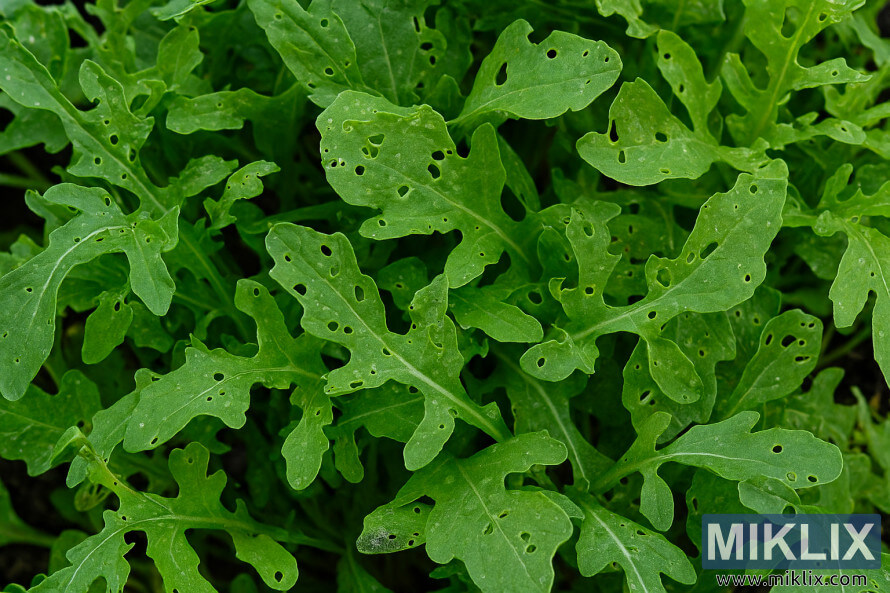
Click or tap the image for more information and higher resolutions.
Harvesting and Storing Arugula
One of the joys of growing arugula is how quickly you can begin harvesting. With proper techniques, you can enjoy multiple harvests from the same plants.
Harvest outer leaves while leaving the center growth point intact for continued production
When to Harvest
Arugula grows quickly and can be harvested at different stages depending on your preference:
- Baby Greens: Harvest when leaves are 2-3 inches long (about 3-4 weeks after planting) for the mildest flavor.
- Full-Size Leaves: Harvest when leaves are 4-6 inches long (about 5-6 weeks after planting) for more robust flavor.
- Mature Plants: Leaves can become increasingly peppery and slightly bitter as plants mature, which some culinary enthusiasts prefer.
For the best flavor, harvest arugula in the morning when temperatures are cool and leaves are crisp. Avoid harvesting during the heat of the day when leaves may be wilted.
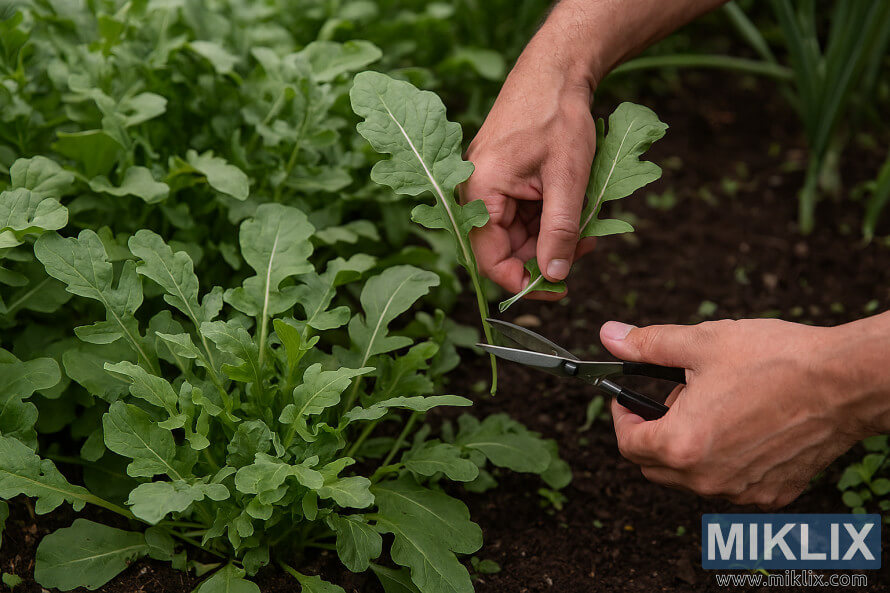
Click or tap the image for more information and higher resolutions.
Harvesting Techniques
There are two main methods for harvesting arugula:
Cut-and-Come-Again Method
This method allows for multiple harvests from the same plants:
- Using clean scissors or garden shears, cut outer leaves about 1 inch above the soil line
- Leave the center growth point intact
- Plants will regrow new leaves for additional harvests
- Repeat every 1-2 weeks as new leaves develop
Whole Plant Harvest
If you prefer to harvest entire plants at once:
- Pull the entire plant from the soil or cut at the base
- Best used when plants are beginning to bolt or for final harvest
- Replant the area with new seeds for succession planting
- Ensures you get all usable leaves before quality declines
Storing Fresh Arugula
To keep your harvested arugula fresh and flavorful:
- Rinse leaves gently in cool water to remove soil and insects
- Spin dry or pat gently with clean kitchen towels
- Store in a perforated plastic bag or container lined with paper towels
- Refrigerate at 32-36°F (0-2°C) for optimal freshness
- Use within 5-7 days for best flavor and texture
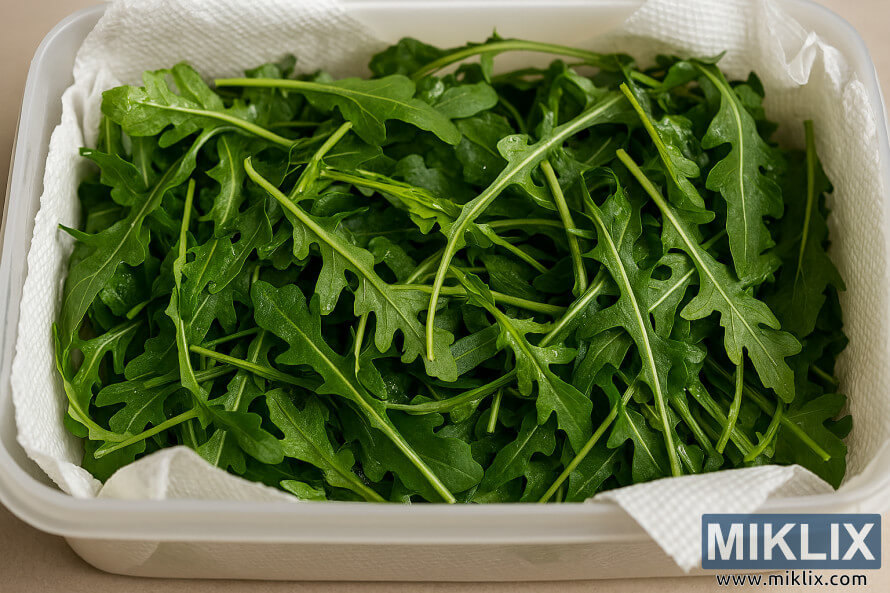
Click or tap the image for more information and higher resolutions.
Troubleshooting Common Arugula Growing Problems
Even experienced gardeners occasionally encounter challenges when growing arugula. Here are solutions to the most common problems:
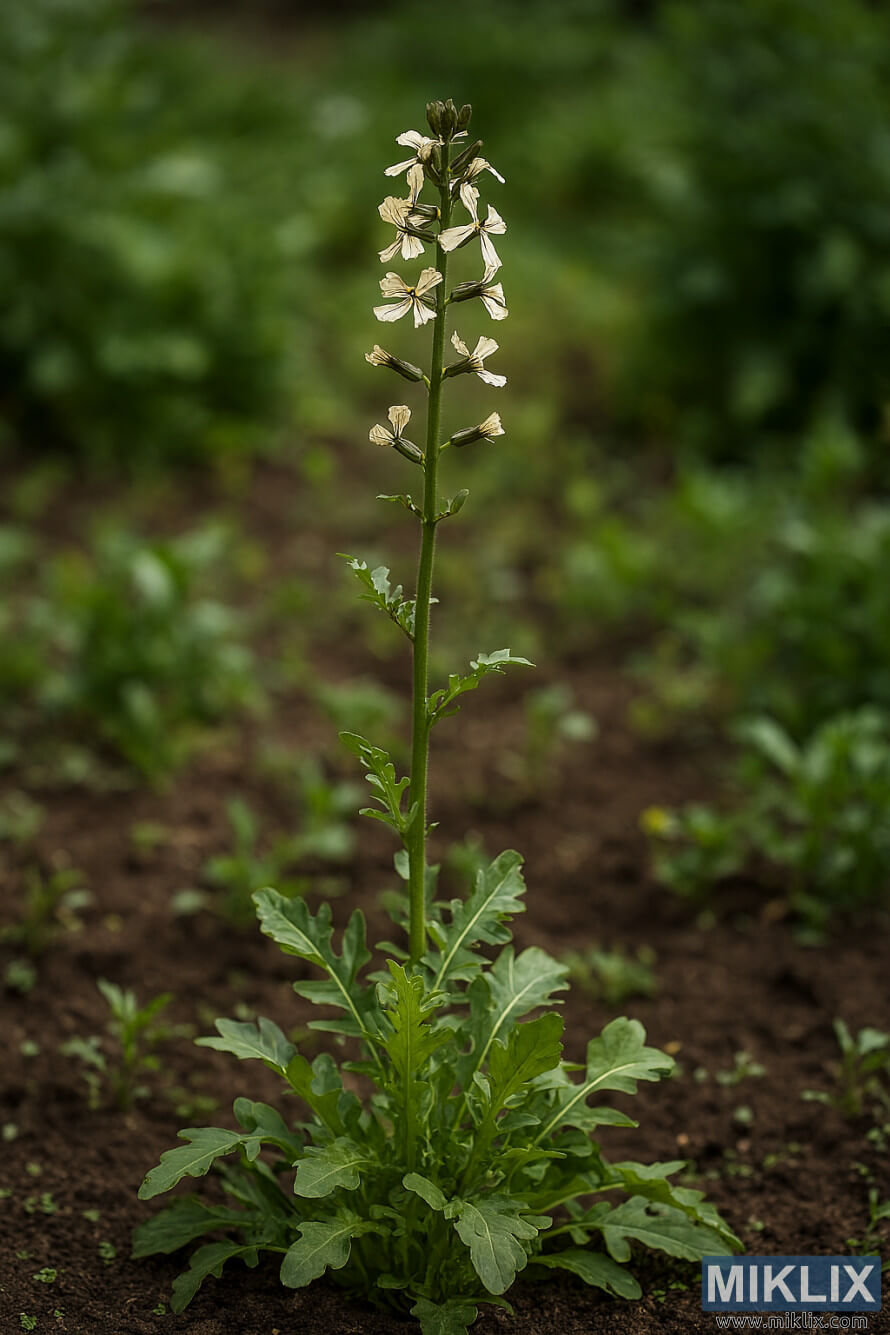
Bolting arugula with flowering stem - harvest quickly or save for seeds
Why is my arugula bolting (flowering) too quickly?
Bolting is triggered primarily by heat and long daylight hours. To prevent early bolting:
- Plant during cooler seasons (early spring or fall)
- Provide afternoon shade in warmer weather
- Ensure consistent watering
- Harvest regularly to encourage leaf production
- Use bolt-resistant varieties in warmer climates
Once arugula starts to bolt, the leaves typically become more bitter. Harvest remaining leaves promptly or allow plants to flower for beneficial insects and seed collection.
Why are my arugula leaves extremely bitter?
Excessive bitterness can be caused by:
- Heat stress – arugula becomes more bitter in hot weather
- Age – older leaves are naturally more peppery
- Water stress – inconsistent watering intensifies flavor
- Beginning to bolt – even before visible flowering
Solutions include harvesting younger leaves, ensuring consistent watering, planting in cooler seasons, and selecting milder varieties if you prefer less pungent flavor.
Why are my arugula seedlings failing to thrive?
Poor seedling development can result from:
- Improper planting depth – seeds planted too deep
- Soil compaction – preventing root development
- Inadequate moisture – especially critical during germination
- Extreme temperatures – too hot or cold for optimal growth
- Damping off disease – fungal issue causing seedling collapse
Ensure seeds are planted shallowly (¼ inch), soil is loose and well-draining, moisture is consistent, and temperatures are moderate for best results.
Why do my arugula leaves have yellow or brown spots?
Discoloration can indicate:
- Nutrient deficiencies – particularly nitrogen
- Fungal diseases – such as downy mildew
- Sunscald – from intense direct sunlight
- Water stress – either too much or too little
Address by ensuring balanced soil fertility, improving air circulation, providing appropriate light conditions, and maintaining consistent moisture levels.
Click or tap the image for more information and higher resolutions.
Culinary Uses for Fresh Arugula
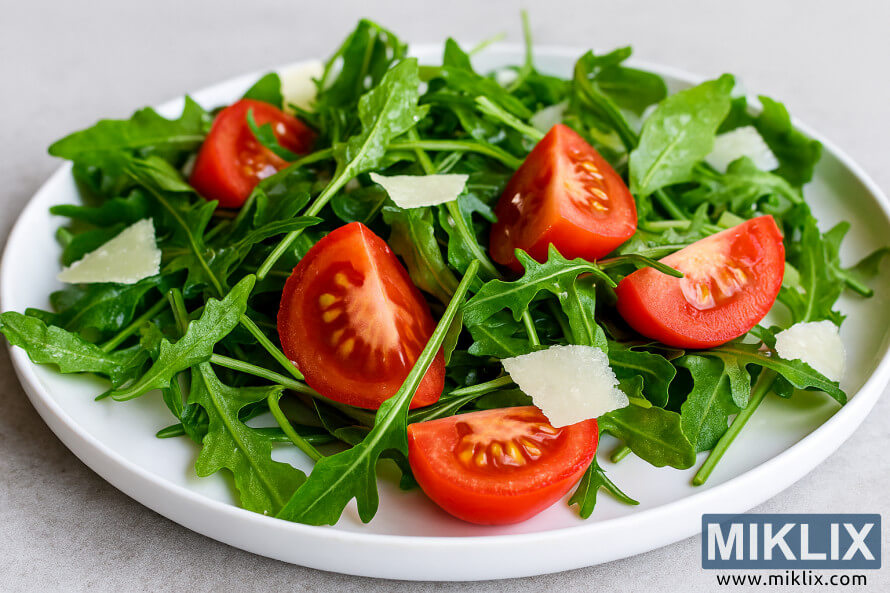
One of the rewards of growing your own arugula is enjoying its fresh, peppery flavor in a variety of dishes. Here are some delicious ways to use your homegrown harvest:
Fresh Applications
- Simple salads with olive oil, lemon, and Parmesan
- Sandwich and burger topping for peppery crunch
- Pizza topping (add after baking)
- Wrap and taco filling
- Garnish for soups and roasted vegetables
Cooked Applications
- Wilted into pasta dishes at the last minute
- Sautéed with garlic as a side dish
- Added to soups and stews
- Incorporated into omelets and frittatas
- Stirred into risotto just before serving
Preservation & Sauces
- Arugula pesto with pine nuts and Parmesan
- Frozen in ice cube trays with olive oil
- Arugula butter for steaks and bread
- Pureed into creamy soups
- Blended into green smoothies
Arugula pairs particularly well with acidic ingredients like lemon and vinegar, rich cheeses, nuts, fruits like pears and apples, and proteins including chicken, fish, and steak. Experiment with different combinations to discover your favorite ways to enjoy this versatile green.
Click or tap the image for more information and higher resolutions.
Conclusion: Enjoy Your Arugula Growing Journey
Growing arugula is a rewarding experience that offers quick results and delicious harvests. Whether you're a beginner gardener or a seasoned pro, this versatile green deserves a place in your garden. Its fast growth, minimal space requirements, and impressive nutritional profile make it an excellent choice for anyone looking to grow their own food.
Remember that arugula is quite forgiving – even if you make mistakes, you can always sow more seeds and try again in just a few weeks. With each planting, you'll gain experience and develop your own preferred methods for growing this delightful green.
We hope this guide has provided you with all the information you need to successfully grow arugula in your garden. Happy growing, and enjoy the peppery, fresh flavors of your homegrown harvest!
Click or tap the image for more information and higher resolutions.
Further Reading
If you enjoyed this post, you may also like these suggestions:
- A Guide to Growing the Best Kale in Your Garden
- A Complete Guide to Growing Nectarines in Your Home Garden
- A Complete Guide to Growing Bananas at Home