
A Complete Guide to Growing Bananas at Home
Published: January 8, 2026 at 9:44:20 PM UTC
Growing your own bananas can be a rewarding experience that brings a touch of the tropics to your garden or home. Whether you have a spacious backyard in a warm climate or a sunny corner in a cooler region, banana plants can thrive with the right care and conditions.
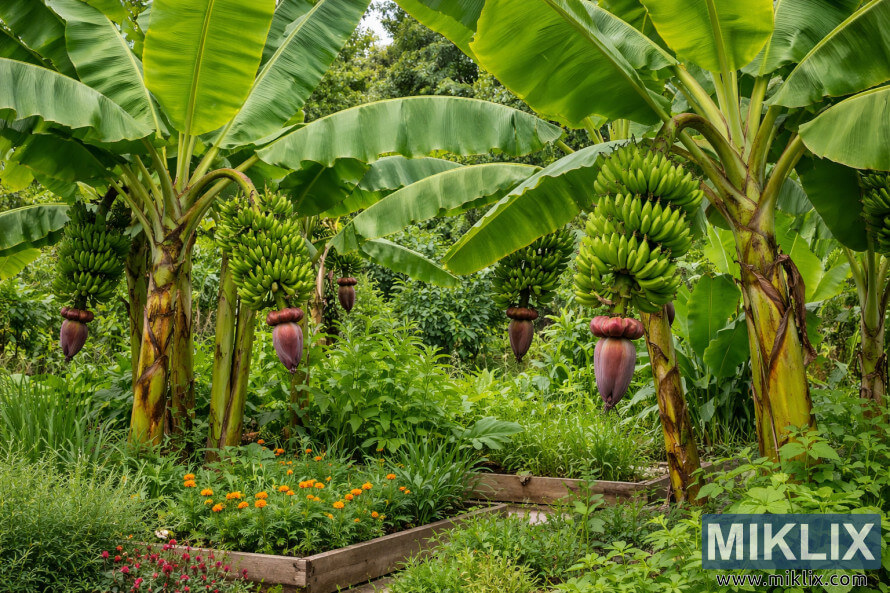
Click or tap the image for more information and higher resolutions.
This comprehensive guide will walk you through everything you need to know about cultivating these fascinating plants, from selecting the right varieties to harvesting your own homegrown fruit.
Benefits of Growing Your Own Bananas
Before diving into the cultivation details, let's explore why growing bananas at home is worth the effort:
Fresh homegrown bananas have superior flavor
- Exceptional Taste - Homegrown bananas develop fuller flavor than store-bought varieties, which are typically harvested prematurely for shipping.
- Ornamental Value - Banana plants add a dramatic tropical aesthetic to any garden or indoor space with their large, lush foliage.
- Sustainability - Growing your own fruit reduces packaging waste and transportation emissions associated with commercial bananas.
- Variety Access - Cultivate unique banana varieties not commonly found in supermarkets, including smaller, sweeter types perfect for home growing.
- Productive Plants - A single mature banana plant can produce 25-40 pounds of fruit, providing an abundant harvest from a relatively small space.
- Multiple Uses - Beyond fruit, banana plants provide shade, act as windbreaks, and their leaves can be used for cooking or composting.
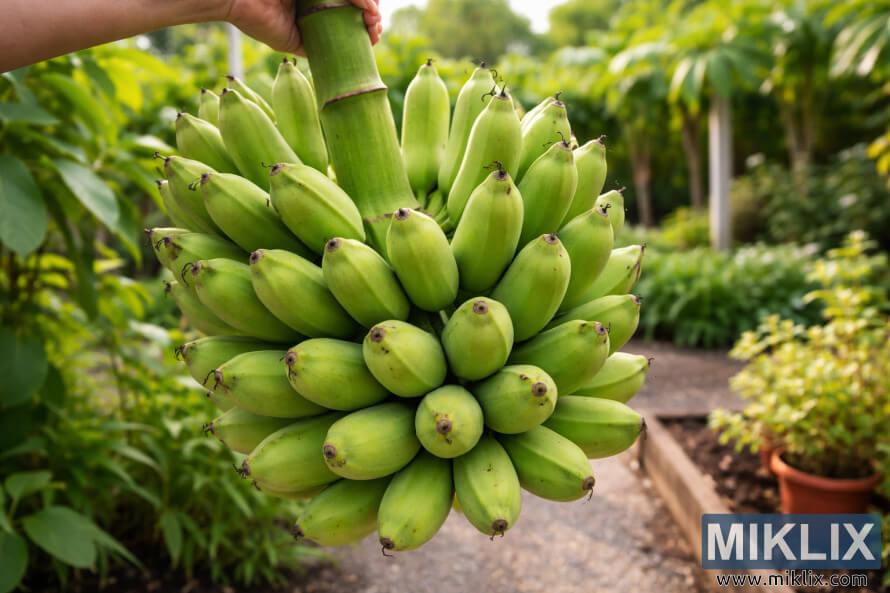
Click or tap the image for more information and higher resolutions.
Best Banana Varieties for Home Growing
Selecting the right banana variety is crucial for success, especially if you're growing in a non-tropical climate. Here are some excellent options for home gardeners:
Dwarf Varieties for Container Growing
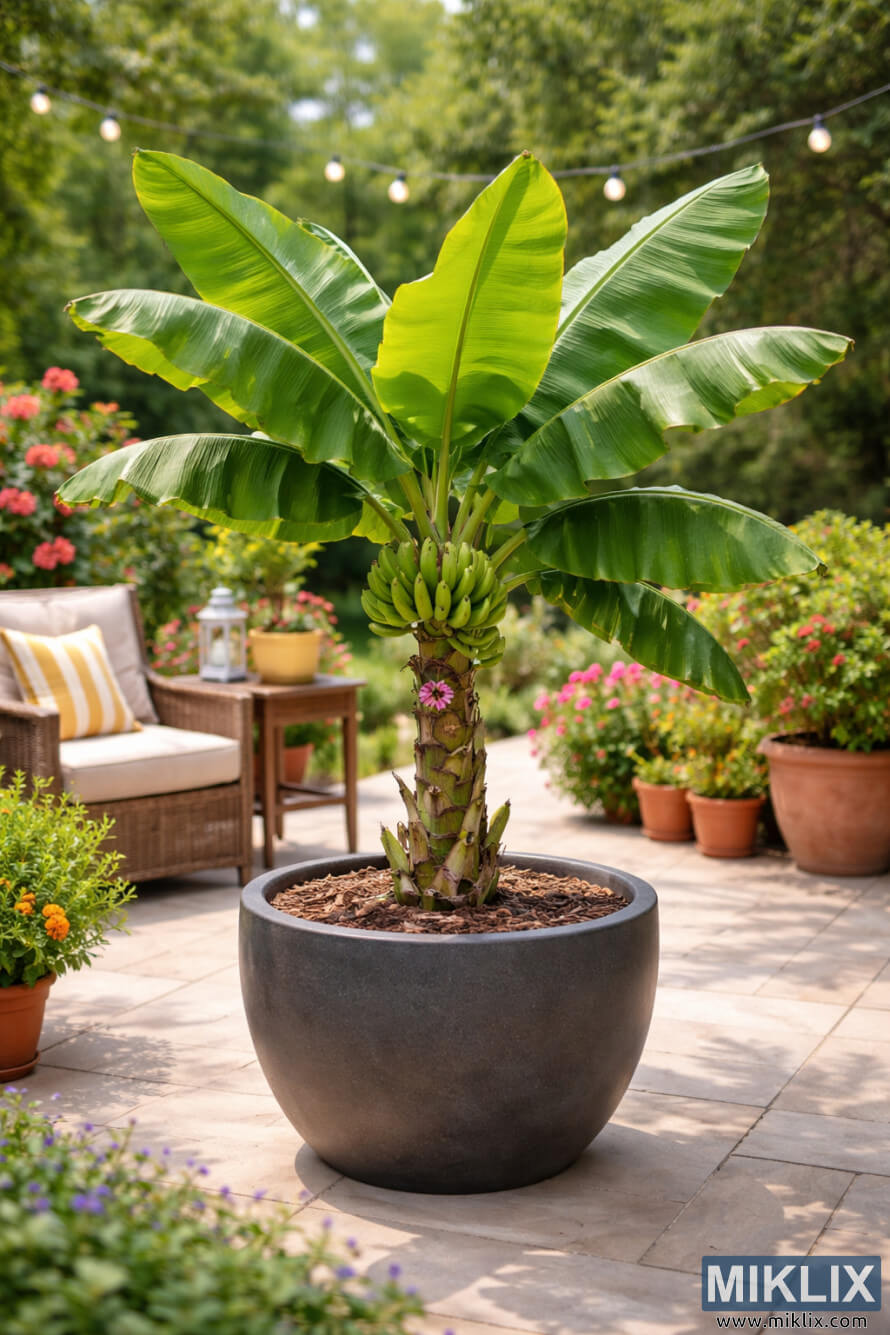
Dwarf Cavendish thrives in container environments
Dwarf Cavendish
Height: 6-8 feet
Climate: Zones 9-11
Container-friendly: Yes
The most popular dwarf variety, producing sweet fruit similar to grocery store bananas. Excellent for containers and small spaces, with good cold tolerance for a banana plant.
Super Dwarf Cavendish
Height: 3-4 feet
Climate: Zones 9-11
Container-friendly: Excellent
Ultra-compact variety perfect for indoor growing or small patios. Produces smaller fruit bunches but maintains the classic banana flavor. Ideal for areas with limited space.
Dwarf Orinoco
Height: 6-9 feet
Climate: Zones 8-11
Container-friendly: Yes
Also known as "Horse Banana," this variety produces smaller, apple-flavored fruit. More cold-hardy than many other varieties, making it suitable for marginal growing zones.
Click or tap the image for more information and higher resolutions.
Cold-Hardy Varieties for Outdoor Growing
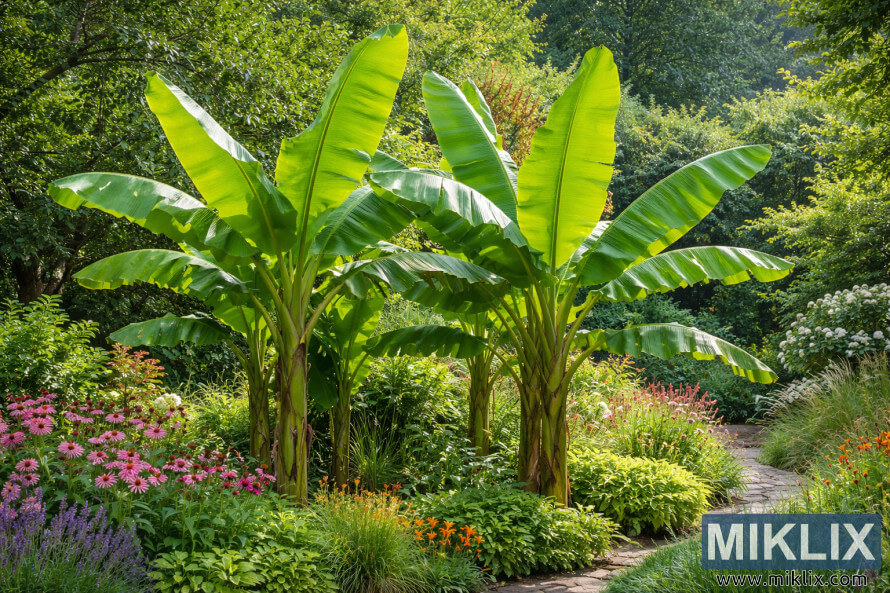
Cold-hardy Musa Basjoo can survive in temperate climates
Musa Basjoo
Height: 12-18 feet
Climate: Zones 5-11
Container-friendly: No
The most cold-hardy banana, surviving temperatures down to 0°F (-18°C) with proper winter protection. Grown primarily as an ornamental in cooler regions, as fruit rarely matures in short growing seasons.
Raja Puri
Height: 8-10 feet
Climate: Zones 8-11
Container-friendly: Yes
Compact plant with excellent cold tolerance. Produces sweet, small fruits and can fruit more quickly than many other varieties, often within 12-15 months of planting.
Blue Java
Height: 15-20 feet
Climate: Zones 9-11
Container-friendly: With pruning
Also called "Ice Cream Banana" for its creamy, vanilla-flavored fruit. Distinctive bluish-green foliage and good cold tolerance make it popular in subtropical regions.
Click or tap the image for more information and higher resolutions.
Varieties for Tropical Regions
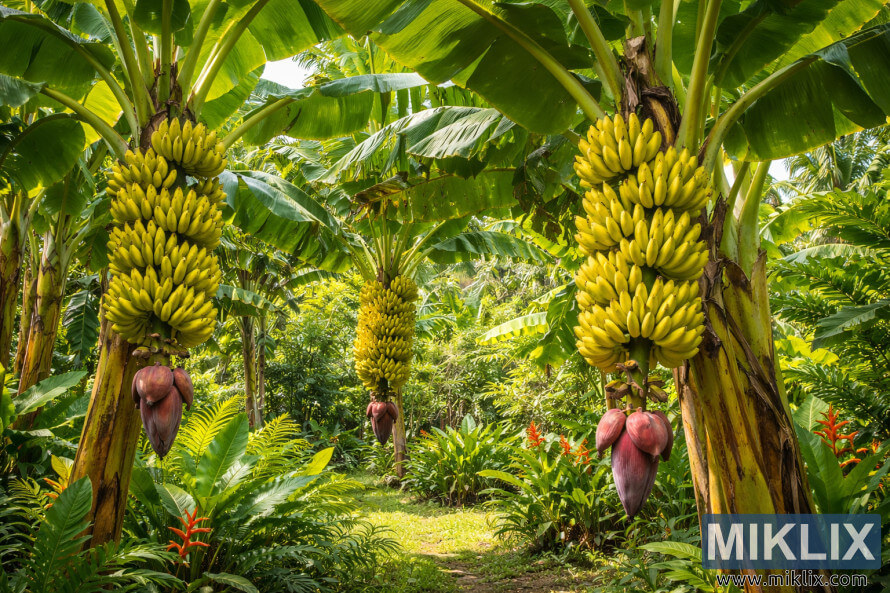
Lady Finger bananas thrive in tropical environments
Lady Finger
Height: 12-18 feet
Climate: Zones 10-11
Container-friendly: No
Produces smaller, sweeter fruit than Cavendish varieties. Tall, slender plants with elegant growth habit make them ornamentally valuable as well as productive.
Goldfinger (FHIA-01)
Height: 10-16 feet
Climate: Zones 9-11
Container-friendly: No
Disease-resistant hybrid with excellent production. Fruit has a distinct apple-like flavor when ripe. More tolerant of less-than-ideal conditions than many varieties.
Brazilian
Height: 12-15 feet
Climate: Zones 9-11
Container-friendly: No
Also known as "Apple Banana" or "Silk Banana." Produces sweet fruit with a slight tartness. Popular for its excellent flavor profile and reliable production.
Click or tap the image for more information and higher resolutions.
Climate and Growing Requirements for Bananas
Understanding the environmental needs of banana plants is essential for successful cultivation. While they're typically associated with tropical climates, with the right care and variety selection, bananas can be grown in a surprising range of conditions.
Temperature Requirements
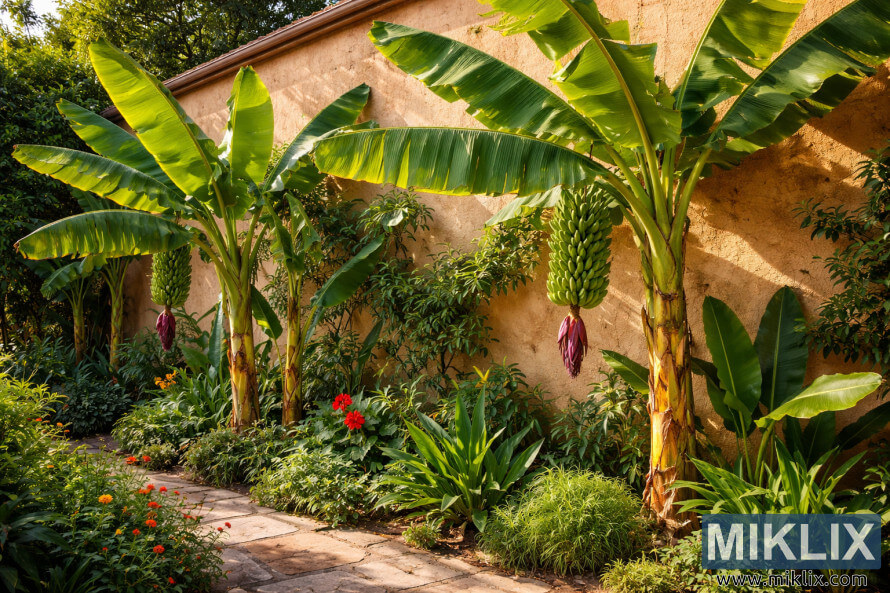
Creating a warm microclimate helps bananas thrive in marginal areas
- Optimal Growth: Bananas grow best between 78-86°F (26-30°C).
- Growth Slows: Below 60°F (16°C), growth significantly slows.
- Growth Stops: At temperatures below 50°F (10°C), growth halts completely.
- Damage Occurs: Frost or temperatures below 32°F (0°C) will damage or kill the above-ground portions of most banana varieties.
- Heat Tolerance: Bananas can handle extreme heat if adequately watered, though temperatures above 98°F (37°C) may cause leaf scorch.
Microclimate Tip: In marginal growing zones, plant bananas near south-facing walls that absorb heat during the day and release it at night. This can create a microclimate several degrees warmer than the surrounding area.
Click or tap the image for more information and higher resolutions.
Light Requirements
Bananas are sun-loving plants that require adequate light for optimal growth and fruit production:
- Full Sun: In most regions, bananas need 6-8 hours of direct sunlight daily for best fruit production.
- Partial Shade: In extremely hot climates, afternoon shade can be beneficial to prevent leaf burn.
- Indoor Growing: When grown indoors, place near south-facing windows or provide supplemental grow lights for 10-12 hours daily.
Water and Humidity Requirements
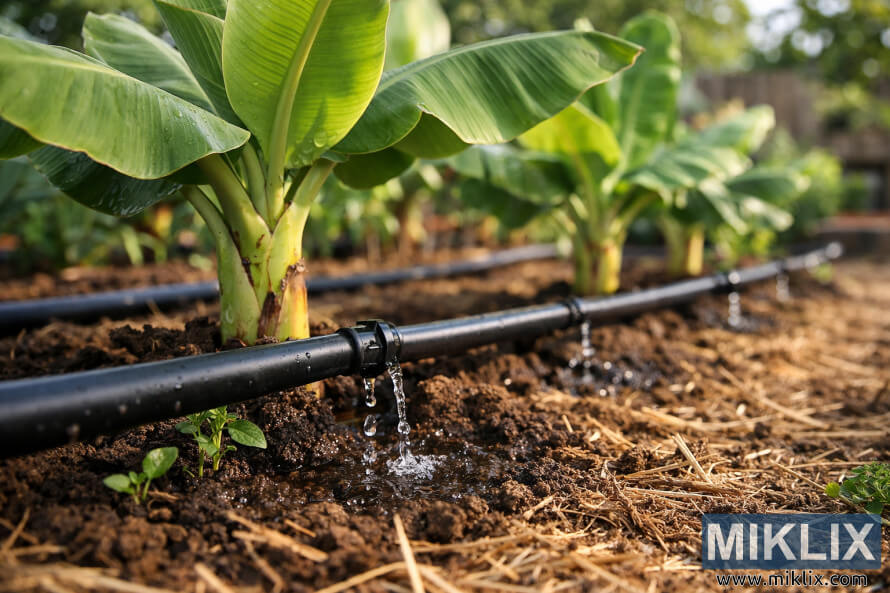
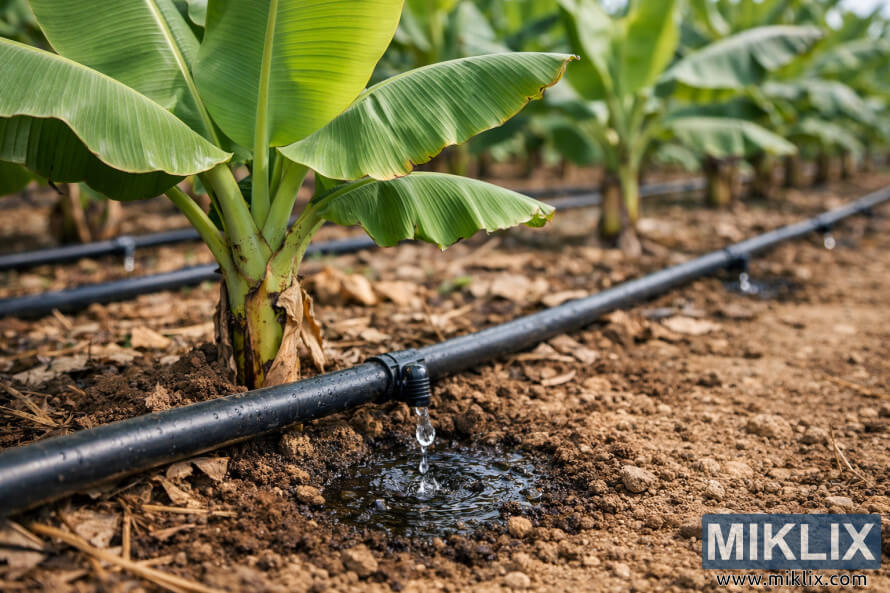
Consistent watering is essential for banana plant health
- Water Needs: Bananas require 1-1.5 inches of water weekly, increasing during hot weather and fruit development.
- Consistency: Consistent moisture is crucial—never allow the soil to completely dry out during active growth.
- Humidity: Bananas thrive in humid conditions (60-80% relative humidity). Indoor growers may need to use humidifiers or mist plants regularly.
- Drainage: Despite high water needs, bananas cannot tolerate waterlogged conditions. Good drainage is essential.
Click or tap the image for more information and higher resolutions.
Soil Requirements for Growing Bananas
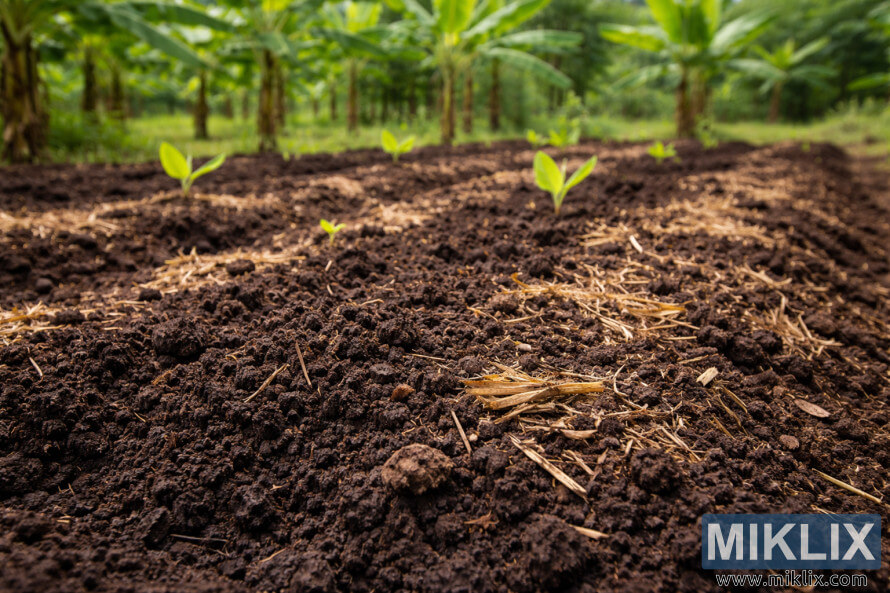
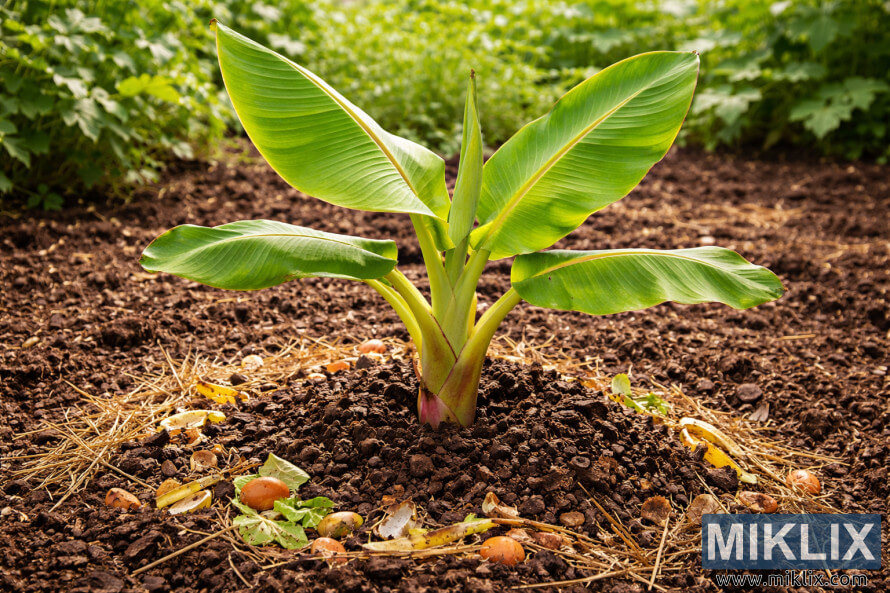
Well-prepared soil rich in organic matter is ideal for banana plants
Bananas are heavy feeders that require nutrient-rich soil to support their rapid growth and fruit production. Creating the right soil environment is fundamental to success:
Ideal Soil Characteristics
- Texture: Loose, loamy soil that retains moisture while allowing excess water to drain.
- Depth: Deep soil (at least 2 feet) to accommodate the extensive root system.
- pH Level: Slightly acidic to neutral (pH 5.5-7.0) for optimal nutrient availability.
- Organic Matter: High in organic content (5-10%) to provide nutrients and improve soil structure.
- Drainage: Well-draining to prevent root rot, yet moisture-retentive to support growth.
Click or tap the image for more information and higher resolutions.
Soil Preparation
Proper soil preparation before planting will give your banana plants the best start:
- Test your soil to determine pH and nutrient levels. Adjust pH if necessary using lime to raise it or sulfur to lower it.
- Dig a large planting hole approximately 3 feet wide and 2 feet deep for each plant.
- Mix in organic matter such as compost, well-rotted manure, or worm castings at a ratio of 1:1 with the native soil.
- Add slow-release fertilizer high in potassium and phosphorus to the planting hole.
- Create a slight mound when backfilling to improve drainage, especially in areas with heavy rainfall.
Container Soil Mix: For container-grown bananas, use a mix of 60% high-quality potting soil, 20% compost, 10% perlite, and 10% coconut coir. This provides both nutrition and excellent drainage.
Click or tap the image for more information and higher resolutions.
Step-by-Step Banana Planting Instructions
With the right preparation and technique, planting bananas can be straightforward. Follow these detailed steps for both outdoor garden and container planting.
Outdoor Planting Guide
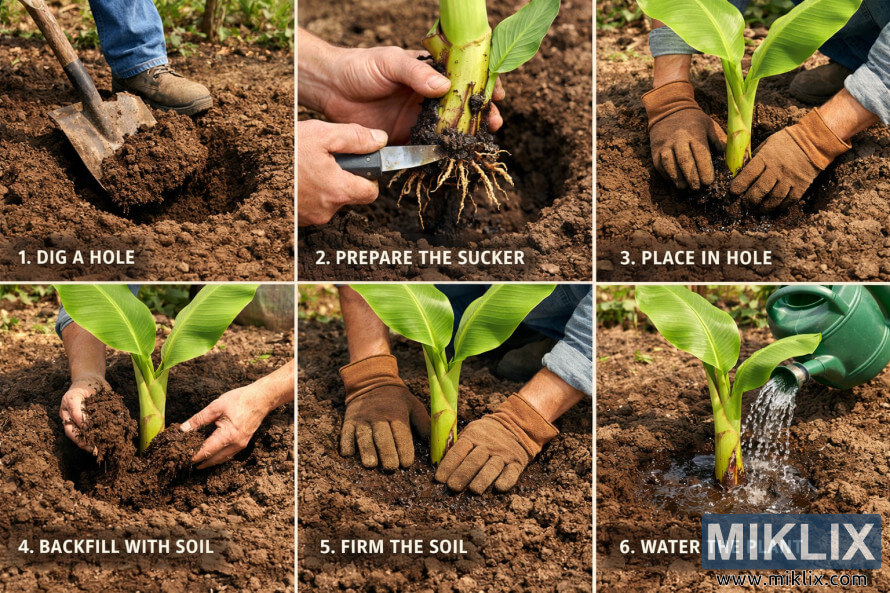
Proper planting technique ensures good establishment
- Select the right location - Choose a spot with full sun (at least 6 hours daily), protection from strong winds, and good drainage. In cooler climates, select a south-facing location near a wall for added warmth.
- Prepare planting material - Obtain a healthy banana sucker (pup) with narrow sword-shaped leaves, ideally 2-3 feet tall. Look for suckers with a good chunk of corm (rhizome) attached and healthy roots.
- Prepare the planting hole - Dig a hole approximately 2-3 times wider and slightly deeper than the root ball or corm of your sucker.
- Amend the soil - Mix the excavated soil with compost or well-rotted manure at a 50:50 ratio.
- Trim the sucker - Cut back the foliage to reduce transpiration while the plant establishes. Leave one or two small leaves at most.
- Position the plant - Place the sucker in the hole so that the top of the corm is level with or slightly below the soil surface.
- Backfill carefully - Fill in around the plant with the amended soil, gently firming it to eliminate air pockets but not compacting it.
- Water thoroughly - Give the newly planted banana a deep watering to settle the soil.
- Apply mulch - Add a 3-4 inch layer of organic mulch around the plant, keeping it a few inches away from the pseudostem to prevent rot.
Spacing Guide: For dwarf varieties, space plants 4-6 feet apart. For standard varieties, allow 10-12 feet between plants. If creating a banana grove for cross-protection, you can plant more densely in a block formation.
Click or tap the image for more information and higher resolutions.
Container Planting Guide
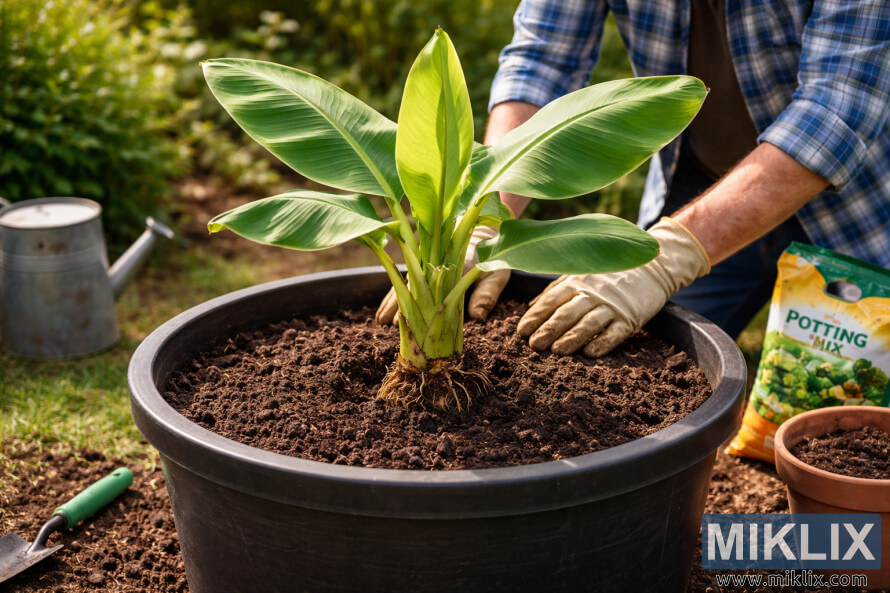
Container planting is ideal for dwarf varieties and cooler climates
- Choose an appropriate container - Select a pot at least 24 inches in diameter and 24 inches deep with drainage holes. Fabric pots work well for their excellent drainage and aeration.
- Prepare container mix - Create a well-draining but nutrient-rich potting mix as described in the soil section above.
- Add drainage layer - Place a layer of coarse material like gravel or broken pottery pieces at the bottom of the container to improve drainage.
- Position the plant - Add some potting mix to the bottom of the container, then place the banana plant so the top of the root ball sits 1-2 inches below the container rim.
- Fill the container - Add potting mix around the plant, gently firming it as you go, until the mix reaches about 1 inch below the rim (to allow for watering).
- Water thoroughly - Water until it flows freely from the drainage holes to settle the soil and eliminate air pockets.
- Add mulch - Apply a thin layer of mulch to the soil surface to help retain moisture.
Container Size Warning: Undersized containers will severely limit growth and fruit production. Plan to repot container-grown bananas annually or as they outgrow their containers. A mature dwarf banana may require a 30-gallon container.
Click or tap the image for more information and higher resolutions.
Watering, Fertilizing, and Maintenance Schedule
Consistent care is the key to successful banana cultivation. These fast-growing plants have substantial water and nutrient requirements to support their rapid development and fruit production.
Watering Schedule
| Growth Stage | Time | Outdoor Plants | Container Plants | Signs of Water Stress |
| Establishment | (First 4-8 weeks) | Keep soil consistently moist but not soggy. Water deeply 2-3 times per week. | Check daily; water when top inch of soil feels dry. Typically every 1-2 days. | Wilting, yellowing lower leaves, slow growth. |
| Vegetative Growth | (2-8 months) | 1-1.5 inches of water weekly. Increase during hot weather to 2 inches. | Water thoroughly when top 2 inches of soil dries out. Usually every 2-3 days. | Leaf curling, premature yellowing, stunted growth. |
| Flowering & Fruiting | (9+ months) | Increase to 1.5-2 inches weekly. Consistent moisture is crucial for fruit development. | May need daily watering, especially in hot weather. Never allow to dry out completely. | Small fruit, premature ripening, reduced bunch size. |
| Dormant Period | (Winter in cooler climates) | Reduce watering to once every 2-3 weeks if plant is not actively growing. | Water sparingly, only when soil is quite dry. Approximately every 7-10 days. | Root rot from overwatering during dormancy. |
Watering Tip: Bananas prefer deep, infrequent watering rather than frequent shallow watering. This encourages deeper root development and better drought resistance.
Click or tap the image for more information and higher resolutions.
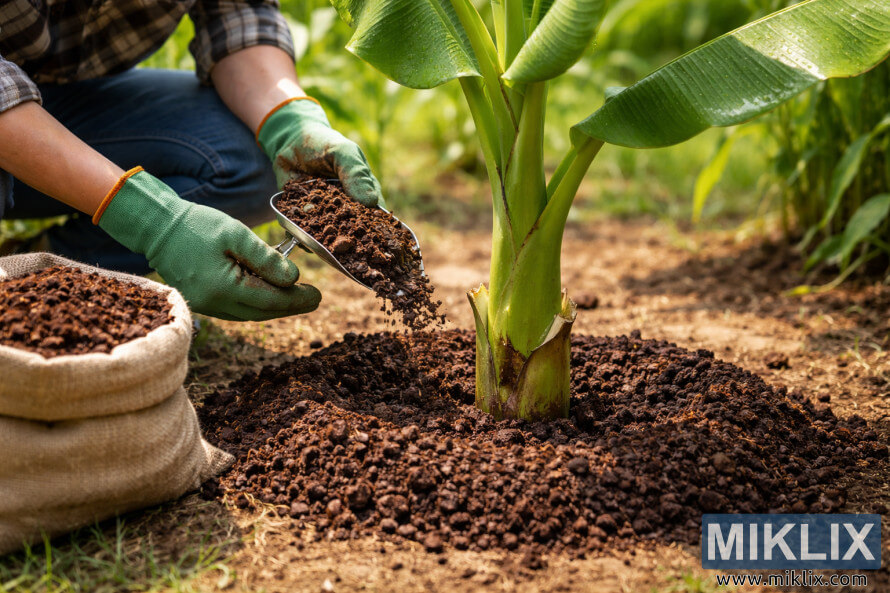
Fertilization Schedule
Regular fertilization supports vigorous growth and fruit production
Bananas are heavy feeders that require regular fertilization to support their rapid growth and fruit development:
| Growth Stage | Time | Fertilizer Type | Application Rate | Frequency |
| Establishment | (First 4-8 weeks) | Balanced organic fertilizer (e.g., 5-5-5) | 1/2 cup per plant | Once after planting, then monthly |
| Vegetative Growth | (2-8 months) | High-nitrogen fertilizer (e.g., 8-2-12) | 1 cup per plant | Every 4-6 weeks |
| Pre-flowering | (8-10 months) | High-potassium fertilizer (e.g., 3-1-6) | 1-2 cups per plant | Every 4 weeks |
| Flowering & Fruiting | High-potassium fertilizer (e.g., 3-1-6) | 2 cups per plant | Every 3-4 weeks | |
| Dormant Period | (Winter in cooler climates) | None | N/A | Suspend fertilization |
Organic Alternatives: Compost, worm castings, fish emulsion, and banana peels make excellent organic fertilizers for banana plants. Apply compost as a 2-inch layer around the plant every 2-3 months during the growing season.
Click or tap the image for more information and higher resolutions.
General Maintenance Tasks
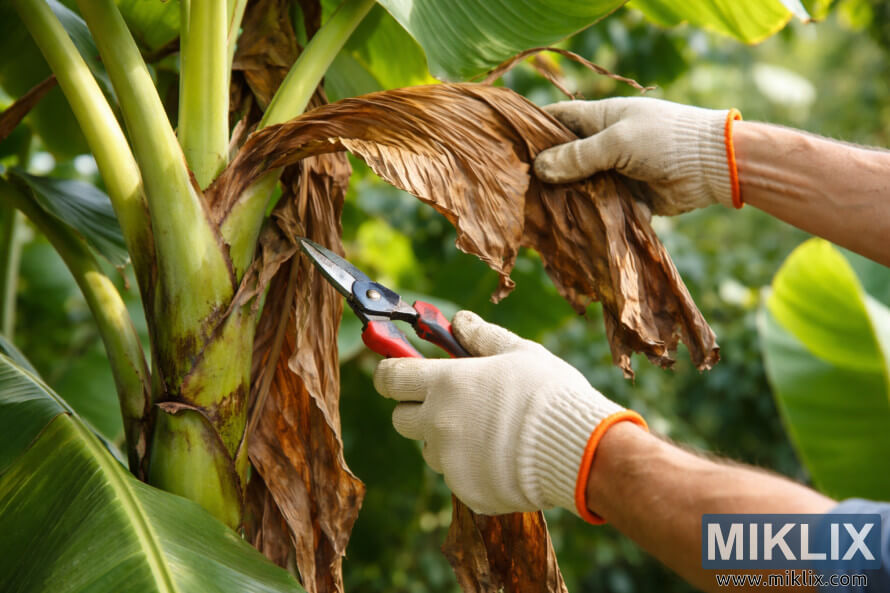
Regular pruning keeps banana plants healthy and attractive
- Mulching: Maintain a 3-4 inch layer of organic mulch around plants, refreshing it as it decomposes. Keep mulch a few inches away from the pseudostem to prevent rot.
- Pruning: Remove dead or damaged leaves regularly. Cut them at the base of the leaf stem (petiole) with a clean, sharp knife or pruners.
- Sucker Management: For best fruit production, limit each mat to 3-4 plants: the mother plant (fruiting), one large sucker (half-grown), and one small sucker. Remove excess suckers by cutting them at ground level and digging out the growing point.
- Wind Protection: In windy areas, stake tall plants to prevent toppling, especially when fruiting. Use a sturdy stake and soft ties that won't damage the pseudostem.
- Winter Protection: In marginal climates, protect plants during winter by cutting back the pseudostem to about 2-3 feet tall and wrapping it with insulating materials like burlap and straw.
Click or tap the image for more information and higher resolutions.
Pest and Disease Management for Banana Plants
While banana plants are relatively hardy, they can face several pest and disease challenges. Early identification and intervention are key to maintaining plant health and productivity.
Common Banana Pests
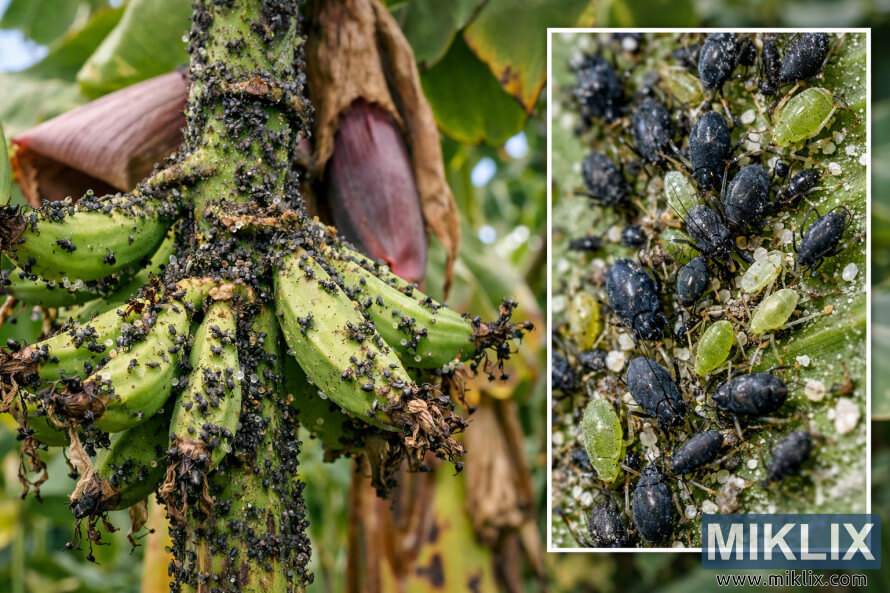
| Pest | Symptoms | Control Methods |
| Aphids | Clusters of small insects on new growth; sticky honeydew; curled or distorted leaves. | Spray with strong water stream; apply insecticidal soap or neem oil; introduce beneficial insects like ladybugs. |
| Spider Mites | Fine webbing on undersides of leaves; stippled, yellowing foliage; tiny moving specks visible with magnification. | Increase humidity; spray leaves with water regularly; apply insecticidal soap or horticultural oil. |
| Banana Weevil | Tunneling in corm and pseudostem; weakened plants prone to toppling; reduced vigor. | Use clean planting material; remove and destroy affected plants; apply beneficial nematodes to soil. |
| Nematodes | Stunted growth; yellowing leaves; reduced root system; knots or lesions on roots. | Plant resistant varieties; incorporate organic matter into soil; practice crop rotation; use hot water treatment for suckers. |
| Thrips | Silvery scarring on fruit; reddish-brown discoloration; premature ripening. | Remove weeds that host thrips; use blue sticky traps; apply insecticidal soap or neem oil. |
Click or tap the image for more information and higher resolutions.
Common Banana Diseases
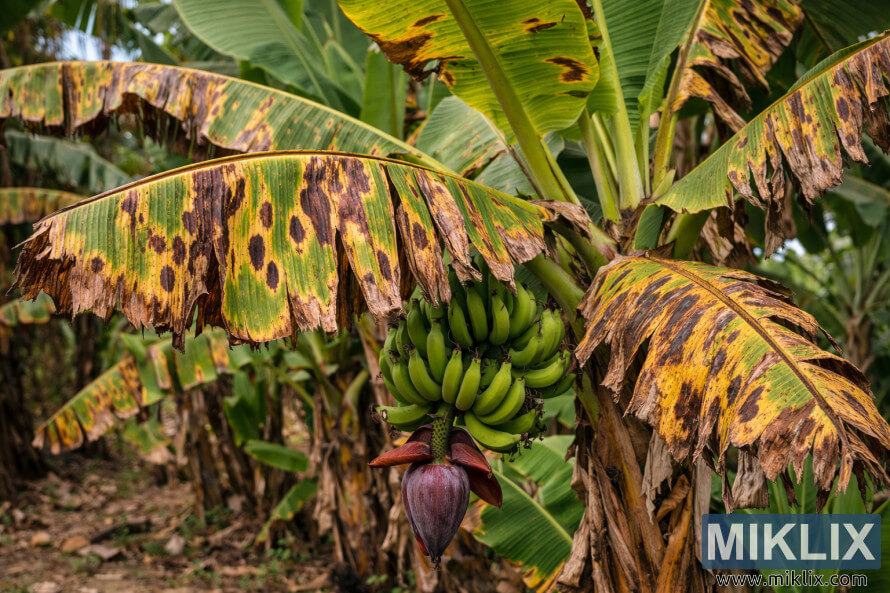
| Disease | Symptoms | Control Methods |
| Panama Disease (Fusarium Wilt) | Yellowing of older leaves; splitting of pseudostem at base; brown or black discoloration in cut pseudostem. | Plant resistant varieties; use disease-free planting material; improve soil drainage; avoid contaminated soil. |
| Sigatoka Leaf Spot | Yellow spots that enlarge and turn brown with yellow halos; premature leaf death. | Remove affected leaves; improve air circulation; apply copper-based fungicides; maintain adequate nutrition. |
| Black Leaf Streak | Black streaks on leaves that expand into large necrotic areas; severe defoliation. | Similar to Sigatoka control; more frequent fungicide applications may be necessary; plant resistant varieties. |
| Bacterial Soft Rot | Foul-smelling soft rot at the base of the plant; wilting; plant collapse. | Improve drainage; avoid injury to plants; remove and destroy infected plants; disinfect tools between cuts. |
| Banana Bunchy Top Virus | Stunted growth; bunched appearance of leaves at crown; dark green streaks on leaves and midribs. | Use virus-free planting material; control aphid vectors; remove and destroy infected plants immediately. |
Prevention Tip: Many banana diseases are spread through infected planting material. Always start with certified disease-free plants or treat suckers before planting by trimming away all roots and outer layers of the corm, then soaking in a 10% bleach solution for 10 minutes.
Click or tap the image for more information and higher resolutions.
Sustainable Pest Management Practices
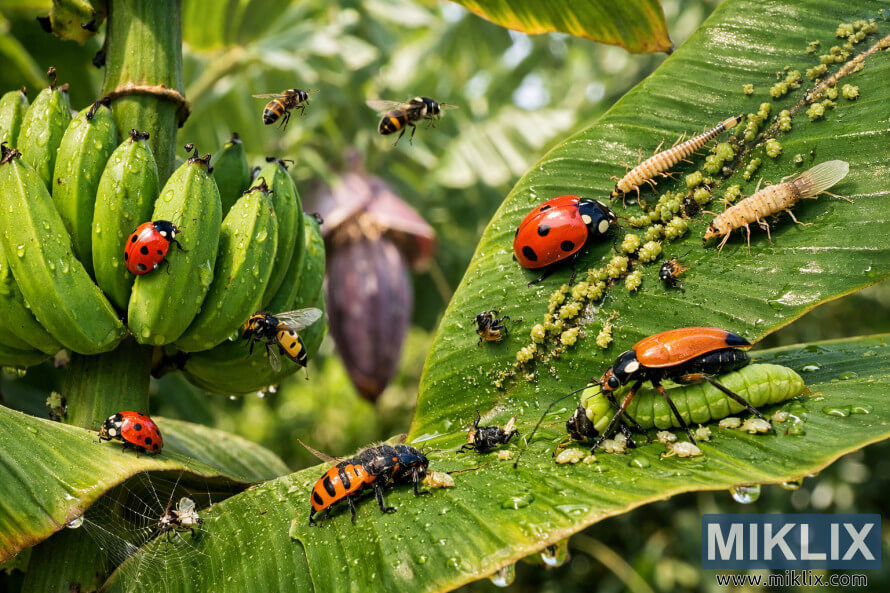
Beneficial insects provide natural pest control
- Companion Planting: Grow pest-repelling plants like marigolds, alliums, and herbs near bananas to deter common pests.
- Biodiversity: Maintain diverse plantings to attract beneficial insects that prey on banana pests.
- Physical Barriers: Use fruit bags to protect developing bunches from thrips, birds, and other pests.
- Regular Monitoring: Inspect plants weekly for early signs of pest or disease problems.
- Proper Sanitation: Remove dead leaves and plant debris regularly to reduce disease pressure.
- Healthy Plants: Maintain optimal growing conditions—well-nourished plants are more resistant to pests and diseases.
Click or tap the image for more information and higher resolutions.
Harvesting Timeline and Techniques
One of the most rewarding aspects of growing bananas is harvesting your own homegrown fruit. Understanding when and how to harvest ensures you'll enjoy the best flavor and quality.
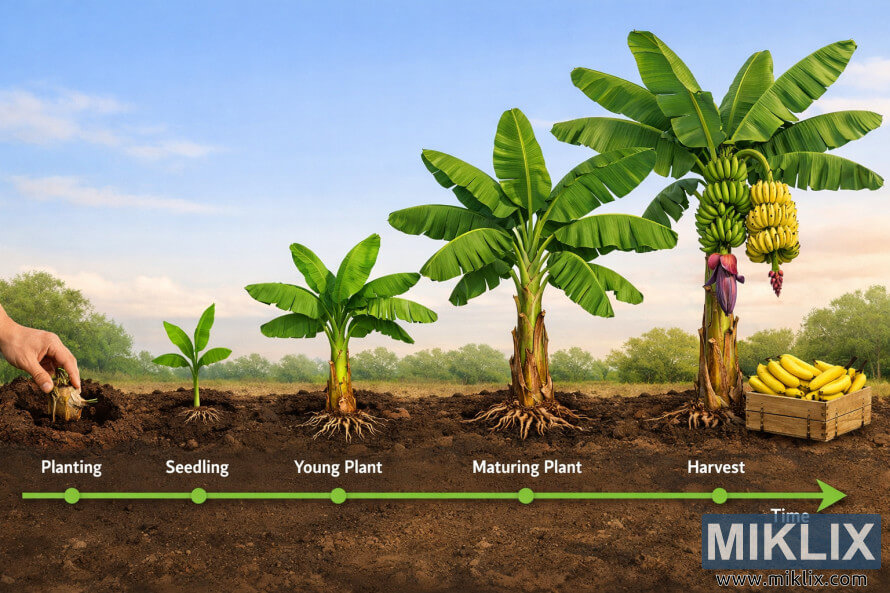
Banana Growth Timeline
| Growth Stage | Timeline | What to Expect |
| Establishment | 0-2 months | New leaves emerge; roots develop; minimal visible growth above ground. |
| Vegetative Growth | 2-8 months | Rapid leaf production; pseudostem thickens; suckers begin to develop. |
| Flower Emergence | 9-12 months* | Flowering stalk emerges from center of pseudostem; purple flower bud appears. |
| Fruit Development | 3-4 months after flowering | Hands of bananas form; fruit fills out; flower bud continues to elongate. |
| Harvest | 12-16 months total* | Fruit reaches mature size; angles between fruit soften; color begins to lighten. |
* Timeline varies significantly based on variety, climate, and growing conditions. In optimal tropical conditions, the cycle may be shorter. In marginal climates or with container-grown plants, it may take longer.
Click or tap the image for more information and higher resolutions.
When to Harvest
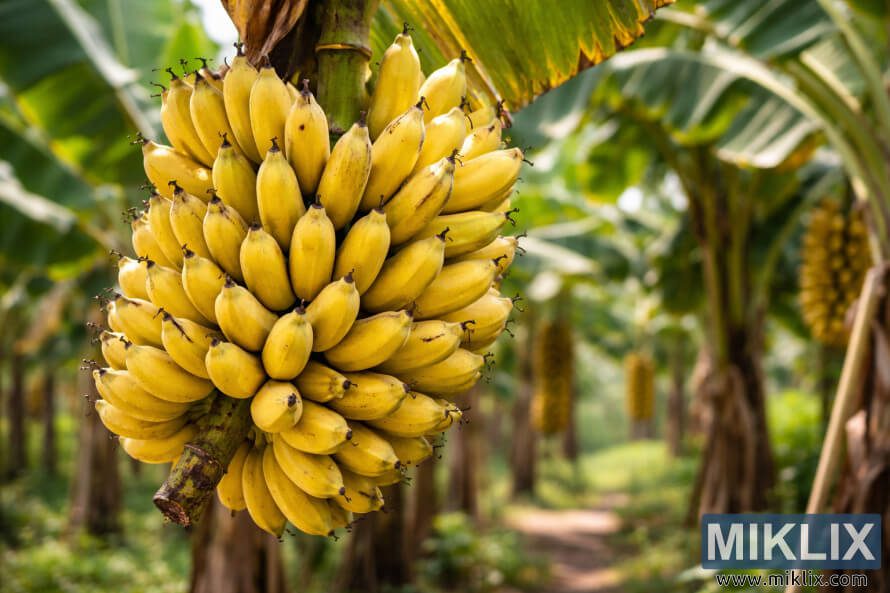
Mature bananas ready for harvest have filled out and lost their angular appearance
Unlike many fruits, bananas are harvested before they're fully ripe. Here's how to determine the right time:
- Size: Fruits have reached their typical size for the variety.
- Shape: The angular edges of the fruit have filled out and become more rounded.
- Color: The deep green color begins to lighten slightly (but still remains green).
- Flower End: The small floral remnants at the tip of each fruit dry up and rub off easily.
- Top Hand: When the top hand of bananas (closest to the plant) shows signs of yellowing, it's time to harvest the entire bunch.
Click or tap the image for more information and higher resolutions.
Harvesting Techniques
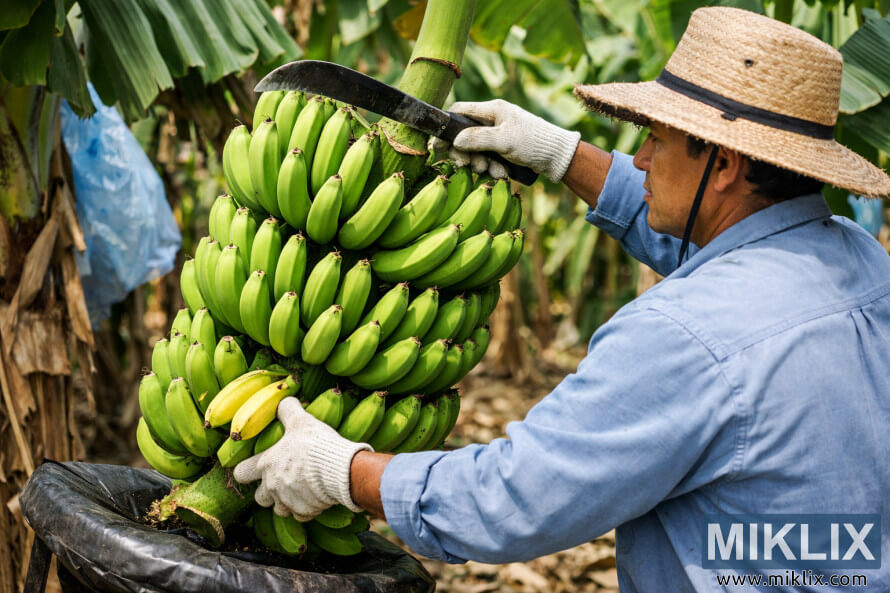
Support the bunch while cutting to prevent damage
- Gather tools - You'll need a sharp knife or machete, gloves (banana sap stains clothing), and possibly a stepladder for tall varieties.
- Support the bunch - Have someone hold the bunch or prepare a soft landing spot as mature bunches can weigh 25-40 pounds or more.
- Make the cut - Cut the stalk about 12 inches above the top hand of bananas. For tall plants, you may need to partially cut through the pseudostem to bring the bunch within reach.
- Handle carefully - Avoid bumping or bruising the fruit during transport as this can cause premature ripening and spoilage.
Click or tap the image for more information and higher resolutions.
Ripening Harvested Bananas
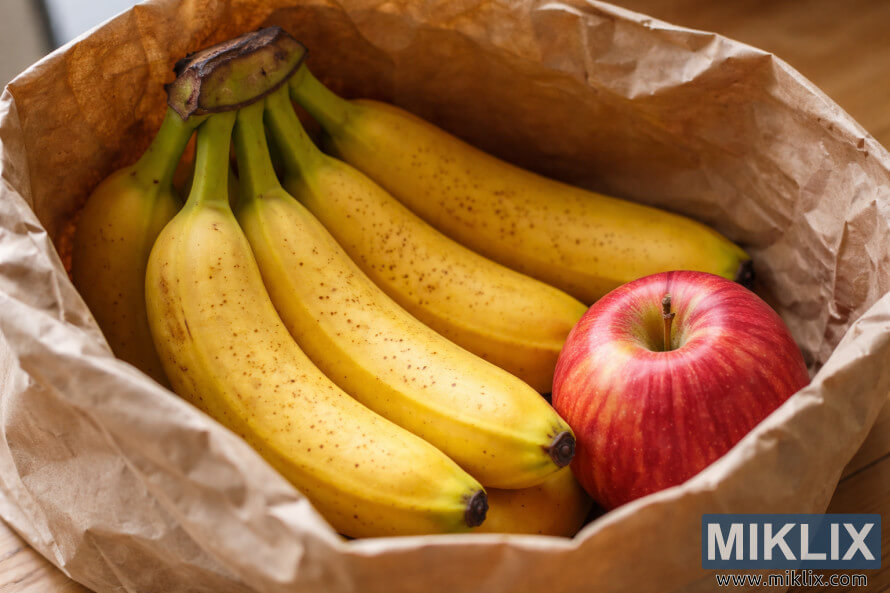
A paper bag with an apple accelerates the ripening process
After harvesting, you have several options for ripening your bananas:
- Whole Bunch Method: Hang the entire bunch in a cool, shaded area. Harvest individual hands as needed.
- Hand-by-Hand Method: Cut individual hands from the bunch and ripen them separately, allowing for staggered ripening.
- Accelerated Ripening: Place green bananas in a paper bag with an apple or ripe banana to speed up ripening through ethylene gas exposure.
- Temperature Control: Warmer temperatures (70-75°F/21-24°C) accelerate ripening; cooler temperatures slow it down.
Important: Never refrigerate bananas before they're ripe. Cold temperatures interrupt the ripening process and can cause the peel to blacken without properly ripening the fruit inside.
Click or tap the image for more information and higher resolutions.
Post-Harvest Plant Care
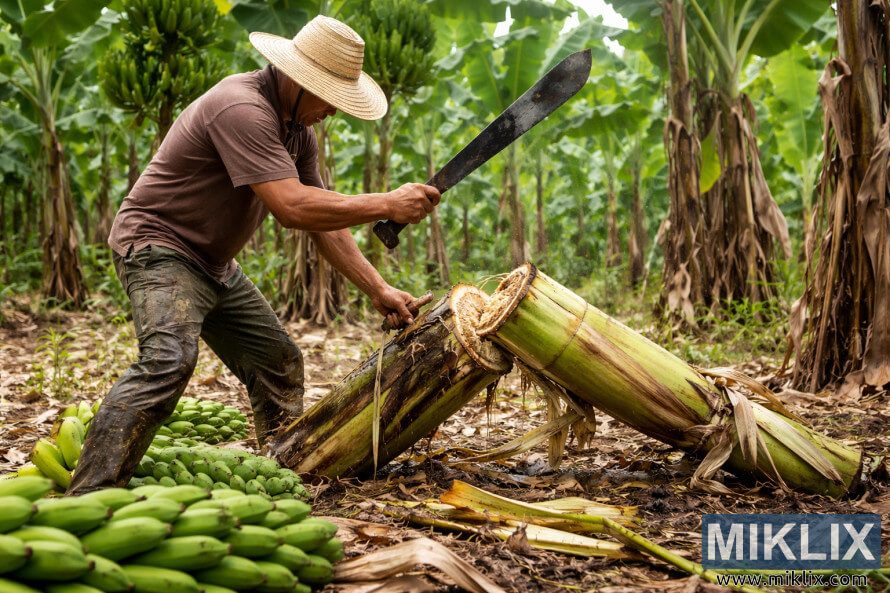
Remove the fruited pseudostem to make room for suckers
After harvesting, the mother plant that produced the fruit will die naturally. To maintain your banana patch:
- Cut down the mother plant - After harvesting, cut the pseudostem down to about 12 inches from the ground.
- Chop and recycle - Cut the pseudostem into small pieces and use as mulch around the banana mat or add to your compost pile.
- Select a successor - Choose the strongest sucker to become the next fruiting plant. This is typically the largest sword sucker.
- Manage other suckers - Remove excess suckers, keeping only 2-3 per mat at different growth stages for continuous production.
- Fertilize - Apply fertilizer to support the developing suckers that will produce your next harvest.
Click or tap the image for more information and higher resolutions.
Common Challenges and Solutions in Banana Growing
Even experienced gardeners face challenges when growing bananas. Here are solutions to the most common problems you might encounter.
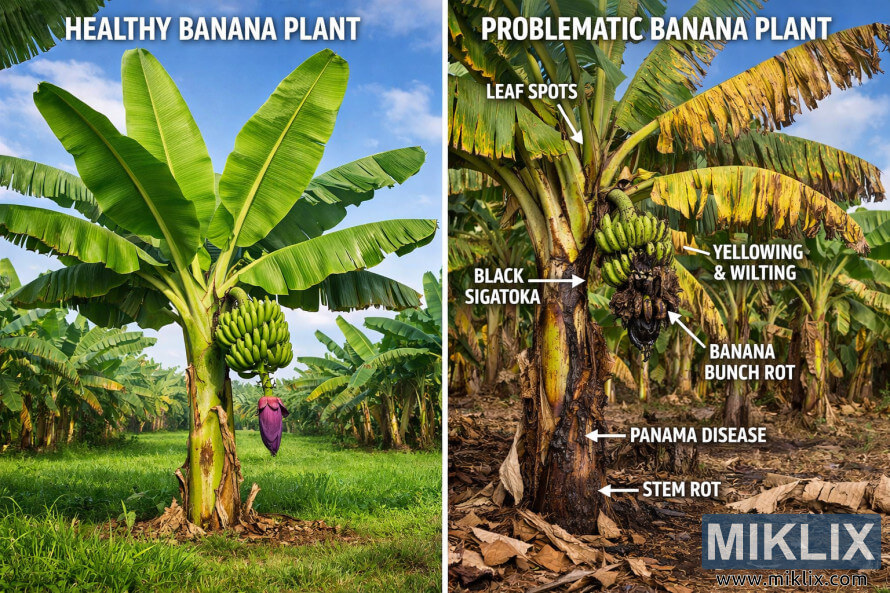
Recognizing common problems helps with early intervention
Challenge: Plant Not Flowering
Possible Causes:
- Insufficient light
- Inadequate nutrients
- Too young (less than 9 months)
- Too cold
- Improper variety for your climate
Solutions:
- Ensure at least 6 hours of direct sunlight daily
- Increase potassium fertilization
- Be patient - some varieties take 18+ months to flower
- Provide winter protection in marginal climates
- Consider switching to a variety better suited to your conditions
Challenge: Yellowing Leaves
Possible Causes:
- Natural aging of older leaves
- Nutrient deficiencies
- Overwatering or poor drainage
- Cold damage
- Disease (Panama, Sigatoka)
Solutions:
- Normal if only affecting oldest leaves
- Apply balanced fertilizer with micronutrients
- Improve drainage; adjust watering schedule
- Provide cold protection; select hardier varieties
- Remove affected leaves; apply appropriate fungicides
Challenge: Wind Damage
Possible Causes:
- Exposed planting location
- Single plants without group protection
- Top-heavy plants with fruit
Solutions:
- Plant in sheltered locations
- Grow in groups to provide mutual protection
- Stake plants, especially when fruiting
- Consider windbreak plantings around banana patch
- For severe winds, cut leaves in half to reduce wind resistance
Challenge: Small or Poor-Quality Fruit
Possible Causes:
- Insufficient water during fruit development
- Nutrient deficiencies
- Too many suckers competing for resources
- Pest or disease pressure
- Insufficient sunlight
Solutions:
- Maintain consistent soil moisture
- Increase potassium fertilization during fruiting
- Remove excess suckers, keeping only 3-4 per mat
- Implement appropriate pest and disease controls
- Ensure plants receive adequate sunlight
Challenge: Container Plants Struggling
Possible Causes:
- Container too small
- Poor drainage
- Inadequate watering
- Root-bound conditions
- Insufficient nutrients
Solutions:
- Use containers at least 24" wide and deep
- Ensure adequate drainage holes
- Water consistently, never allowing complete drying
- Repot annually into fresh soil
- Fertilize more frequently than ground-planted bananas
Challenge: Winter Survival Issues
Possible Causes:
- Temperatures below plant's tolerance
- Wet soil during cold periods
- Inadequate protection
- Inappropriate variety for climate
Solutions:
- Select cold-hardy varieties like Musa Basjoo
- Improve winter drainage
- Cut back to 2-3 feet and wrap with insulation
- Apply thick mulch around base
- Consider growing in containers that can be moved indoors
Click or tap the image for more information and higher resolutions.
Frequently Asked Questions About Banana Cultivation
How long does it take for banana plants to produce fruit?
In optimal conditions, banana plants typically produce fruit 9-15 months after planting. However, this timeline varies significantly based on:
- Climate - Plants grow faster in warm, tropical conditions.
- Variety - Some varieties fruit more quickly than others.
- Growing conditions - Optimal soil, water, and nutrients speed development.
- Starting material - Larger suckers or tissue culture plants may fruit sooner than small pups.
In cooler climates or with container-grown plants, fruiting may take up to 24 months. After the initial harvest, subsequent fruit from suckers typically develops more quickly, often within 6-8 months.
Can I grow bananas indoors year-round?
Yes, you can grow bananas indoors year-round, but with some limitations:
- Choose dwarf varieties like Super Dwarf Cavendish or Dwarf Orinoco.
- Provide bright, direct light for at least 6 hours daily. A south-facing window is ideal, but supplemental grow lights may be necessary.
- Maintain warm temperatures (65-85°F/18-29°C) and humidity above 50%.
- Use a large container (at least 15-20 gallons) with excellent drainage.
- Be prepared for slower growth and potentially smaller fruit than outdoor-grown plants.
While indoor bananas can fruit, they often remain primarily ornamental. Consider moving them outdoors during warm months if possible for better growth and fruit production.
Do banana plants need pollination to produce fruit?
No, the edible bananas grown by home gardeners do not require pollination to produce fruit. Commercial banana varieties are parthenocarpic, meaning they develop fruit without fertilization. The fruits are actually seedless berries that develop from unfertilized flowers.
Wild bananas do require pollination and produce seeds, but these are rarely grown in home gardens. The absence of pollination requirements makes bananas easier to grow in enclosed spaces or areas with few pollinators.
How do I protect banana plants during winter?
Winter protection strategies depend on your climate and the banana variety:
- Zones 9-11: Most banana varieties need minimal protection. Apply a thick layer of mulch around the base and protect from occasional frost with frost cloth.
- Zones 7-8: Cut pseudostem to about 2-3 feet tall after the first frost. Wrap the remaining stump with several layers of burlap or frost cloth, then fill the interior with dry straw or leaves. Mound 12+ inches of mulch around the base.
- Zones 5-6: Grow cold-hardy varieties like Musa Basjoo. After first frost, cut to 12 inches tall, wrap stump, and heavily mulch. The rhizome will survive to regrow in spring, though fruiting is unlikely.
- Zones below 5: Grow in containers and bring indoors to a bright location for winter, or treat as an annual.
Container-grown plants can be moved to a protected location like a garage or basement. Reduce watering during dormancy but don't allow the soil to completely dry out.
Why are my banana leaves splitting and tearing?
Banana leaves naturally split and tear, especially in windy conditions. This is actually an adaptive feature that:
- Reduces wind resistance, preventing the plant from toppling
- Allows light to reach lower leaves
- Helps with air circulation, reducing disease pressure
Minor splitting doesn't harm the plant and doesn't require intervention. However, excessive tearing may indicate:
- Too much wind exposure (consider adding windbreaks)
- Nutrient deficiencies (particularly potassium)
- Physical damage from improper handling
Only remove leaves if they're more than 50% damaged or completely brown.
Can I grow bananas from store-bought fruit?
No, you cannot grow bananas from the fruit purchased in grocery stores. Commercial bananas are seedless and sterile, developed through centuries of selective breeding. The tiny black specks in the center of commercial bananas are undeveloped, non-viable seed remnants.
To grow bananas at home, you'll need to:
- Purchase a banana sucker, rhizome, or tissue culture plant from a nursery
- Obtain a sucker from an existing banana plant
- Find specialty seed suppliers that offer seeded banana varieties (these will be different from commercial eating varieties)
The easiest and most reliable method is to purchase a small banana plant from a reputable nursery or to get a sucker from a friend or neighbor who grows bananas.
Conclusion: Enjoying the Fruits of Your Labor
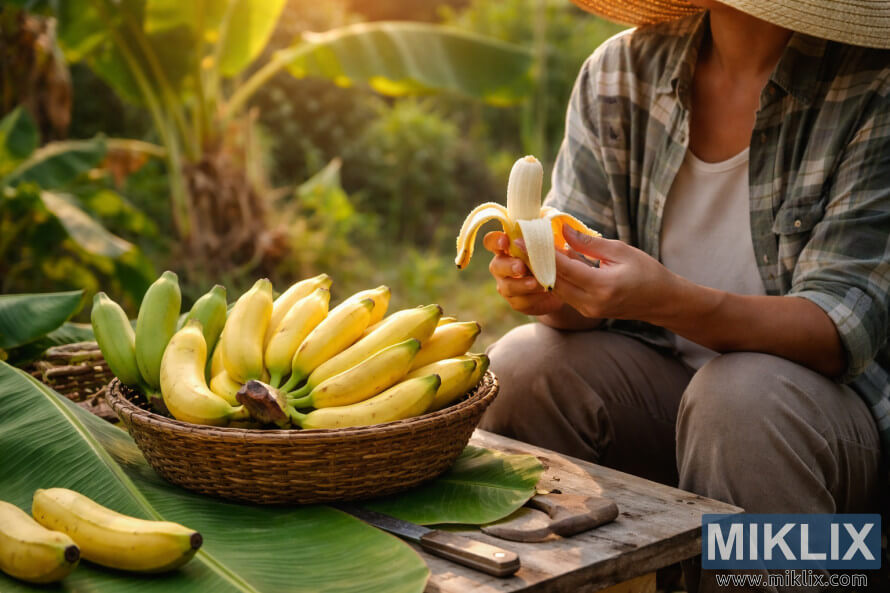
The satisfaction of harvesting your own homegrown bananas
Growing bananas at home can be one of the most rewarding gardening experiences. Whether you're cultivating them in a tropical paradise or nurturing container specimens in cooler climates, the journey from planting to harvest offers both challenges and immense satisfaction.
Remember that banana plants are remarkably adaptable. With proper variety selection, attentive care, and a bit of patience, you can enjoy these tropical treasures in a wide range of growing conditions. The lush foliage alone makes them worthwhile ornamentals, and successfully harvesting your own fruit is an achievement worth celebrating.
As you embark on your banana-growing adventure, stay flexible and observant. Each growing environment presents unique challenges, and you'll develop techniques specific to your conditions. Don't be discouraged by setbacks—even experienced growers face occasional challenges with these magnificent plants.
With the knowledge from this guide and a willingness to learn through experience, you're well-equipped to join the growing community of home banana cultivators. Happy growing!
Click or tap the image for more information and higher resolutions.
Further Reading
If you enjoyed this post, you may also like these suggestions:
- A Complete Guide to Growing Leeks at Home Successfully
- How to Grow Swiss Chard: A Complete Beginner's Guide
- A Complete Guide to Growing Grapefruits From Planting to Harvest