
Image: Nutritional Properties and Health Benefits of Brussels Sprouts
Published: January 4, 2026 at 8:40:49 PM UTC
Last updated: January 4, 2026 at 8:41:12 PM UTC
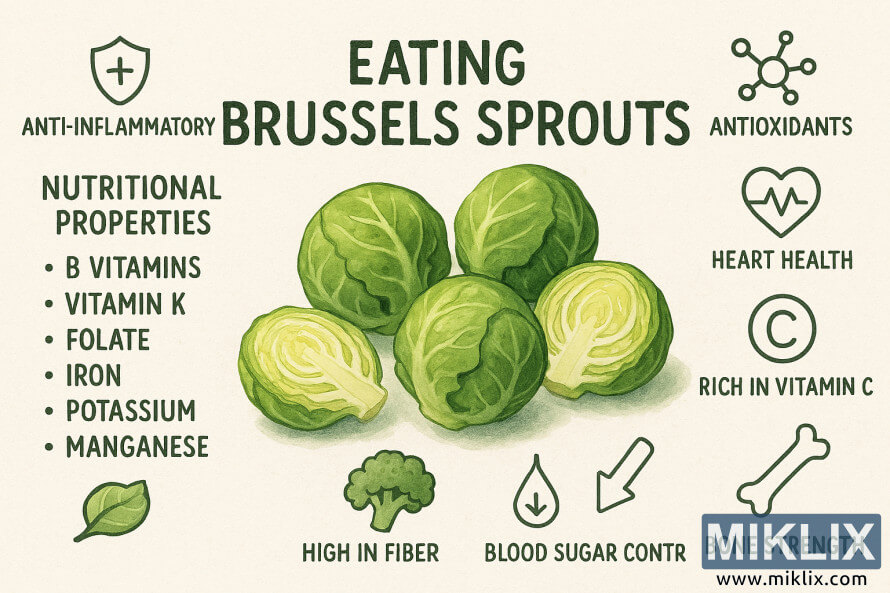
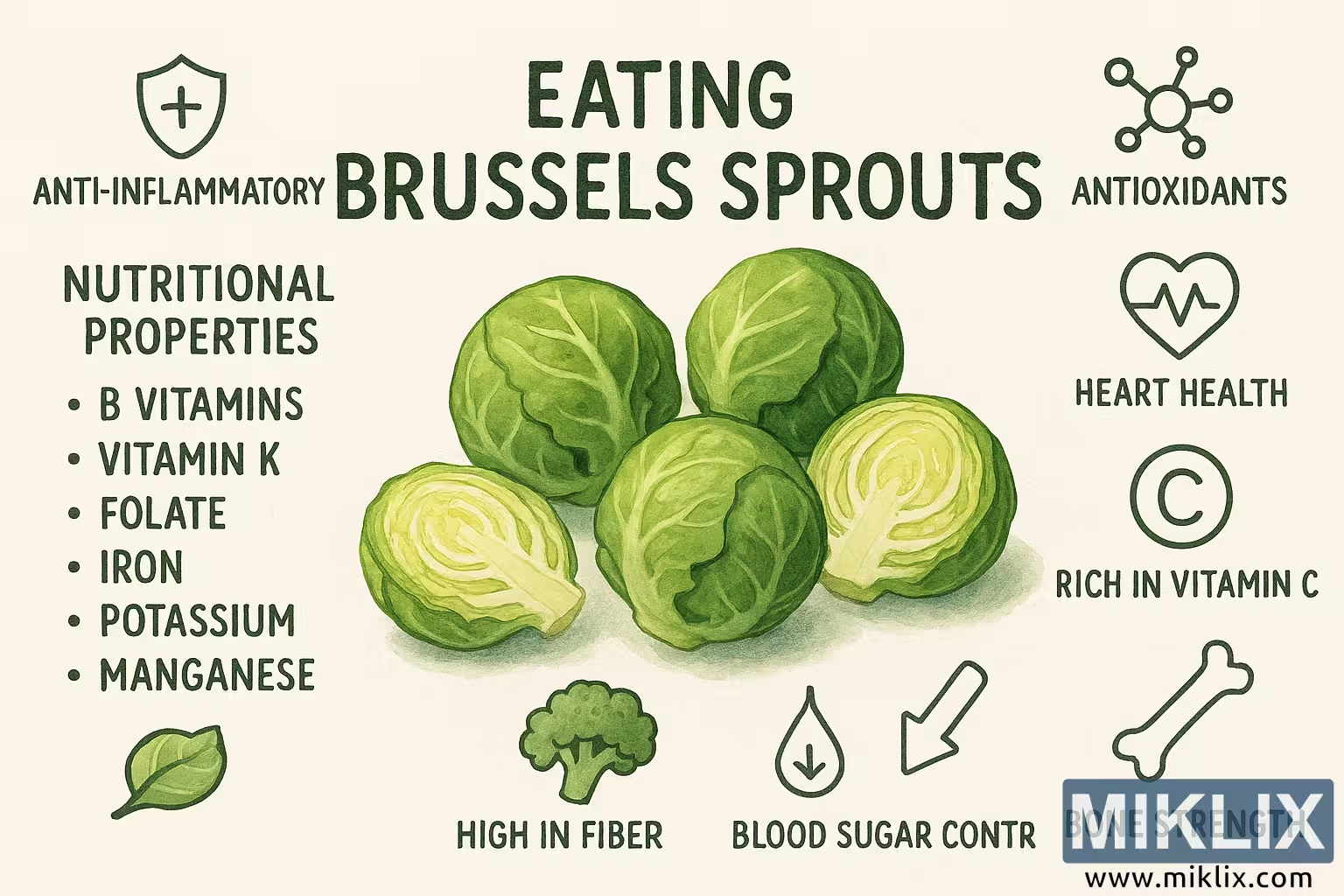
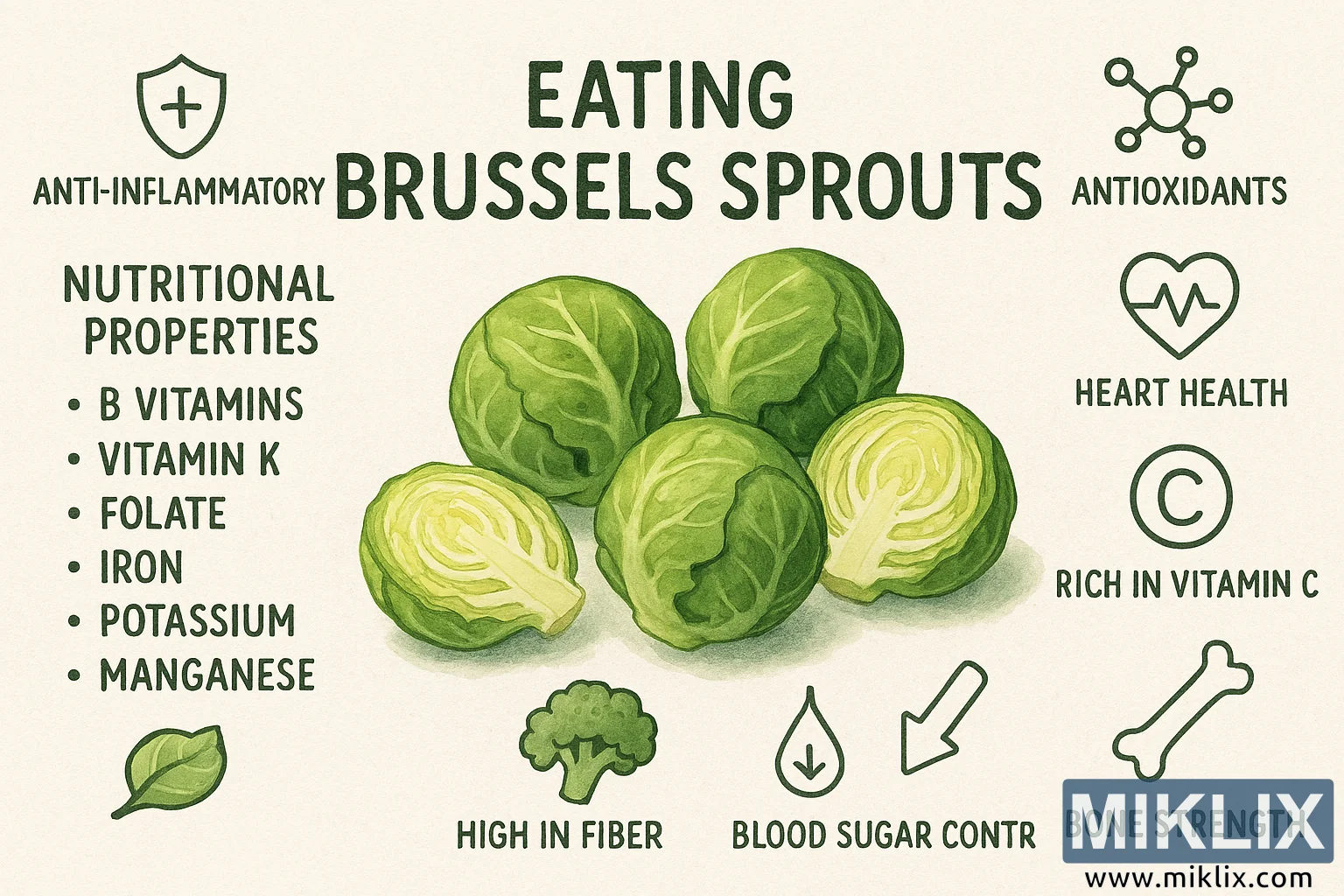
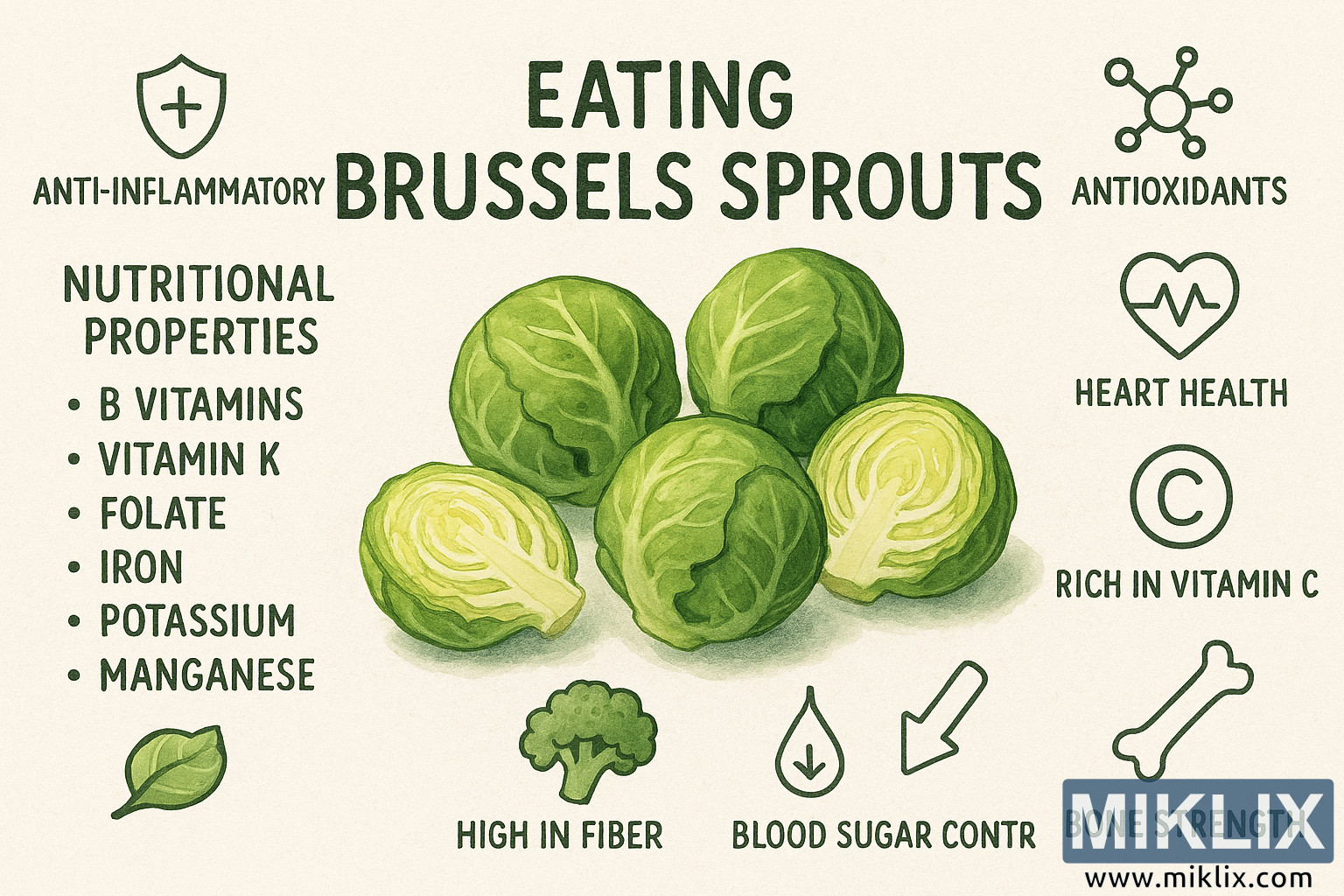
Landscape educational infographic about Brussels sprouts showing their nutritional properties and health benefits, including vitamins, minerals, fiber, antioxidants, heart health support, blood sugar control, cholesterol-lowering, bone strength, and anti-inflammatory effects, in a clean green-on-off-white design.
Available versions of this image
The image files available for download below are less compressed and higher resolution - and as a result of that, higher quality - than the images embedded in articles and pages on this website, which are more optimized for file size in order to reduce bandwidth consumption.
Regular size (1,536 x 1,024)
Large size (3,072 x 2,048)
Very large size (4,608 x 3,072)
Extra large size (6,144 x 4,096)
Comically large size (1,048,576 x 699,051)
- Still uploading... ;-)
Image description
This landscape-oriented educational illustration showcases the nutritional properties and health benefits of eating Brussels sprouts in a clean, visually engaging layout. The background is a soft, off-white parchment-like texture that gives the image a warm, natural, and slightly organic feel, ideal for nutrition, health, and wellness contexts. At the center-right of the composition, a small group of Brussels sprouts is depicted in a semi-realistic digital style: one whole sprout and several halved sprouts reveal tightly packed leaves in layered shades of green, from pale lime at the core to deeper emerald at the outer leaves. Subtle shading and highlights emphasize their fresh, crisp texture and three-dimensional form.
To the upper left of the sprouts, the bold heading "EATING BRUSSELS SPROUTS" appears in uppercase, hand-drawn, dark green lettering, serving as the primary title of the graphic. The typography style is friendly and approachable, with enough weight and contrast to stand out clearly against the light background. On the left side of the image, a vertical list labeled "NUTRITIONAL PROPERTIES" is set in the same dark green uppercase font. Beneath this subheading, key nutrients associated with Brussels sprouts are listed as concise bullet points: B vitamins, vitamin K, folate, iron, potassium, and manganese. The list is arranged with generous spacing to maintain readability and to visually balance the icons and benefits on the right.
Surrounding the central sprouts illustration, a series of simple line icons paired with benefit labels describe the main health effects of including Brussels sprouts in the diet. Each benefit is written in dark green uppercase text and is connected conceptually to a nearby icon, creating a clean infographic-style layout. Benefits include antioxidants (represented by a stylized molecule icon), heart health (shown as a heart shape with an electrocardiogram line), rich in vitamin C (indicated by a bold "C" within a circle), and lowers cholesterol (depicted with a downward arrow). Additional benefits include bone strength (represented by a diagonal bone), high in fiber (shown with a stylized broccoli or floret icon), blood sugar control (symbolized by a droplet with a plus sign), and anti-inflammatory properties (indicated by a shield with a cross in the center).
The color palette is dominated by natural greens that evoke freshness, plant-based eating, and health, with dark green used for text and icons to ensure high contrast and readability. The parchment-like off-white background adds softness and warmth while keeping the overall appearance minimal and uncluttered. The visual hierarchy is carefully organized: the main title and central sprouts draw the eye first, followed by the radial arrangement of health benefit icons and the structured nutrient list on the left. Overall, the image works simultaneously as an attractive illustration of Brussels sprouts, a quick-reference nutritional guide, and an accessible educational infographic about their health benefits.
The image is related to: Brussels Sprouts: Why These Little Greens Deserve the Spotlight