
How to Grow Scallions: Complete Guide for Beginners
Published: April 14, 2026 at 9:14:59 PM UTC
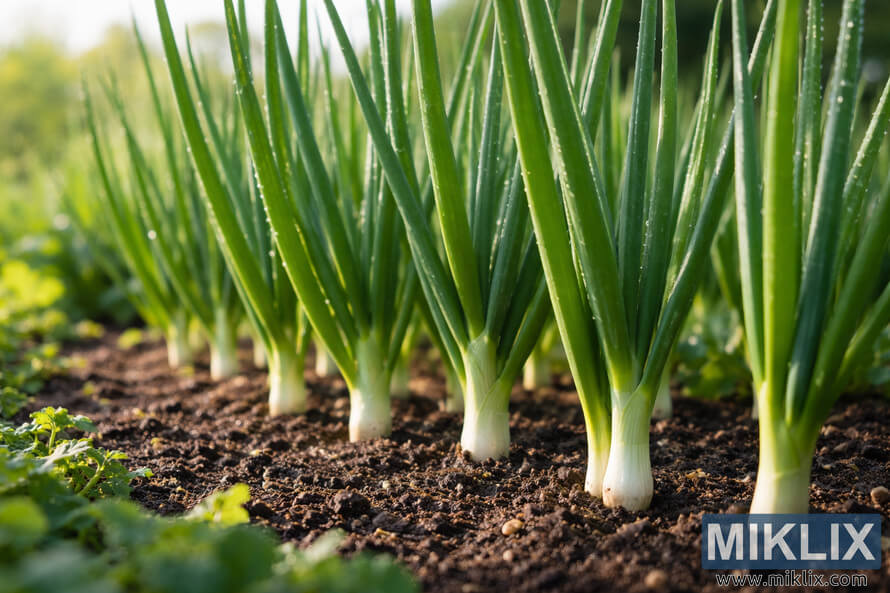
Growing your own scallions transforms your cooking and connects you to fresh food. These versatile green onions thrive in nearly any space. Whether you have a sprawling garden or a small balcony, scallions reward minimal effort with abundant harvests. This guide walks you through every step of cultivation.
Click or tap the image for more information and higher resolutions.
Scallions grow faster than most vegetables. You can harvest them in as little as eight weeks from seed. Their mild onion flavor enhances countless dishes. From salads to stir-fries, these spring onions add freshness to your cooking. The best part is that you can regrow them from kitchen scraps. This makes scallions one of the most economical vegetables to cultivate.
Understanding Scallions and Green Onions
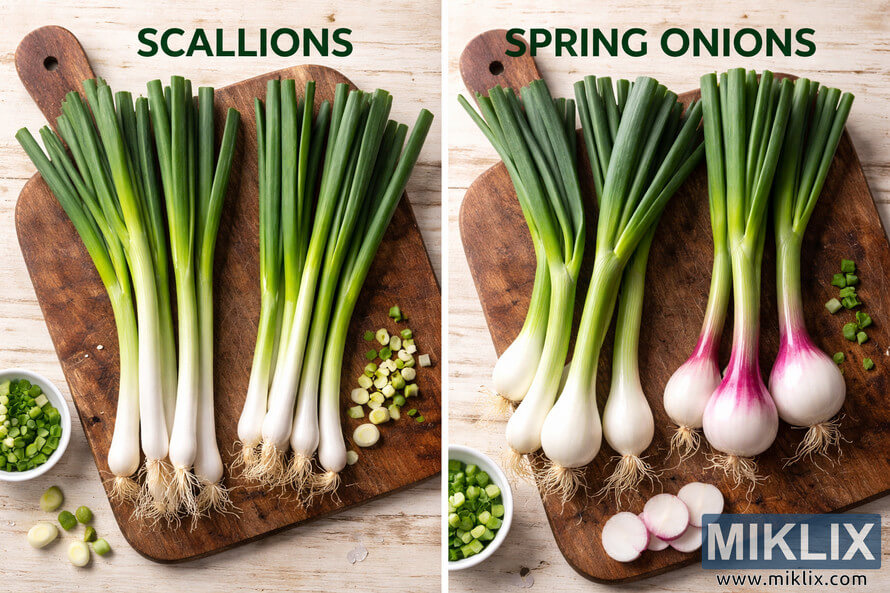
Scallions and green onions refer to the same plant in most contexts. These are young onions harvested before the bulb fully develops. The entire plant is edible from root to tip. Spring onions sometimes have a slightly larger white bulb. However, gardeners often use these names interchangeably.
The allium family includes scallions along with garlic, shallots, and regular onions. This connection explains their similar flavor profiles. Scallions offer a milder taste compared to mature onions. The green tops provide a fresh, mild onion flavor. The white bulb delivers a slightly stronger taste. Both parts work beautifully in cooking.
These vegetables adapt to various growing conditions. They tolerate partial shade better than many crops. This flexibility makes them perfect for tucked-away garden spots. Scallions also companion plant well with tomatoes, carrots, and most herbs. Their pest-repelling properties benefit neighboring plants.
Click or tap the image for more information and higher resolutions.
Choosing the Right Variety of Scallions
Popular Scallion Varieties
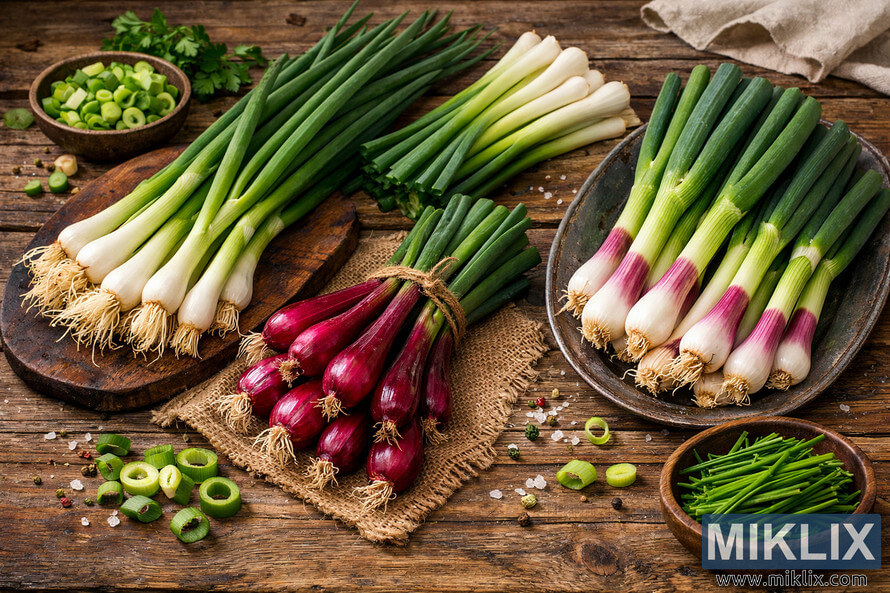
Selecting the right variety sets you up for success. Different types suit different climates and uses. Evergreen Hardy White scallions tolerate cold weather exceptionally well. They survive frost and continue growing when temperatures drop. This variety works perfectly for fall and winter gardens.
Tokyo Long White produces tender stalks with mild flavor. These scallions mature quickly, ready to harvest in just 60 days. Gardeners love them for continuous harvests. Red Beard scallions add color to your garden and plate. Their red-tinged stems create visual interest in salads and garnishes.
Parade scallions resist bolting in warm weather. This means they stay productive longer during hot summers. Consider your climate when choosing varieties. Cold-region gardeners should prioritize hardy types. Warm-climate growers benefit from bolt-resistant varieties.
Variety Selection Tip: Start with Evergreen Hardy White if you are new to growing scallions. This forgiving variety adapts to most conditions and produces reliably.
Click or tap the image for more information and higher resolutions.
Planting Methods for Scallions
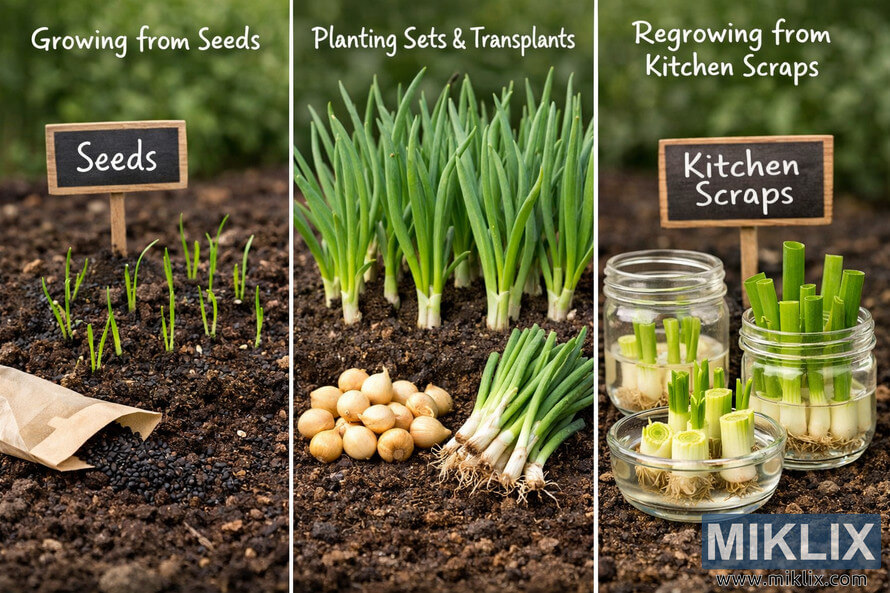
Growing from Seeds
Starting scallions from seed gives you the widest variety selection. Sow seeds directly in the garden or start them indoors. Direct sowing works well in spring after the last frost. Plant seeds one quarter inch deep in rows. Space rows six inches apart for easy access.
Indoor seed starting extends your growing season. Begin seeds six weeks before your last frost date. Use quality seed starting mix in containers. Keep the soil moist but not waterlogged. Seeds germinate within seven to ten days at room temperature. Thin seedlings to one inch apart once they reach two inches tall.
Planting Sets and Transplants
Onion sets provide a faster route to harvest. These are small, dormant bulbs sold at garden centers. Plant sets one inch deep with the pointed end facing up. Space them two inches apart in rows. Sets establish quickly and resist many common diseases.
Transplants from nurseries save even more time. Choose healthy-looking plants with vibrant green tops. Plant them at the same depth they grew in their containers. Water thoroughly after transplanting to reduce shock. Transplants can go in the ground two weeks before the last frost.
Regrowing from Kitchen Scraps
Regrowing scallions from scraps costs nothing and works surprisingly well. Save the white root ends when you cook with green onions. Leave about one inch of the white bulb attached to roots. Place these in a glass of water on a sunny windowsill. Change the water every two days.
Roots appear within a week. Green tops start growing shortly after. Once roots reach one inch long, transplant to soil. This method provides a continuous supply of fresh scallions. The regrown plants produce harvestable tops in just two weeks. However, they may not last as long as plants grown from seeds or sets.
Click or tap the image for more information and higher resolutions.
Soil Requirements for Growing Scallions
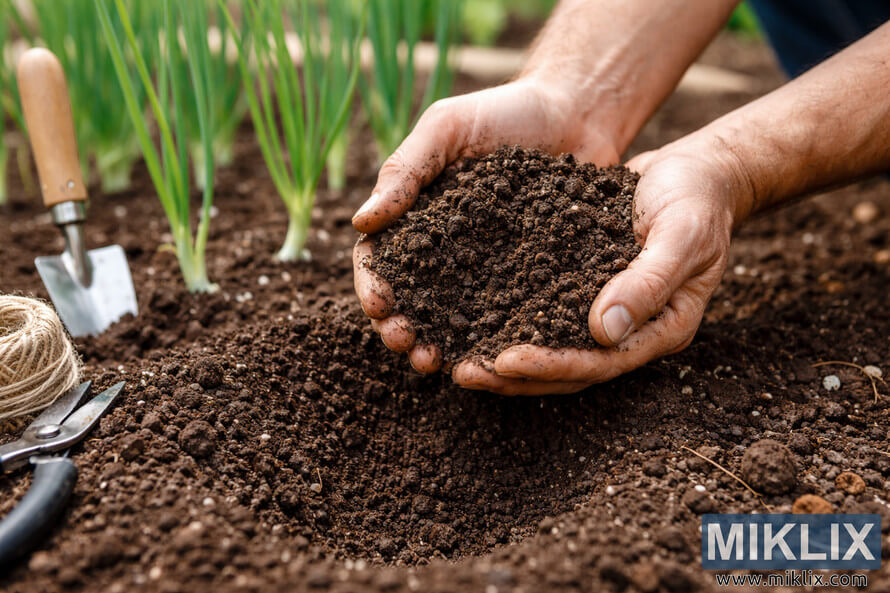
Scallions prefer well-draining soil rich in organic matter. Heavy clay soils can stunt root development. Sandy soils drain too quickly and need amendments. The ideal soil combines drainage with moisture retention. Mix compost into your planting area before sowing. This improves soil structure and provides nutrients.
Aim for a soil pH between six and seven. Scallions tolerate slightly acidic to neutral conditions. Test your soil if growth seems sluggish. Most garden centers sell inexpensive pH testing kits. Adjust pH with lime to raise it or sulfur to lower it.
Add a two-inch layer of compost to your beds each season. This feeds the soil and improves its texture over time. Well-fed soil produces healthier, more flavorful scallions. Avoid fresh manure as it can burn young roots. Use aged compost or well-rotted manure instead.
Container Soil Mix
- Two parts potting soil
- One part compost
- One part perlite for drainage
- Slow-release organic fertilizer
Garden Bed Preparation
- Remove weeds and debris
- Add three inches of compost
- Work compost six inches deep
- Level and firm the surface
Click or tap the image for more information and higher resolutions.
Sunlight Needs for Healthy Scallions
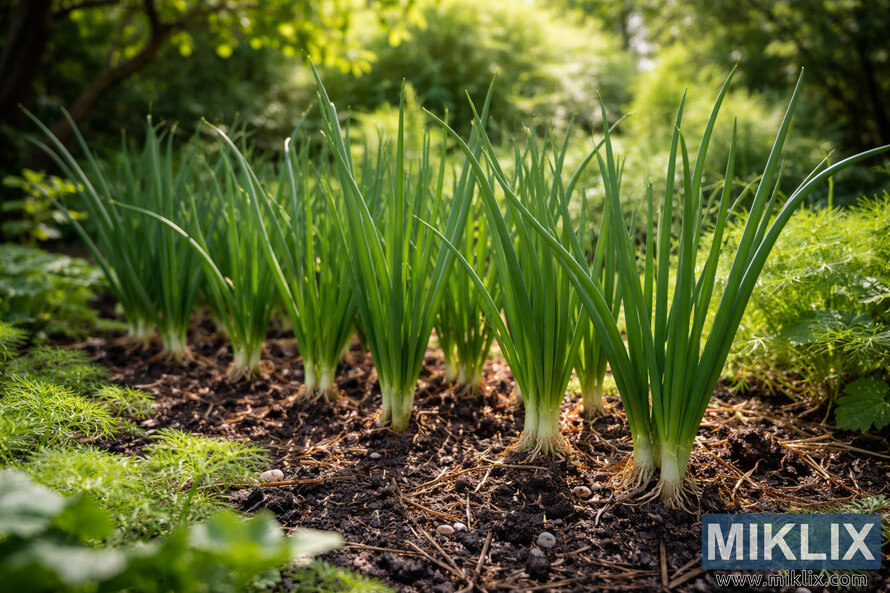
Scallions perform best with full sun exposure. This means six to eight hours of direct sunlight daily. Full sun encourages vigorous growth and stronger flavor. However, these adaptable onions tolerate partial shade better than many vegetables. They will grow in locations receiving four to six hours of sun.
Partial shade becomes advantageous in hot climates. Too much intense summer heat can stress plants and trigger early bolting. A location with morning sun and afternoon shade works perfectly in warm regions. This protects plants during the hottest part of the day.
Container-grown scallions offer flexibility in sun exposure. Move pots to follow the sun or provide afternoon shade as needed. Monitor your plants for signs of insufficient light. Pale, spindly growth indicates they need more sun. Adjust placement accordingly for best results.
Click or tap the image for more information and higher resolutions.
Watering Schedule for Scallions
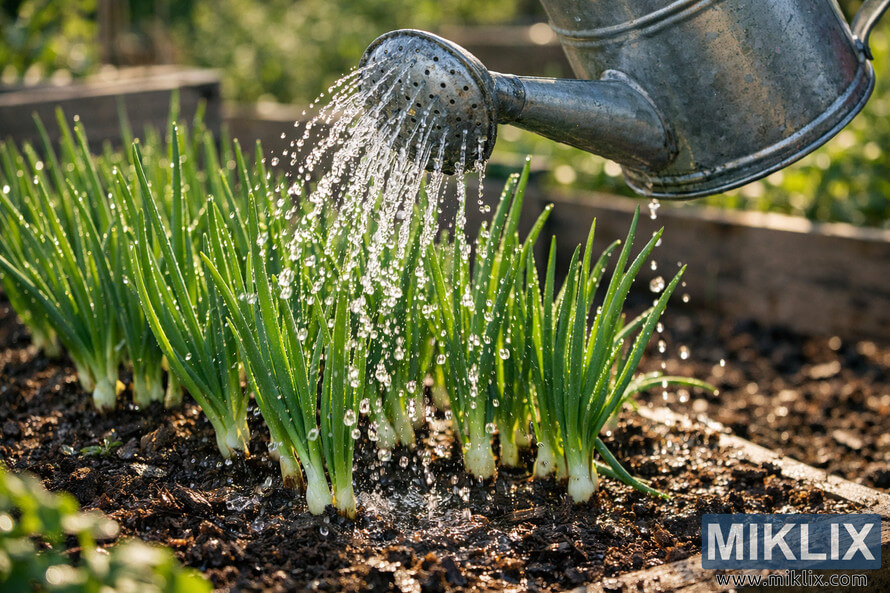
Consistent moisture produces the best scallions. These shallow-rooted plants need regular watering. The top inch of soil should stay evenly moist. Check soil moisture daily during hot weather. Water deeply when the surface feels dry to your finger.
Morning watering reduces disease problems. Wet foliage overnight invites fungal infections. Water at the soil level rather than overhead. This keeps leaves dry and focuses moisture where roots need it. Drip irrigation or soaker hoses work beautifully for scallion beds.
Container-grown scallions dry out faster than garden beds. Check container moisture twice daily during summer heat. Pots may need watering every day or even twice daily. Ensure containers have drainage holes to prevent waterlogging. Standing water causes root rot and kills plants quickly.
Watering Guidelines by Season
- Spring - Water two to three times per week as temperatures rise
- Summer - Daily watering may be necessary during heat waves
- Fall - Reduce to twice weekly as temperatures cool
- Winter - Water only when soil becomes dry, usually once per week
Mulching around plants conserves moisture and reduces watering frequency. Apply a two-inch layer of straw or shredded leaves. Keep mulch away from plant stems to prevent rot. Mulch also moderates soil temperature and suppresses weeds.
Click or tap the image for more information and higher resolutions.
Fertilizing Your Scallions
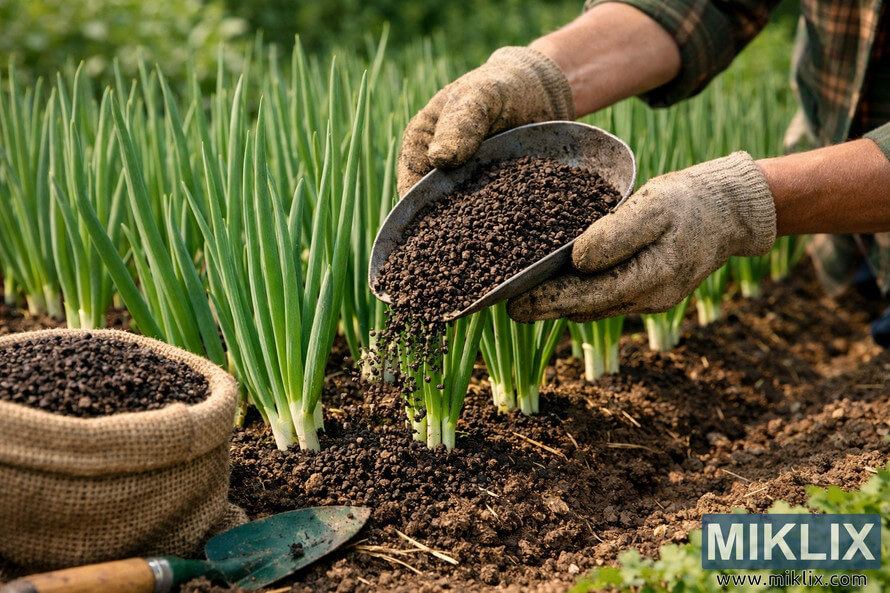
Scallions benefit from regular feeding throughout the growing season. These fast-growing plants need nitrogen for healthy green growth. Apply a balanced organic fertilizer every three weeks. Fish emulsion works wonderfully for scallions. Dilute it according to package directions and apply as a soil drench.
Side-dress established plants with compost monthly. Sprinkle a thin layer around plants and work it lightly into the soil surface. This gentle feeding method prevents fertilizer burn. It also continues improving soil structure over time.
Container-grown scallions need more frequent fertilization. Nutrients leach out with each watering. Feed container plants every two weeks with diluted liquid fertilizer. Use half the recommended strength to avoid over-fertilizing. Watch for dark green, vigorous growth as signs of proper nutrition.
Organic Fertilizer Options: Fish emulsion, compost tea, diluted kelp extract, and balanced organic granular fertilizers all work well for scallions. Avoid high-phosphorus fertilizers which encourage bulb formation rather than leaf growth.
Click or tap the image for more information and higher resolutions.
Managing Pests and Diseases
Common Pests
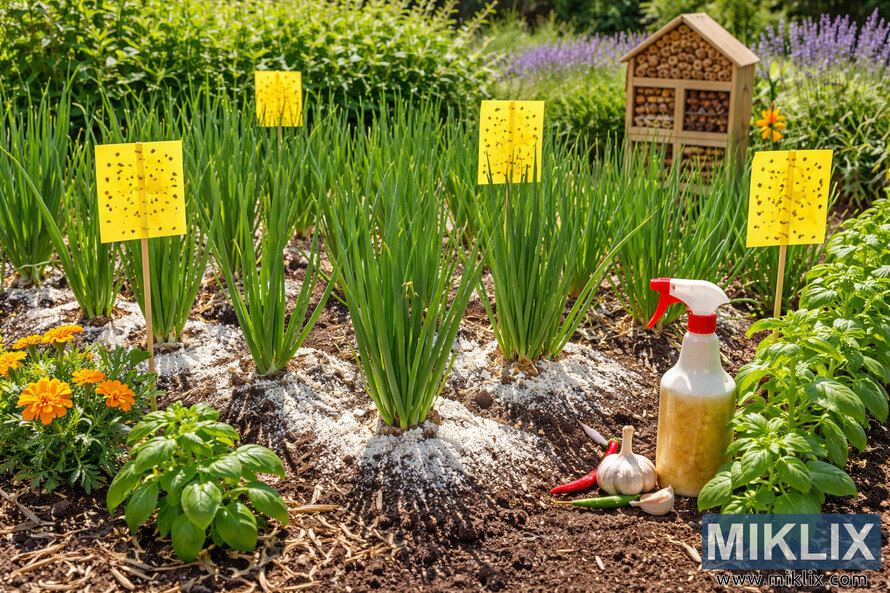
Thrips pose the most common threat to scallions. These tiny insects create silvery streaks on leaves. Heavy infestations stunt growth and reduce yields. Spray plants with insecticidal soap at the first sign of damage. Repeat applications every five days until thrips disappear.
Onion maggots tunnel into the white bulb area. Affected plants wilt and die despite adequate watering. Prevent maggots by using row covers immediately after planting. Remove covers once plants establish. Rotate planting locations each year to disrupt pest life cycles.
Aphids occasionally cluster on young scallion leaves. A strong spray of water dislodges most aphids. For persistent problems, apply neem oil solution. This organic pesticide controls aphids without harming beneficial insects.
Disease Prevention
Downy mildew appears as yellowing leaves with fuzzy growth on undersides. This fungal disease thrives in cool, wet conditions. Improve air circulation by proper spacing. Water early in the day so foliage dries quickly. Remove and destroy infected plants immediately.
White rot causes leaves to yellow and wilt. The bulb develops white, fluffy fungal growth. This serious disease persists in soil for years. Prevent white rot through crop rotation. Never plant allium family members in the same spot more than once every four years.
Purple blotch creates purple spots on leaves and stems. This fungal infection spreads in humid conditions. Choose resistant varieties when possible. Space plants adequately for air movement. Avoid overhead watering to keep foliage dry.
Prevention Strategies
- Proper spacing for air circulation
- Morning watering keeps leaves dry
- Crop rotation prevents soil diseases
- Row covers exclude flying pests
- Healthy soil builds plant resistance
Risk Factors
- Overhead watering invites fungal diseases
- Crowded plantings trap moisture
- Poor drainage encourages root rot
- Repeated planting in same location
- Stressed plants attract more pests
Click or tap the image for more information and higher resolutions.
Harvesting Techniques for Scallions
Harvest scallions when they reach pencil thickness. This typically occurs eight to ten weeks after planting. The entire plant is edible at any stage. Smaller, younger scallions taste milder. Larger, mature ones offer stronger onion flavor. Choose based on your taste preference and recipe needs.
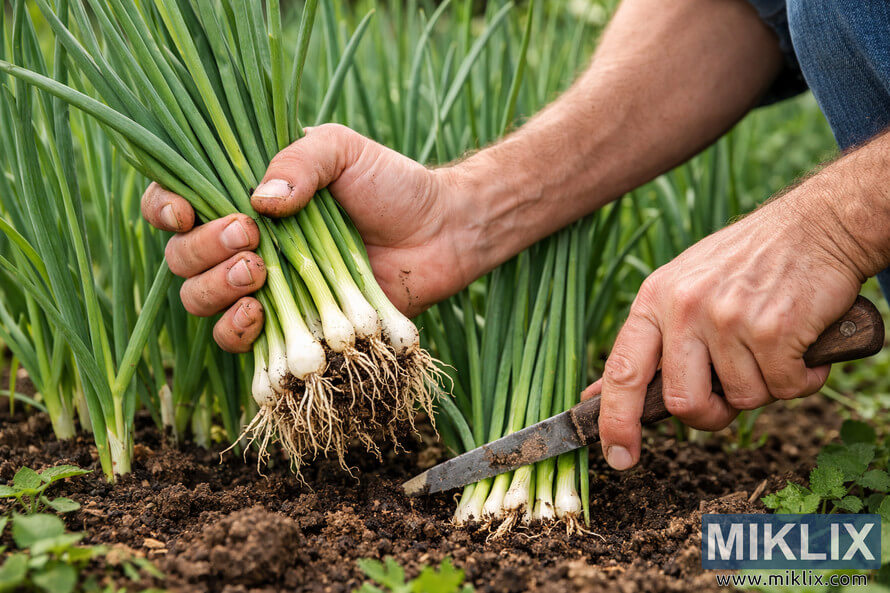
Pull scallions from loose soil by grasping near the base. Tug gently to avoid breaking the stem. Loosen surrounding soil with a garden fork if needed. This prevents damage to neighboring plants. Shake off excess soil and rinse roots under cold water.
Cut scallions at soil level for a continuous harvest. This technique works especially well with plants grown from scraps. Leave roots and about one inch of white bulb in the ground. New green shoots emerge within two weeks. You can harvest the same plant three to four times before it exhausts.
Storage Tips
Fresh scallions keep for one week in the refrigerator. Wrap unwashed green onions in damp paper towels. Place them in a plastic bag in the vegetable crisper. Wash just before use to maintain freshness longer.
Freeze chopped scallions for longer storage. Slice both green and white parts into small pieces. Spread them on a baking sheet and freeze until solid. Transfer frozen pieces to freezer bags. They keep for up to six months and work great in cooked dishes.
Dried scallions create a convenient pantry staple. Slice thinly and spread on dehydrator trays. Dry at 125 degrees for four to six hours until crisp. Store in airtight containers away from light. Rehydrate in soups or use directly in cooking.
Click or tap the image for more information and higher resolutions.
Container Growing Tips for Scallions
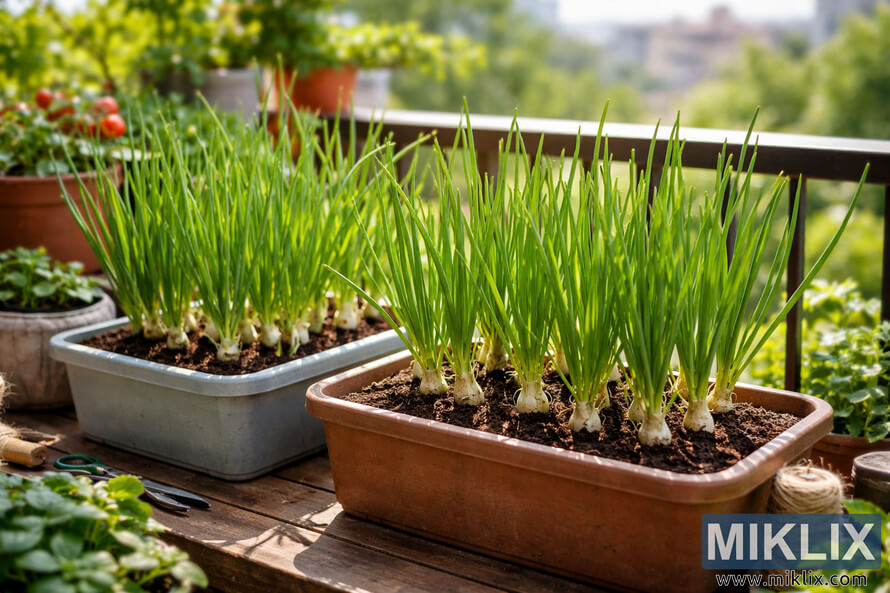
Containers offer perfect growing conditions for scallions. These shallow-rooted plants thrive in pots at least six inches deep. Wider containers accommodate more plants for bigger harvests. A standard twelve-inch diameter pot holds twelve to fifteen scallions comfortably.
Choose containers with adequate drainage holes. Clay pots breathe better but dry out faster. Plastic containers retain moisture longer and weigh less. Self-watering containers work beautifully for scallions. They maintain consistent moisture levels with less effort.
Fill containers with quality potting mix rather than garden soil. Garden soil compacts in containers and drains poorly. Add compost to potting mix for extra nutrients. Mix in perlite or vermiculite to improve drainage further.
Balcony and Patio Growing
Position containers where they receive morning sun. This provides needed light while avoiding harsh afternoon heat. South or east-facing locations work best in most climates. Protect containers from strong winds which dry out soil quickly.
Group containers together to create humidity around plants. This reduces water stress during hot weather. Elevate pots on feet or blocks for better drainage. This prevents roots from sitting in water after rain.
Succession planting ensures continuous harvests from containers. Plant new seeds or sets every three weeks. This staggers maturity dates so you always have fresh scallions ready. Three or four containers in rotation provide year-round supplies.
Space-Saving Tip: Plant scallions between slower-growing vegetables in large containers. They mature quickly and you can harvest them before the other crops need the space. This maximizes production from limited container space.
Click or tap the image for more information and higher resolutions.
Year-Round Growing Strategies
Scallions tolerate cool weather better than most vegetables. This makes year-round production possible in many climates. Spring and fall plantings usually perform best. However, with some protection, you can harvest fresh scallions even in winter.
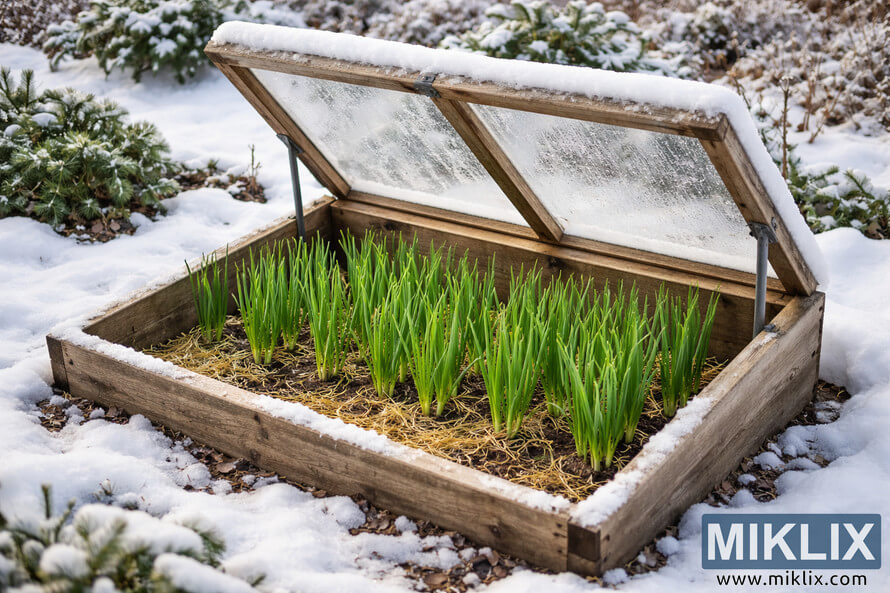
Cold frames extend the growing season significantly. These simple structures trap solar heat and protect plants from frost. Place cold frames over fall-planted scallions. They continue growing through mild winters. Open the frame on warm days to prevent overheating.
Row covers provide lightweight frost protection. Drape floating row covers over scallion beds when frost threatens. These breathable fabrics protect plants down to 28 degrees. Remove covers during the day once temperatures rise above freezing.
Indoor Winter Growing
Grow scallions indoors during winter for fresh supplies. Place containers near south-facing windows for maximum light. Supplement with grow lights if natural light seems insufficient. Standard fluorescent lights work fine for scallions.
Indoor temperatures between 60 and 70 degrees suit scallions perfectly. They tolerate cooler temperatures down to 45 degrees. Keep plants away from heating vents which create dry air. Maintain humidity by grouping plants together or using pebble trays.
Start seeds indoors in late fall for winter harvests. Succession planting every three weeks maintains continuous production. Indoor-grown scallions may take slightly longer to mature. However, the convenience of fresh green onions steps from your kitchen makes it worthwhile.
Click or tap the image for more information and higher resolutions.
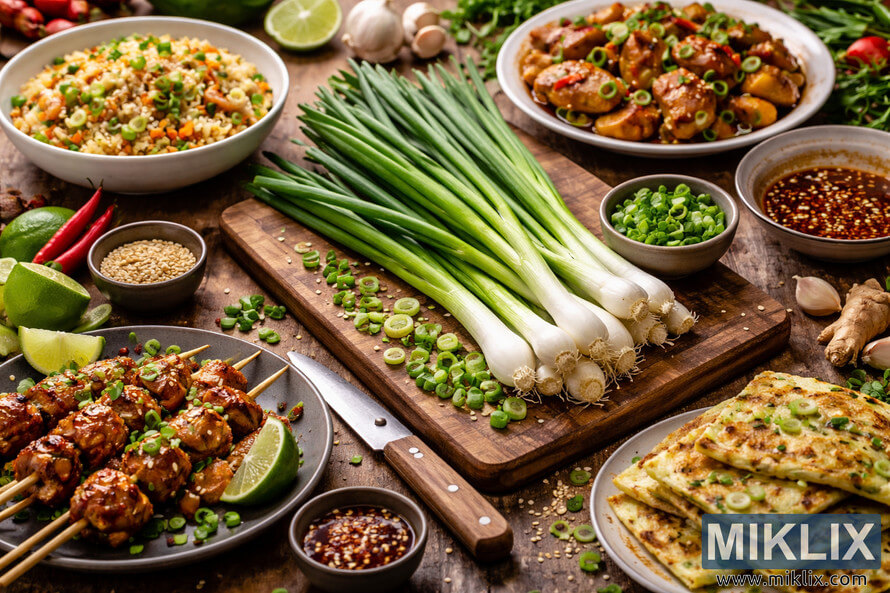
Using Scallions in Your Cooking
Fresh scallions elevate countless dishes with their mild onion flavor. The green tops offer delicate taste perfect for garnishes. The white bulb provides stronger onion flavor ideal for cooking. Use both parts to maximize flavor in your recipes.
Raw scallions add crisp texture and fresh flavor to salads. Chop them finely and mix throughout green salads. Slice them into matchsticks for Asian-style slaws. The green tops make beautiful garnishes for finished dishes. Their bright color adds visual appeal to soups and rice dishes.
Cooking transforms scallions into sweet, mellow ingredients. Sauté sliced white bulbs with garlic and ginger for stir-fry bases. Add green tops during the last few minutes of cooking time. This preserves their color and fresh taste. Grilled whole scallions develop incredible smoky-sweet flavor.
Popular Scallion Recipes
- Scallion pancakes with soy dipping sauce
- Scallion oil drizzled over rice or noodles
- Cream cheese and scallion bagel spread
- Spring onion soup with potatoes
- Grilled scallions with chili and lime
- Scallion and cheese omelet
Scallion oil brings intense allium flavor to any dish. Heat oil with lots of sliced scallions for several minutes. Strain out the solids and use the flavored oil for cooking. Drizzle it over rice, noodles, or vegetables. This sauce keeps refrigerated for two weeks.
Compound butter made with scallions adds flavor to grilled meat and vegetables. Mix softened butter with finely chopped scallions, salt, and garlic. Roll into a log using plastic wrap. Slice rounds and melt over hot food for instant flavor enhancement.
Click or tap the image for more information and higher resolutions.
Start Growing Your Own Scallions Today
Growing scallions provides one of the most rewarding gardening experiences. These versatile green onions produce quickly and tolerate various conditions. Whether you have garden beds or just a sunny windowsill, you can grow your own fresh scallions. The mild onion flavor enhances everything from salads to sophisticated dishes.
Start with just a few plants to build your confidence. Try regrowing kitchen scraps while you plan a larger planting. Success with scallions often inspires gardeners to expand their vegetable growing. The satisfaction of harvesting ingredients you grew yourself transforms cooking into something special.
Remember that gardening improves with practice. Each growing season teaches new lessons about your specific conditions. Keep notes on what works best in your garden. Share your harvest and knowledge with friends and family. Fresh scallions make wonderful gifts that showcase your growing skills.
Further Reading
If you enjoyed this post, you may also like these suggestions:
- A Guide to Growing the Best Elderberries in Your Garden
- Growing Blackberries: A Guide for Home Gardeners
- A Guide to Growing Your Own Cucumbers From Seed to Harvest