
Growing Carrots: The Complete Guide to Garden Success
Published: December 14, 2025 at 8:55:14 PM UTC
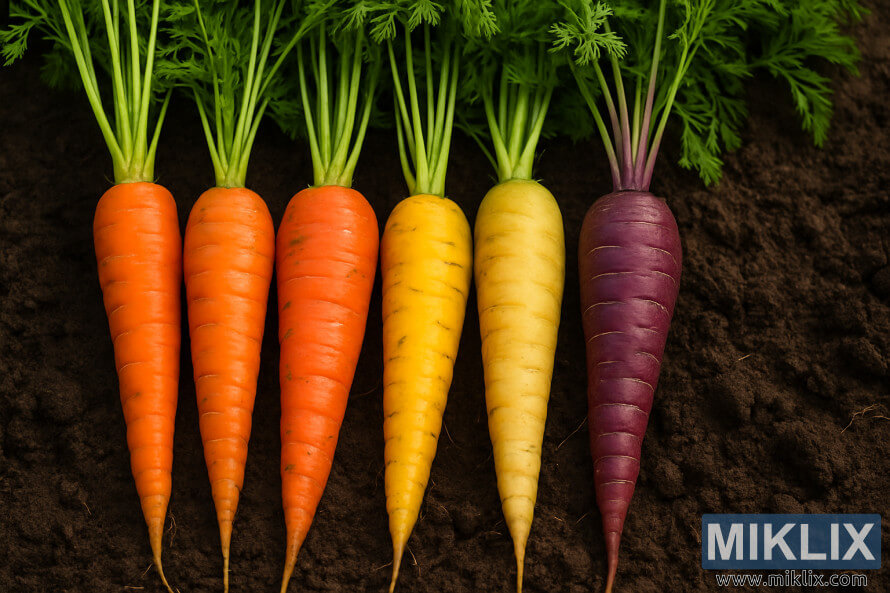
There's something magical about pulling a homegrown carrot from the soil. That satisfying resistance as you tug, the reveal of vibrant orange (or purple, red, or yellow!), and the incomparable sweetness that store-bought carrots simply can't match.
Click or tap the image for more information and higher resolutions.
While growing carrots has a reputation for being tricky, with the right approach, you'll be harvesting bountiful crops of these nutritious root vegetables in no time. This comprehensive guide will walk you through everything you need to know about growing carrots successfully in your home garden.
Benefits of Growing Your Own Carrots
Growing your own carrots offers numerous advantages over store-bought options. First, homegrown carrots deliver superior flavor—sweeter, more complex, and genuinely carrot-y. You'll also enjoy greater variety, with access to dozens of unique carrot types in different colors, shapes, and sizes that rarely appear in grocery stores.
Nutritionally, freshly harvested carrots retain more vitamins and minerals than those that have traveled long distances and sat on shelves. They're packed with beta-carotene, fiber, vitamin K, potassium, and antioxidants. Plus, growing your own means you control exactly what goes into your soil and onto your plants—no mystery pesticides or chemical fertilizers.
Beyond the practical benefits, there's the simple joy of the growing process. Children especially delight in the "treasure hunt" of carrot harvesting, and many gardeners find that carrots are the gateway vegetable that gets kids excited about eating what they've grown.
Finally, carrots are economical to grow. A single packet of seeds costs a few dollars but can produce pounds of carrots. They store well after harvest and can be preserved through multiple methods, providing nutritious vegetables for months after the growing season ends.
Best Carrot Varieties for Home Gardens
Carrots come in a stunning array of shapes, sizes, and colors. Choosing the right varieties for your garden depends on your soil type, growing season length, and personal preferences.
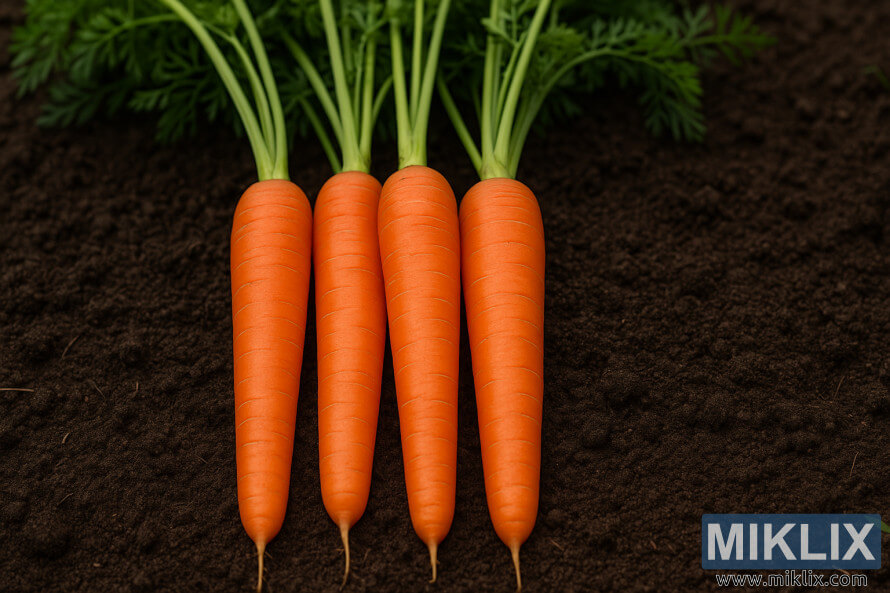
Nantes
Sweet, crisp, and cylindrical with blunt tips. These reliable carrots grow 6-7 inches long and are known for exceptional flavor. Perfect for beginners as they perform well in less-than-perfect soil. Try 'Scarlet Nantes' or 'Bolero' for disease resistance.
Click or tap the image for more information and higher resolutions.
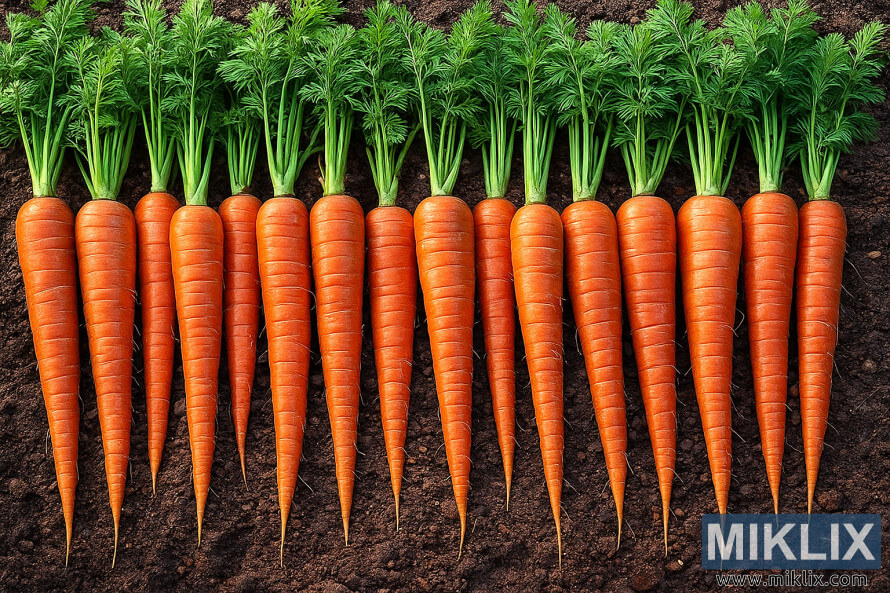
Danvers
Classic tapered shape that handles heavier soils well. These sturdy carrots grow 6-8 inches long with strong tops that make harvesting easier. 'Red Core Danvers' is a popular heirloom variety with excellent storage qualities.
Click or tap the image for more information and higher resolutions.
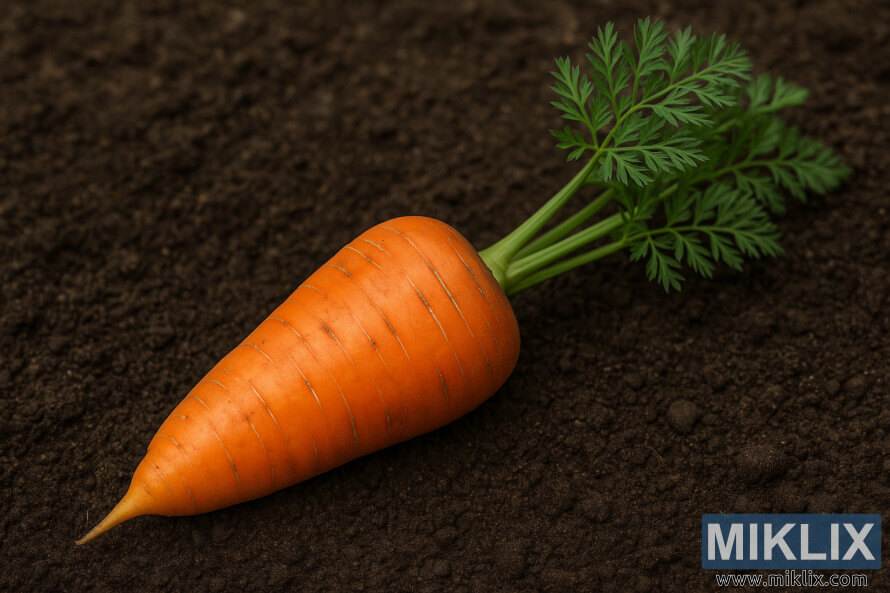
Chantenay
Broad-shouldered and tapered, these stocky carrots thrive in heavier soils. Shorter (5-6 inches) but wider than other types, they're excellent for container growing and clay soils. 'Red Cored Chantenay' is a sweet, flavorful heirloom.
Click or tap the image for more information and higher resolutions.
Imperator
Long and slender with pointed tips—the classic grocery store appearance. These carrots need deep, loose soil to reach their 8-10 inch potential. 'Sugarsnax' is an exceptionally sweet Imperator type that's worth the extra soil preparation.
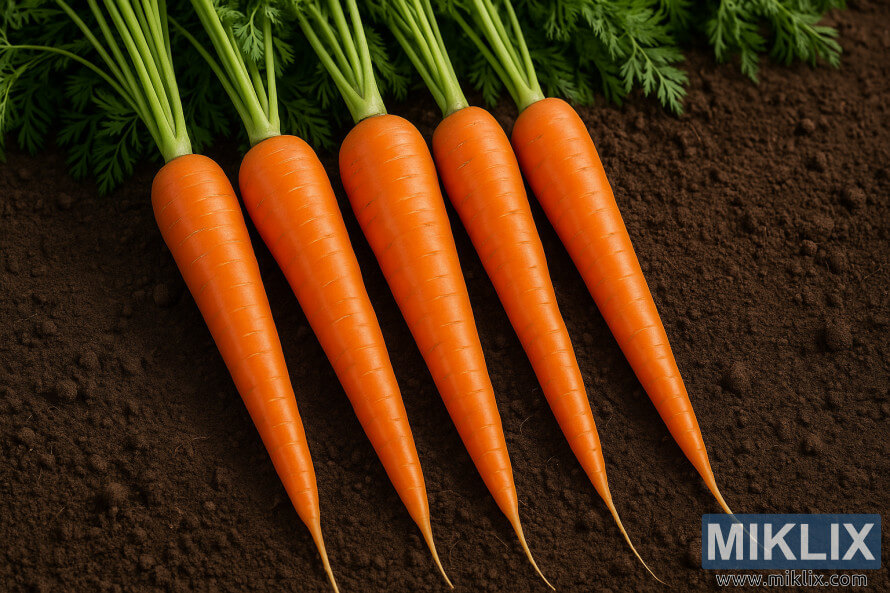
Click or tap the image for more information and higher resolutions.
Paris Market/Round
Ball-shaped carrots about 1-2 inches in diameter. Perfect for shallow or rocky soils where longer varieties struggle. 'Atlas' and 'Thumbelina' are excellent choices for containers or clay soil. Kids love their unique shape!
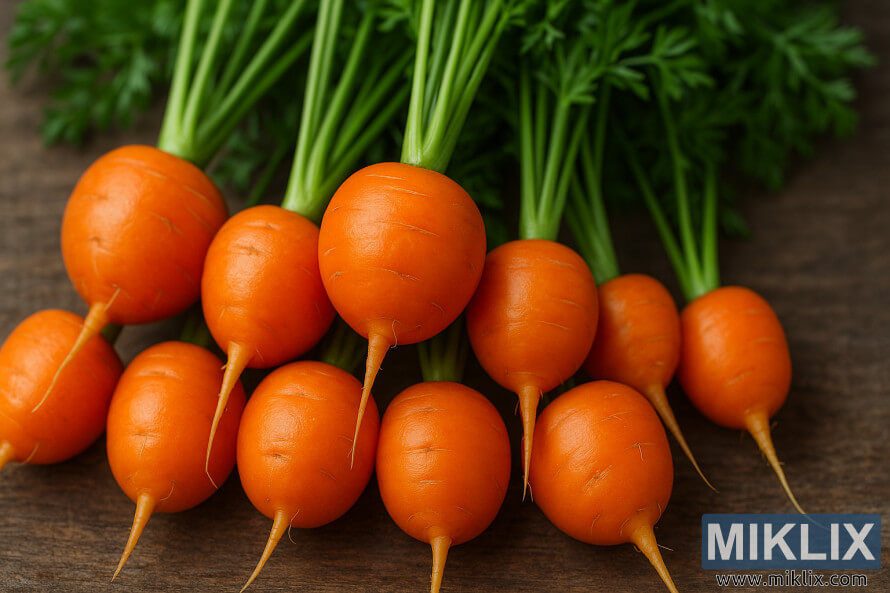
Click or tap the image for more information and higher resolutions.
Colorful Varieties
Beyond orange, try purple 'Cosmic Purple' (orange inside), white 'White Satin', yellow 'Solar Yellow', or red 'Atomic Red'. These colorful varieties contain different antioxidants and make for stunning presentations. Rainbow mixes like 'Kaleidoscope' provide variety in one seed packet.
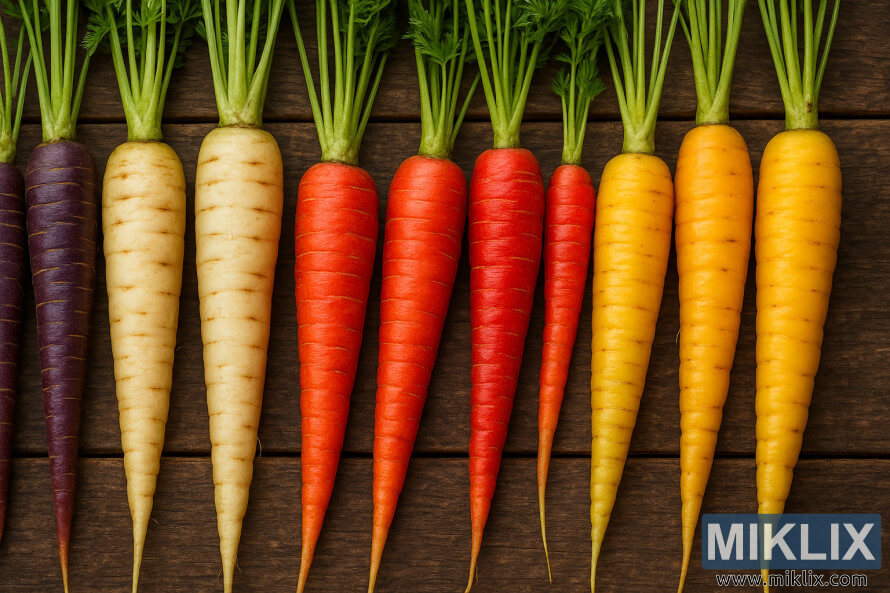
Click or tap the image for more information and higher resolutions.
Soil Preparation and Ideal Growing Conditions
Soil Requirements
Carrots demand specific soil conditions to develop properly. The ideal soil is:
- Loose and friable to a depth of at least 12 inches
- Free of rocks, stones, and clumps that cause forking
- Well-draining to prevent rot
- Sandy loam texture (heavy clay soils produce stunted, misshapen carrots)
- pH between 6.0 and 6.8 (slightly acidic to neutral)
If your native soil is heavy clay or rocky, consider growing carrots in raised beds or containers where you can control the soil composition. For clay soils, amend with compost and coarse sand to improve drainage and texture.
Preparing Your Soil
Start preparing your carrot bed at least 2-3 weeks before planting:
- Remove all rocks, sticks, and debris from the planting area
- Loosen the soil to a depth of 12 inches using a garden fork or broadfork
- Break up any soil clumps and remove remaining stones
- Add 2-3 inches of compost and work it into the top 6 inches of soil
- Avoid fresh manure, which causes carrots to fork; use only well-aged compost
- Rake the surface smooth and level
Fertilizer Considerations
Carrots need balanced nutrition but are sensitive to excess nitrogen, which produces lush tops but poor roots. Use a low-nitrogen, phosphorus-rich fertilizer (like 5-10-10) worked into the soil before planting. Avoid high-nitrogen fertilizers and fresh manure, which cause forking and hairy roots.
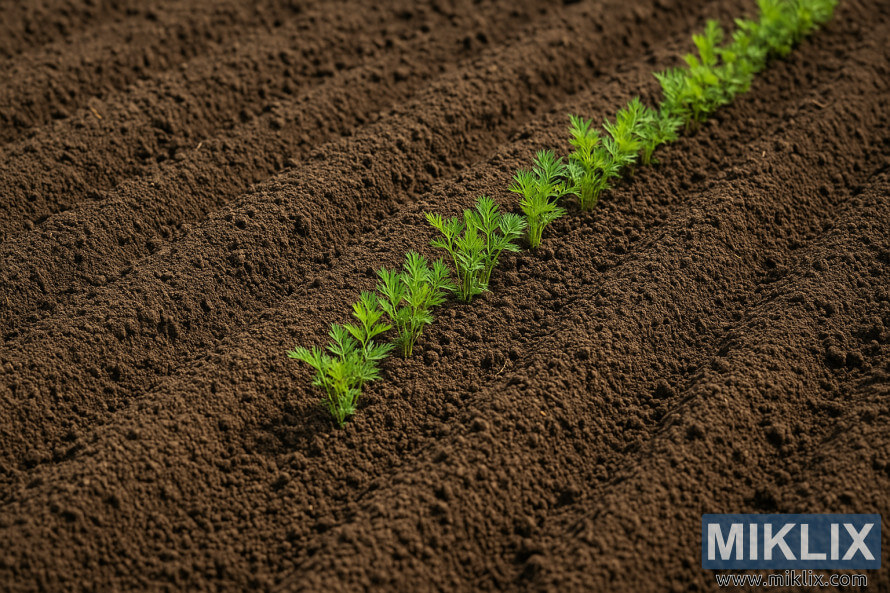
Click or tap the image for more information and higher resolutions.
Step-by-Step Planting Instructions
When to Plant Carrots
Timing is crucial for successful carrot growing:
- Spring planting: Sow seeds 2-3 weeks before the last spring frost date when soil temperatures reach at least 45°F
- Fall planting: Sow seeds 10-12 weeks before the first fall frost for a late autumn/early winter harvest
- Succession planting: Sow small batches every 2-3 weeks for continuous harvests
- Ideal soil temperature: 55-75°F for best germination
Carrots grow best in cool weather but can be grown year-round in mild climates. In hot summer regions, focus on spring and fall crops, as summer heat can make carrots bitter and tough.
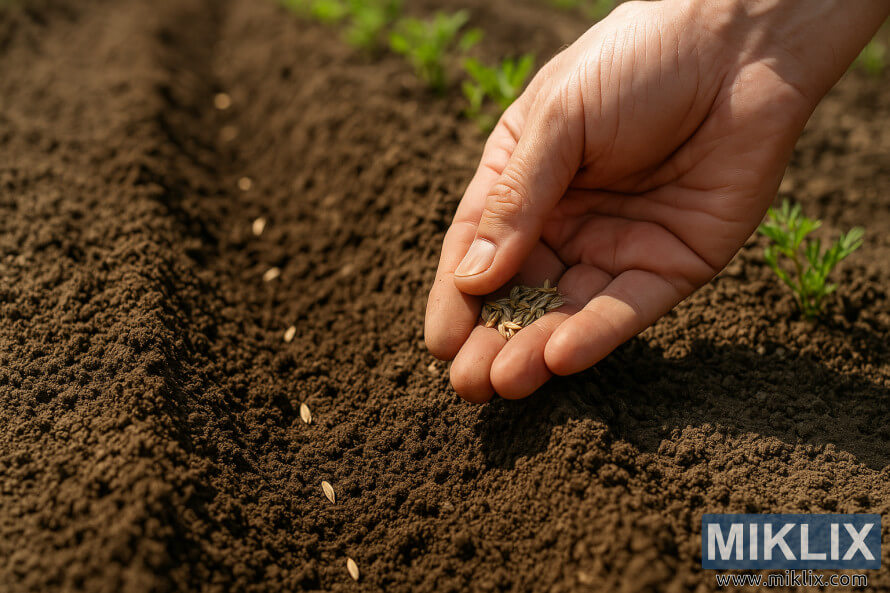
Click or tap the image for more information and higher resolutions.
Seed Depth and Spacing
Carrot seeds are tiny and require careful handling:
- Plant seeds just 1/4 inch deep—any deeper and they may not germinate
- Space seeds about 1/2 inch apart in rows
- Space rows 12-18 inches apart (can be closer in raised beds)
- Consider mixing seeds with fine sand for more even distribution
- Plan to thin seedlings later to 2-3 inches apart
Planting Techniques for Maximum Germination
Traditional Row Method
- Create shallow furrows (1/4 inch deep) with a pencil or stick
- Mix carrot seeds with fine sand (1:4 ratio) for easier handling
- Sprinkle seed mixture along the furrow
- Cover seeds with a thin layer of fine soil or compost
- Water gently using a mister or spray bottle
Seed Tape Method
- Purchase ready-made carrot seed tapes or make your own
- To make: place seeds on strips of toilet paper with water-soluble glue
- Space seeds 2 inches apart on the tape
- Lay tape in furrow and cover with 1/4 inch of soil
- Water thoroughly but gently
Radish Companion Method
- Mix carrot seeds with quick-germinating radish seeds
- Sow the mixture in rows as described above
- Radishes will sprout first, marking the rows and breaking soil crust
- Harvest radishes as carrots begin to grow
- This method improves carrot germination significantly
Tip: The Burlap Method
To maintain consistent moisture during the critical germination period, cover newly planted carrot seeds with burlap, cardboard, or a light layer of straw. Water through the covering daily. Once seedlings emerge (7-21 days), carefully remove the covering to prevent damaging the delicate sprouts.
Click or tap the image for more information and higher resolutions.
Watering, Weeding, and Maintenance Requirements
Watering Carrots
Consistent moisture is crucial for carrot development:
- Germination phase: Keep soil consistently moist (not soggy) until seedlings emerge
- Seedling phase: Water deeply 1-2 times per week, providing about 1 inch of water
- Growing phase: Maintain even moisture to prevent cracking and bitter flavor
- Pre-harvest: Reduce watering slightly in the final two weeks to enhance sweetness
Inconsistent watering causes carrots to crack, fork, or develop a bitter taste. Drip irrigation or soaker hoses work well for delivering consistent moisture directly to the soil without wetting the foliage.
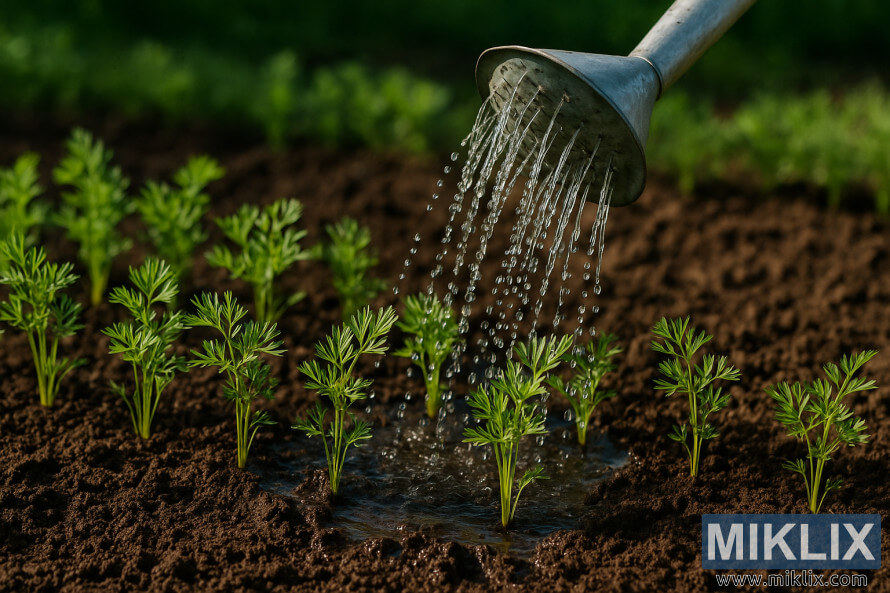
Click or tap the image for more information and higher resolutions.
Weeding and Maintenance
Carrots are poor competitors against weeds and require regular maintenance:
- Weed carefully by hand, especially when seedlings are small
- Avoid deep cultivation that might damage carrot roots
- Apply a light mulch of compost or fine straw once seedlings are 4 inches tall
- Thin seedlings when they reach 2 inches tall, spacing them 2-3 inches apart
- Save thinned seedlings for salads—they're perfectly edible!
Thinning Technique
Proper thinning is essential for well-formed carrots. When seedlings reach 2 inches in height, carefully snip the tops of excess seedlings with scissors rather than pulling them out, which can disturb the roots of neighboring plants. Thin in stages, first to 1 inch apart, then to 2-3 inches as they grow larger.
Common Pests and Diseases with Organic Solutions
While carrots are relatively problem-free compared to many vegetables, they do face some challenges. Here are the most common issues and organic solutions:
| Pest/Disease | Symptoms | Organic Solutions |
| Carrot Rust Fly | Reddish-brown tunnels in roots; stunted growth; rusty discoloration | Cover with row cover from sowing until harvest; plant in late spring after fly's first generation; companion plant with strong-smelling herbs like rosemary |
| Aphids | Curled, distorted foliage; sticky residue; clusters of tiny insects | Spray with insecticidal soap or neem oil; introduce beneficial insects like ladybugs; strong spray of water to dislodge |
| Wireworms | Small holes in roots; tunneling damage | Rotate crops; avoid planting after grass; use potato traps (bury potato pieces, check after 2-3 days) |
| Root-knot Nematodes | Forked, galled, or hairy roots; stunted growth | Crop rotation; solarize soil; plant marigolds as a cover crop the season before |
| Leaf Blight | Yellow or brown spots on leaves; wilting foliage | Ensure good air circulation; avoid overhead watering; remove affected leaves; apply organic copper fungicide |
| Powdery Mildew | White powdery coating on leaves | Milk spray (1:9 ratio of milk to water); baking soda spray; neem oil |
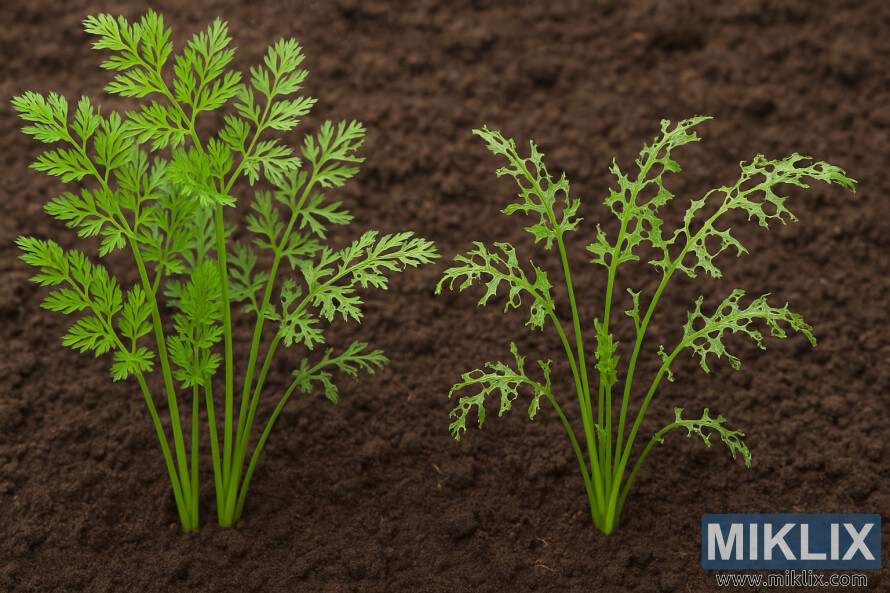
Click or tap the image for more information and higher resolutions.
Preventive Measures
The best approach to pest and disease management is prevention:
- Practice crop rotation (don't plant carrots in the same spot for 3 years)
- Use floating row covers from planting until harvest
- Maintain good air circulation between plants
- Water at soil level rather than overhead
- Remove plant debris promptly at the end of the season
Companion Planting for Pest Control
Strategic companion planting can help deter carrot pests:
- Plant with onions, leeks, or chives to repel carrot rust fly
- Rosemary and sage deter many carrot pests
- Marigolds help control nematodes in the soil
- Avoid planting near dill, which can cross-pollinate with carrots
- Radishes planted with carrots help break soil crust and mark rows
When and How to Harvest Carrots
Timing Your Harvest
Knowing when to harvest is key to enjoying carrots at their peak flavor:
- Most varieties mature in 60-80 days from sowing
- Baby carrots can be harvested as early as 30-40 days
- Check seed packet for days-to-maturity for your specific variety
- Carrots are ready when their shoulders (tops) are 3/4 to 1 inch in diameter
- Fall-planted carrots often taste sweeter after light frost exposure
You can harvest a few carrots to check size and flavor, leaving others to continue growing if needed. For the sweetest flavor, harvest in the morning when sugar content is highest.
Harvesting Techniques
Proper harvesting prevents damage and maximizes storage potential:
- Water the bed thoroughly the day before harvesting to soften soil
- Loosen soil alongside the row with a garden fork (not directly under carrots)
- Grasp the tops firmly near the crown and pull straight up with a gentle twisting motion
- If carrots resist, loosen more soil rather than pulling harder
- For very deep varieties, you may need to dig alongside to avoid breakage
Post-Harvest Handling
Immediately after harvesting:
- Brush off excess soil (don't wash if storing long-term)
- Trim tops to 1/2 inch if storing (leave tops on if using immediately)
- Sort carrots, separating any damaged ones for immediate use
- Allow surface moisture to dry before storage
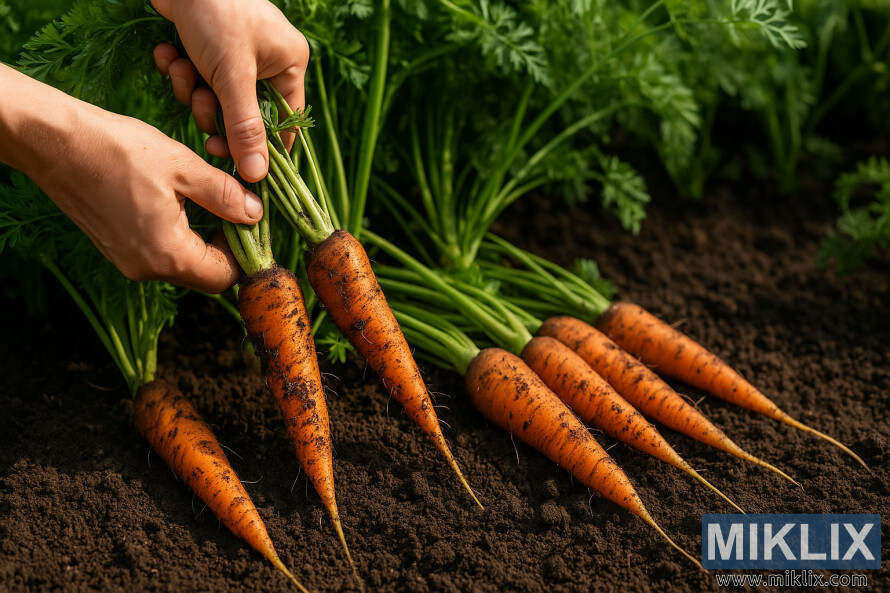
Click or tap the image for more information and higher resolutions.
Storage and Preservation Methods
Short-Term Storage
For carrots you'll use within a few weeks:
- Remove tops, leaving 1/2 inch of stem
- Brush off soil but don't wash until ready to use
- Store in perforated plastic bags in the refrigerator crisper drawer
- Maintain high humidity by adding a slightly damp paper towel
- Properly stored, carrots will last 3-4 weeks in the refrigerator
Long-Term Storage
For keeping carrots fresh for months:
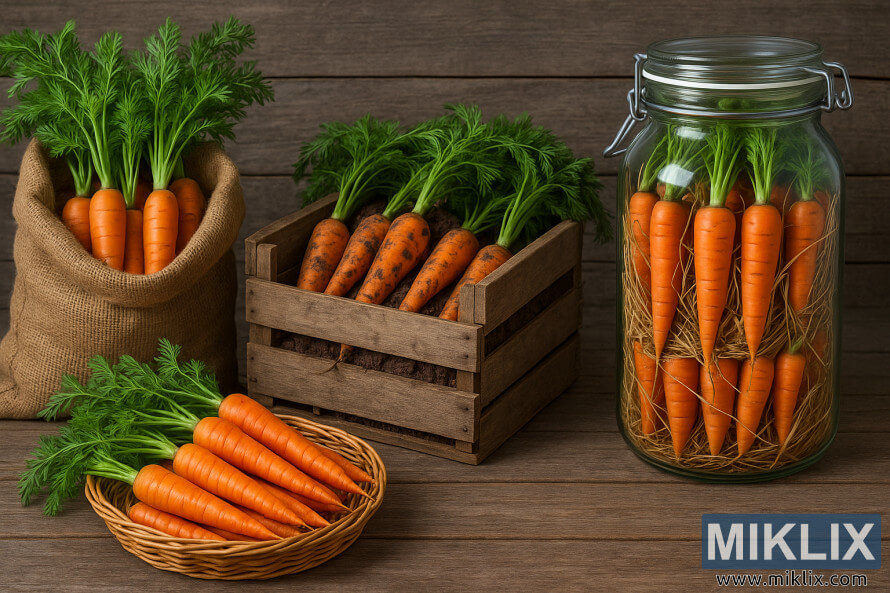
- Root cellar method: Layer unwashed carrots in boxes of damp sand, sawdust, or peat moss; store at 32-40°F with high humidity
- In-ground storage: In mild winter areas, leave fall carrots in the ground and harvest as needed; mulch heavily with straw to prevent freezing
- Clamp storage: Create an outdoor pit lined with straw, fill with carrots, and cover with more straw and soil
- Cold room storage: Store in ventilated containers at 32-40°F and 90-95% humidity
With proper storage conditions, carrots can maintain quality for 4-6 months.
Preservation Methods
Freezing
- Wash, peel, and trim carrots
- Cut into desired shapes (coins, sticks, etc.)
- Blanch for 2-3 minutes in boiling water
- Cool immediately in ice water
- Drain thoroughly and pat dry
- Pack in freezer bags, removing air
- Label and freeze for up to 12 months
Canning
- Prepare carrots as for freezing
- Pack into sterilized jars with 1 inch headspace
- Add 1/2 tsp salt per pint (optional)
- Fill with boiling water, leaving 1 inch headspace
- Remove air bubbles and wipe rims
- Process in pressure canner (not water bath)
- Follow canner instructions for your altitude
Dehydrating
- Wash, peel, and trim carrots
- Slice thinly (1/8 inch) or shred
- Blanch for 3 minutes (optional but recommended)
- Arrange in single layer on dehydrator trays
- Dry at 125°F until brittle (6-10 hours)
- Cool completely before storing
- Store in airtight containers for up to a year
Click or tap the image for more information and higher resolutions.
Troubleshooting Common Growing Problems
Root Formation Issues
| Problem | Cause | Solution |
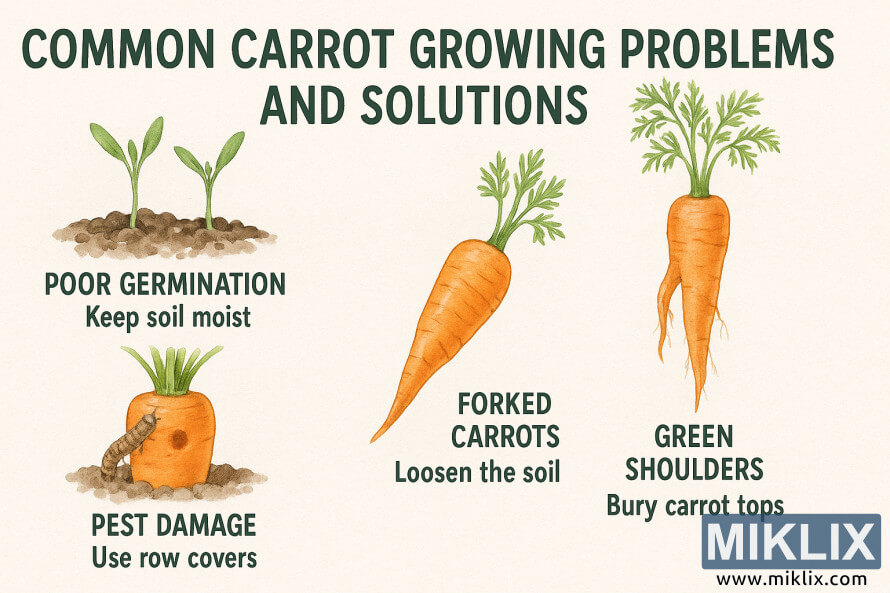
| Forked or deformed carrots | Rocks or clumps in soil; too much nitrogen | Prepare soil more thoroughly; use raised beds with screened soil; reduce nitrogen fertilizer |
| Stunted growth | Compacted soil; overcrowding; poor nutrition | Loosen soil deeply before planting; thin properly; balance fertilizer |
| Cracked roots | Inconsistent watering; sudden heavy rain after dry period | Water consistently; mulch to maintain even moisture |
| Hairy/fuzzy roots | Excess nitrogen; water stress; nematodes | Reduce nitrogen; maintain consistent moisture; rotate crops |
| Green shoulders | Exposure to sunlight | Hill soil around exposed shoulders; mulch properly |
Germination and Growth Problems
| Problem | Cause | Solution |
| Poor germination | Soil too dry; planted too deep; soil crust formation | Keep soil consistently moist; plant 1/4 inch deep; cover with vermiculite or fine compost |
| Seedlings wilt and die | Damping off disease; excessive heat | Improve air circulation; avoid overwatering; provide shade in hot weather |
| Bitter taste | Heat stress; water stress; harvested too late | Grow in cooler seasons; maintain consistent moisture; harvest at proper maturity |
| Bolting (flowering) | Heat stress; age; day length changes | Plant heat-tolerant varieties in summer; harvest before bolting begins |
When to Start Over
If your carrot seedlings are severely damaged by pests, disease, or extreme weather, it's sometimes better to start fresh rather than trying to save a struggling crop. Carrots grow relatively quickly, so replanting is often the most efficient solution. Keep extra seeds on hand for such situations.
Click or tap the image for more information and higher resolutions.
Tips for Continuous Harvest and Succession Planting
Succession Planting Strategies
To enjoy fresh carrots throughout the growing season:
- Sow small batches every 2-3 weeks rather than one large planting
- Plant different varieties with staggered maturity dates together
- Dedicate sections of your garden bed to different planting dates
- Use a garden journal to track planting dates and results
- In warm climates, skip midsummer plantings and resume in early fall
A typical succession plan might include spring plantings every 3 weeks from late March through May, then fall plantings from late July through September (adjusting for your climate zone).
Season Extension Techniques
Extend your carrot growing season with these methods:
- Cold frames: Allow earlier spring planting and later fall harvests
- Row covers: Protect from frost and extend season by 2-4 weeks
- Mulching: Heavy straw mulch can protect fall-planted carrots through winter
- Greenhouses: Enable year-round carrot production in many climates
- Shade cloth: Allows summer planting in hot climates by reducing soil temperature
Year-Round Carrot Calendar
In most temperate climates, aim for:
- Early spring: Fast-maturing varieties (Amsterdam, Adelaide)
- Late spring: Main-season varieties (Nantes, Danvers)
- Late summer: Fall/storage varieties (Autumn King, Bolero)
- Fall: Overwintering varieties for spring harvest (Napoli, Merida)
Container and Small-Space Strategies
Deep Containers
Grow carrots in containers at least 12 inches deep:
- Use fabric grow bags, barrels, or deep pots
- Fill with loose, sandy potting mix
- Choose shorter varieties for shallower containers
- Water more frequently than in-ground plantings
- Position in full sun but protect from extreme heat
Intensive Planting
Maximize space with these techniques:
- Plant in blocks rather than rows
- Use triangular spacing (3 inches between plants in all directions)
- Interplant quick-growing crops between carrot rows
- Grow vertical crops (like peas) alongside carrots
- Utilize succession planting in the same space
Winter Growing
Extend your season with winter carrots:
- Plant cold-hardy varieties 10-12 weeks before hard freeze
- Use thick mulch (8-12 inches of straw) over rows
- Add row covers or cold frames for extra protection
- Harvest throughout winter in milder climates
- Experience sweeter carrots after frost exposure
Click or tap the image for more information and higher resolutions.
Conclusion: Enjoying Your Carrot Harvest
Growing carrots requires some initial effort in soil preparation and attention to detail during germination, but the rewards are well worth it. With proper care, you'll harvest sweet, crunchy, nutrient-dense carrots that far surpass anything available in stores. Whether you're growing traditional orange varieties or experimenting with purple, white, or yellow types, homegrown carrots bring both beauty and nutrition to your table.
Remember that each garden is unique, and carrot growing is partly science and partly art. Keep notes on what works in your specific conditions, and don't be discouraged by occasional challenges. With each season, your carrot-growing skills will improve, and you'll develop techniques perfectly suited to your garden's microclimate.
From the first tiny seedlings to the satisfying moment of pulling a perfect carrot from the soil, growing these versatile root vegetables connects us to the timeless rhythms of nature and the simple joy of growing our own food. Happy planting!
Click or tap the image for more information and higher resolutions.
Further Reading
If you enjoyed this post, you may also like these suggestions:
- A Complete Guide to Growing Potatoes in Your Own Garden
- Growing Apricots: A Guide to Sweet Homegrown Fruit
- A Complete Guide to Growing Rhubarb in Your Home Garden