
A Guide to Growing the Best Kale in Your Garden
Published: December 5, 2025 at 11:57:16 PM UTC
Kale is one of the most nutritious and versatile vegetables you can grow in your garden. This cold-hardy leafy green thrives in cool weather, making it perfect for spring and fall harvests in most regions.

Click or tap the image for more information and higher resolutions.
Whether you're looking to add nutrient-dense greens to your diet or want to enjoy the beautiful textures and colors kale brings to your garden, this comprehensive guide will walk you through everything you need to know for a successful kale-growing experience.
Exploring Kale Varieties: Finding Your Perfect Match
Kale comes in a stunning array of varieties, each with unique characteristics, flavors, and growing habits. Understanding the differences will help you select the perfect type for your garden and culinary preferences.
Popular Kale Varieties for Home Gardens
Curly Kale
The most common variety with ruffled leaves and a slightly bitter, peppery flavor. Extremely cold-hardy and productive.
- Varieties include 'Winterbor', 'Vates Blue Curled', and 'Scarlet'
- Best for kale chips and cooked dishes
- Extremely frost tolerant
- Matures in 50-60 days

Click or tap the image for more information and higher resolutions.
Lacinato/Dinosaur Kale
Also known as Tuscan kale, featuring long, narrow, bumpy dark green leaves with a sweeter, more delicate flavor.
- Varieties include 'Nero di Toscana' and 'Black Palm'
- Excellent for salads and Italian cuisine
- Heat tolerant but still cold-hardy
- Matures in 60-65 days

Click or tap the image for more information and higher resolutions.
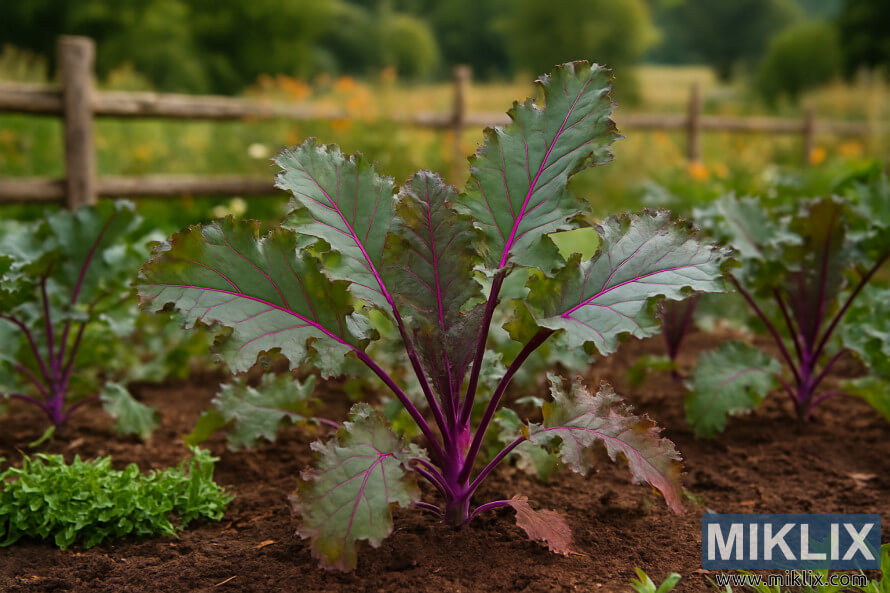
Red Russian Kale
Features oak-shaped leaves with purple stems and veins. Offers a mild, slightly sweet flavor that's tender even when mature.
- Varieties include 'Ragged Jack' and 'Red Ursa'
- Perfect for raw salads and quick cooking
- Beautiful ornamental value
- Matures in 50-55 days
Click or tap the image for more information and higher resolutions.
Specialty Kale Varieties
Redbor Kale
A stunning ornamental variety with deep purple-red curly leaves that intensify in color after frost. Edible with a strong flavor.

Click or tap the image for more information and higher resolutions.
Siberian Kale
Technically a different species (Brassica napus) with frilly blue-green leaves. Extremely cold-hardy and can survive harsh winters.

Click or tap the image for more information and higher resolutions.
Baby Kale
Not a specific variety, but rather young leaves harvested from any kale type. Tender and mild, perfect for salads and quick cooking.

Click or tap the image for more information and higher resolutions.
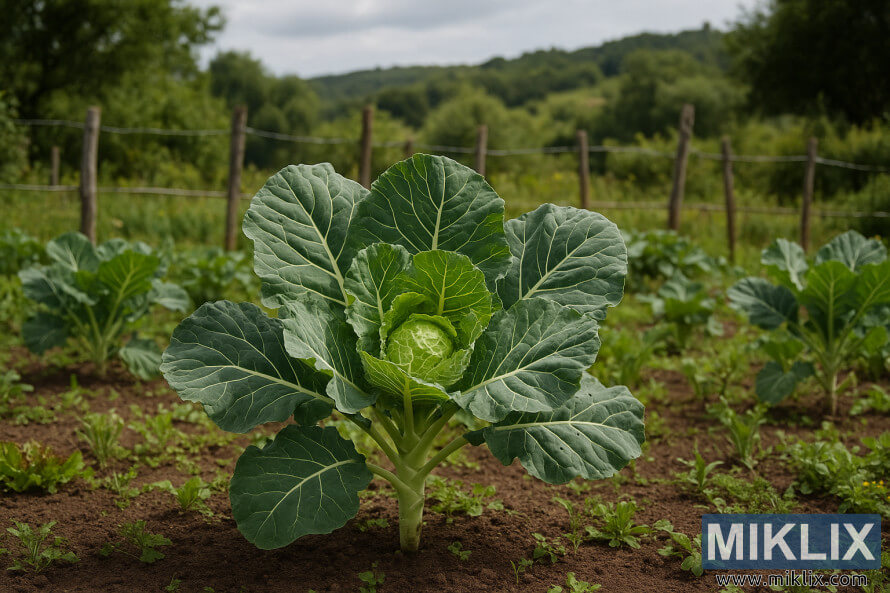
Portuguese Kale
Also called 'Tronchuda Beira', featuring large, flat leaves with thick white ribs. Popular in Portuguese soup recipes.
Click or tap the image for more information and higher resolutions.
Optimal Planting Times: When to Grow Kale
Kale is a cool-season crop that thrives when temperatures are between 55°F and 75°F (13°C to 24°C). Understanding the best times to plant in your region is crucial for a successful harvest.
Spring Planting
For a spring crop, start seeds indoors 4-6 weeks before your last expected frost date. Transplant seedlings outdoors 2-3 weeks before the last frost, as kale can withstand temperatures as low as 20°F (-6°C).
Young kale plants are surprisingly frost-tolerant and can withstand temperatures down to 25°F (-4°C) without damage. This makes them perfect for early spring gardens.
Fall Planting
For a fall/winter harvest, sow seeds directly in the garden 6-8 weeks before your first expected fall frost. In warmer regions (zones 7-10), kale can be grown throughout winter for continuous harvests.
Pro Tip: Fall-grown kale often tastes sweeter and more flavorful than spring-grown kale because cold temperatures trigger the plant to convert starches to sugars, resulting in a naturally sweeter leaf.
Regional Considerations
| Climate Zone | Spring Planting | Fall Planting | Winter Growing |
| Cold (Zones 3-5) | Early April to May | July to August | With protection only |
| Moderate (Zones 6-7) | March to April | August to September | Possible with minimal protection |
| Warm (Zones 8-10) | February to March | September to October | Yes, throughout winter |
Soil Preparation: Creating the Perfect Growing Environment
Kale thrives in nutrient-rich, well-draining soil with a slightly acidic to neutral pH. Proper soil preparation is essential for developing healthy, productive plants.
Soil Requirements
- pH Level: 6.0-7.0 (slightly acidic to neutral)
- Soil Type: Loamy, well-draining soil rich in organic matter
- Depth: At least 12 inches of good soil for proper root development
Step-by-Step Soil Preparation
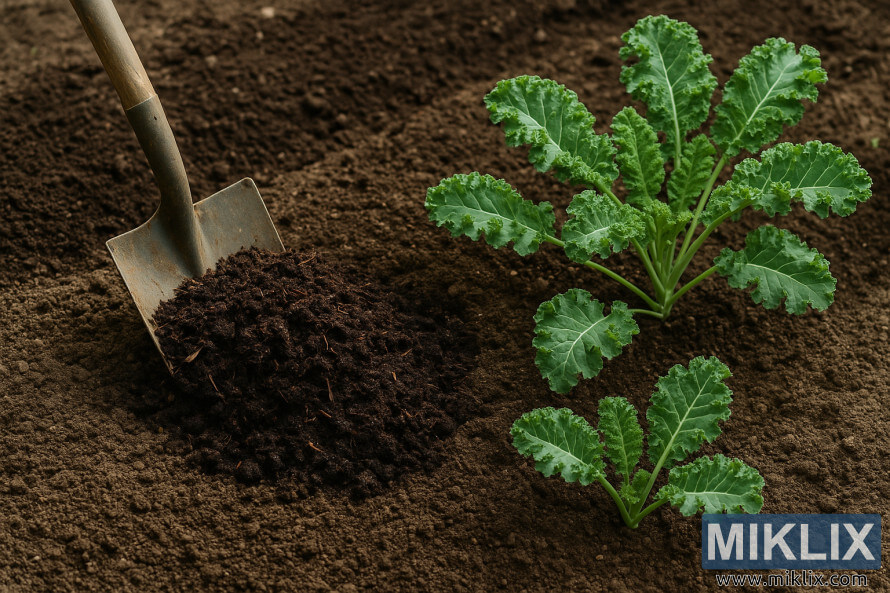
- Test your soil: Use a home soil test kit or send a sample to your local extension office to determine pH and nutrient levels.
- Amend the soil: Add 2-3 inches of compost or well-rotted manure and work it into the top 6-8 inches of soil.
- Adjust pH if necessary: Add lime to raise pH or sulfur to lower it based on your soil test results.
- Add balanced organic fertilizer: Incorporate a slow-release organic fertilizer according to package directions.
- Loosen compacted soil: Use a garden fork to loosen the soil to a depth of 12 inches for better drainage and root growth.
Nutrient Requirements: Kale is a heavy feeder that particularly benefits from nitrogen-rich soil. Nitrogen promotes leafy growth, which is exactly what you want when growing kale. However, balanced nutrition is still important for overall plant health.
Container Soil Mix
If growing kale in containers, create a nutrient-rich potting mix by combining:
- 60% high-quality potting soil
- 20% compost
- 10% perlite or vermiculite for drainage
- 10% worm castings for added nutrients
Click or tap the image for more information and higher resolutions.
Planting Kale: Seeds vs. Transplants
Kale can be grown successfully from either seeds or transplants. Each method has its advantages, and your choice may depend on your growing season, experience level, and preferences.
Starting from Seeds
Starting kale from seeds gives you access to more varieties and is more economical for larger plantings.
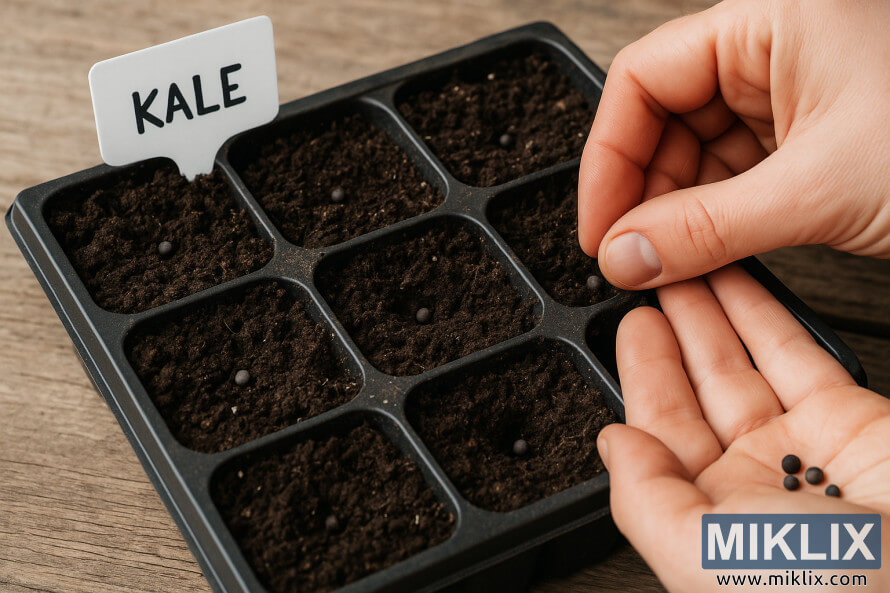
Indoor Seed Starting
- Start seeds indoors 4-6 weeks before transplanting outdoors.
- Use seed-starting mix in clean containers with drainage holes.
- Plant seeds ¼-½ inch deep and keep soil consistently moist.
- Provide 14-16 hours of light daily once seeds germinate.
- Maintain temperatures between 60-70°F (15-21°C) for optimal germination.
Direct Seeding Outdoors
- Sow seeds ¼-½ inch deep in prepared soil.
- Space seeds 1 inch apart in rows 18-24 inches apart.
- Keep soil consistently moist until germination (usually 5-8 days).
- Thin seedlings to 12-18 inches apart when they have 4-5 true leaves.
Click or tap the image for more information and higher resolutions.
Using Transplants
Transplants give you a head start on the growing season and are ideal for beginners or those with shorter growing seasons.
Purchasing Transplants
- Look for stocky plants with 4-6 healthy leaves.
- Avoid leggy or yellowing plants.
- Check for signs of pests or disease before purchasing.
Transplanting Process
- Harden off indoor-grown seedlings by gradually exposing them to outdoor conditions over 7-10 days.
- Dig holes slightly larger than the root ball of each plant.
- Space plants 12-18 inches apart in rows 18-24 inches apart.
- Plant at the same depth as they were growing in their containers.
- Water thoroughly after planting and apply a layer of mulch.
Transplant Shock Prevention: Transplant on a cloudy day or in the evening to reduce stress. Water plants well before and after transplanting, and consider using a diluted seaweed solution to help reduce transplant shock.

Click or tap the image for more information and higher resolutions.
Growing Requirements: Light, Water, and Spacing
Meeting kale's basic growing requirements will ensure healthy plants and abundant harvests. Understanding these needs helps you provide optimal conditions throughout the growing season.
Light Requirements
Kale grows best in full sun (6+ hours of direct sunlight daily), especially in spring and fall. In hot summer regions, partial shade (4-6 hours of sun) during the hottest part of the day can prevent bolting and leaf bitterness.
Water Requirements
Consistent moisture is key to growing tender, flavorful kale leaves. Inconsistent watering can lead to tough, bitter leaves.
- Provide 1-1.5 inches of water per week
- Water deeply rather than frequently to encourage deep root growth
- Use drip irrigation or soaker hoses to keep leaves dry and prevent disease
- Increase watering during hot, dry periods
- Apply 2-3 inches of organic mulch to retain soil moisture
Spacing Guidelines
Proper spacing ensures good air circulation, reduces disease pressure, and allows plants to reach their full size.
| Planting Method | Plant Spacing | Row Spacing |
| Standard Spacing | 12-18 inches | 18-24 inches |
| Baby Kale Production | 3-4 inches | 12-18 inches |
| Container Growing | 12 inches | N/A |
Container Growing
Kale grows well in containers, making it accessible for gardeners with limited space:
- Use containers at least 12 inches deep and 12 inches in diameter
- One plant per 12-inch container, or 3 plants in a 24-inch container
- Ensure containers have adequate drainage holes
- Check soil moisture more frequently, as containers dry out faster than garden soil

Click or tap the image for more information and higher resolutions.
Fertilization Schedule: Feeding Your Kale Plants
Kale is a heavy feeder that requires consistent nutrition throughout its growing cycle. A proper fertilization schedule ensures abundant, nutritious harvests.
Organic Fertilization Options
Compost
A balanced source of nutrients that improves soil structure.
- Apply 1-2 inches as a side dressing around plants
- Reapply every 4-6 weeks during the growing season
- Can be used as a mulch to retain moisture
Organic Fertilizers
Provide specific nutrient ratios for optimal growth.
- Use balanced (5-5-5) or nitrogen-rich (5-2-2) formulations
- Apply according to package directions
- Typically applied every 3-4 weeks
Liquid Fertilizers
Fast-acting nutrition for immediate plant needs.
- Fish emulsion or seaweed extract work well
- Apply every 2-3 weeks at half strength
- Best applied in morning or evening
Fertilization Timeline
- Before Planting: Incorporate compost and a balanced organic fertilizer into the soil.
- At Transplanting: Apply a diluted seaweed solution to reduce transplant shock.
- 2-3 Weeks After Planting: Begin regular fertilization with a nitrogen-rich organic fertilizer.
- Every 3-4 Weeks: Continue fertilizing throughout the growing season.
- After Heavy Harvests: Apply additional fertilizer to support regrowth.
Caution: Over-fertilization can lead to excessive nitrate accumulation in leaves. Always follow package directions and err on the side of less rather than more when applying fertilizers.

Click or tap the image for more information and higher resolutions.
Common Pests and Diseases: Prevention and Treatment
Like all brassicas, kale can be susceptible to certain pests and diseases. Understanding these challenges and how to address them organically is key to a successful harvest.
Common Kale Pests
Cabbage Worms
Small green caterpillars that create holes in leaves.
Prevention:
- Cover plants with floating row covers
- Plant aromatic herbs nearby (dill, thyme)
Treatment:
- Handpick and remove caterpillars
- Apply Bacillus thuringiensis (Bt)
Aphids
Small sap-sucking insects that cluster on undersides of leaves.
Prevention:
- Encourage beneficial insects
- Avoid excessive nitrogen
Treatment:
- Strong spray of water to dislodge
- Insecticidal soap application
Flea Beetles
Tiny beetles that create small holes in leaves.
Prevention:
- Row covers during seedling stage
- Thick layer of mulch
Treatment:
- Diatomaceous earth application
- Sticky traps to reduce populations

Click or tap the image for more information and higher resolutions.
Common Kale Diseases
| Disease | Symptoms | Prevention | Treatment |
| Powdery Mildew | White powdery spots on leaves | Proper spacing, morning watering | Neem oil, milk spray (1:10 ratio) |
| Black Rot | Yellow V-shaped lesions on leaf edges | Crop rotation, resistant varieties | Remove infected plants, copper fungicide |
| Clubroot | Stunted growth, wilting, swollen roots | Maintain soil pH above 6.8, crop rotation | Remove plants, avoid planting brassicas in affected soil for 7 years |

Click or tap the image for more information and higher resolutions.
Companion Planting: Friends and Foes in the Kale Garden
Strategic companion planting can enhance kale growth, deter pests, and maximize garden space. Understanding which plants make good neighbors for kale will help you design a more productive garden.
Beneficial Companions for Kale
Aromatic Herbs
- Thyme: Repels cabbage worms and aphids
- Dill: Attracts beneficial wasps that prey on cabbage worms
- Mint: Deters flea beetles and cabbage moths (best in containers to prevent spreading)
- Rosemary: Confuses pests with strong aroma
Vegetables
- Onions and Garlic: Repel many common kale pests
- Beets: Different root depth minimizes competition
- Celery: Reported to improve kale flavor
- Potatoes: Can provide shade in summer months
Flowers
- Nasturtiums: Act as trap crops for aphids
- Marigolds: Repel nematodes and other soil pests
- Calendula: Attracts pollinators and beneficial insects
- Alyssum: Provides habitat for predatory insects
Plants to Avoid Near Kale
- Strawberries: Compete for nutrients
- Tomatoes: Different growing conditions and potential disease transfer
- Pole Beans: Can shade kale excessively
- Other Brassicas: Share pests and diseases, deplete same nutrients
Companion Planting Strategies
- Interplanting: Grow companions between kale plants to maximize space and provide pest protection.
- Border Planting: Surround kale beds with aromatic herbs or flowers to create a protective barrier.
- Trap Cropping: Plant nasturtiums nearby to draw aphids away from kale.
- Succession Planting: Plant fast-growing companions like radishes between kale rows to harvest before kale reaches full size.

Click or tap the image for more information and higher resolutions.
Harvesting Techniques: Maximizing Your Kale Yield
Proper harvesting techniques not only provide you with fresh kale but also encourage continued production throughout the growing season. Knowing when and how to harvest ensures the best flavor and maximum yield.
When to Harvest Kale
- Begin harvesting when leaves are about the size of your hand (approximately 4-6 inches long)
- Young leaves (baby kale) can be harvested at 2-3 inches for tender salad greens
- Mature plants can be harvested multiple times throughout the season
- Flavor improves after light frost exposure in fall
- Harvest in the morning for best flavor and nutrient content
The key to continuous kale production is regular harvesting. The more you harvest (properly), the more the plant will produce new leaves.
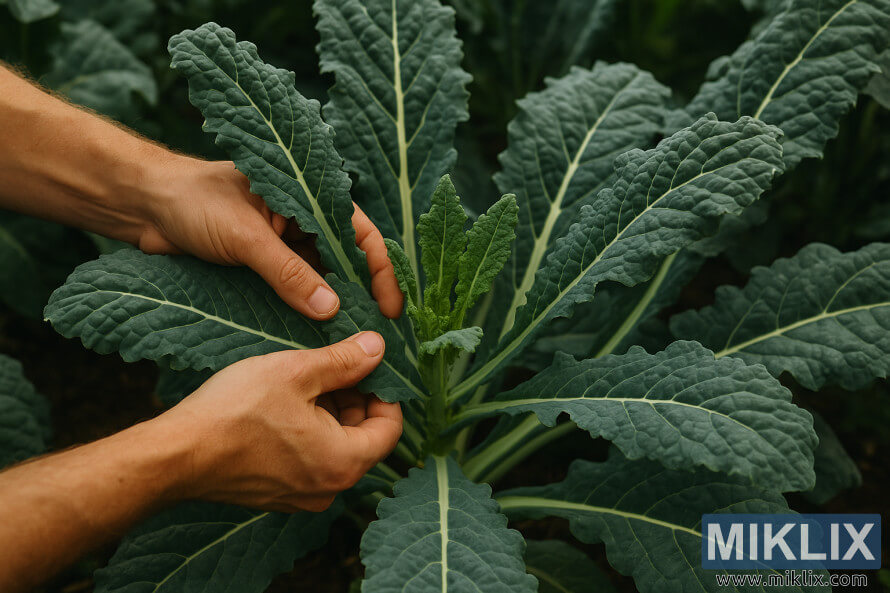
Leaf-by-Leaf Harvesting (Recommended)
- Start with the oldest, outermost leaves at the bottom of the plant.
- Use clean, sharp scissors or pruners to cut leaves 1-2 inches from the main stem.
- Leave at least 5-6 central leaves at the top of the plant intact.
- Harvest no more than 1/3 of the plant's leaves at one time.
- Allow plant to regrow for 5-7 days before harvesting again.
Whole Plant Harvesting
For end-of-season harvest or when plants begin to bolt:
- Cut the entire plant 2 inches above soil level using a sharp knife.
- In mild climates, the plant may regrow from the base for a second harvest.
- For final harvest, pull the entire plant, including roots.
Harvest Tip: For the sweetest kale, harvest after a light frost in fall. Cold temperatures trigger the plant to convert starches to sugars, resulting in a sweeter, more flavorful leaf.
Click or tap the image for more information and higher resolutions.
Storage and Preservation: Enjoying Kale Year-Round
Fresh kale is delicious, but knowing how to properly store and preserve your harvest allows you to enjoy homegrown kale throughout the year, even when your plants aren't actively producing.
Fresh Storage
Properly stored fresh kale can last 1-2 weeks in the refrigerator:
- Harvest in the morning when leaves are crisp.
- Rinse leaves thoroughly to remove dirt and insects.
- Pat dry or use a salad spinner to remove excess moisture.
- Wrap loosely in a damp paper towel.
- Place in a perforated plastic bag or container in the refrigerator.
- Store in the crisper drawer for best results.

Click or tap the image for more information and higher resolutions.
Freezing Kale
Freezing preserves kale for 8-12 months and is perfect for smoothies, soups, and cooked dishes:
- Remove stems and tough center ribs.
- Blanch leaves in boiling water for 2 minutes.
- Immediately transfer to an ice bath to stop cooking.
- Drain thoroughly and pat dry.
- Pack into freezer bags, removing as much air as possible.
- Label with date and contents.

Click or tap the image for more information and higher resolutions.
Dehydrating Kale
Dehydrated kale makes nutritious chips and can be powdered for smoothies:
- Wash and thoroughly dry leaves.
- Remove stems and tear into chip-sized pieces.
- Toss with a small amount of olive oil and seasonings if desired.
- Arrange in a single layer on dehydrator trays.
- Dry at 125°F (52°C) for 4-6 hours until completely crisp.
- Store in airtight containers for up to 6 months.

Click or tap the image for more information and higher resolutions.
Fermenting Kale
Fermentation creates probiotic-rich preserved kale:
- Chop kale into thin strips.
- Massage with 2% salt by weight until wilted.
- Pack tightly into clean jars, ensuring kale is submerged in its liquid.
- Cover with a fermentation weight and airlock lid.
- Ferment at room temperature for 7-14 days.
- Refrigerate after fermentation is complete.
Preservation Tip: For maximum nutrition retention, freeze kale rather than canning it. The high heat required for safe canning destroys many of kale's beneficial nutrients.

Click or tap the image for more information and higher resolutions.
Troubleshooting Common Growing Problems
Even experienced gardeners occasionally encounter challenges when growing kale. Identifying and addressing these issues quickly will help ensure a successful harvest.
Why are my kale leaves turning yellow?
Possible causes:
- Nitrogen deficiency: Apply a nitrogen-rich organic fertilizer.
- Overwatering: Reduce watering frequency and improve drainage.
- Root damage: Avoid disturbing roots when weeding around plants.
- Natural aging: Older leaves naturally yellow; remove them to encourage new growth.
Why is my kale bolting (flowering) prematurely?
Possible causes:
- Heat stress: Provide afternoon shade in hot weather.
- Age: Kale is biennial and naturally flowers in its second year.
- Day length: Long summer days can trigger flowering.
Solutions: Plant heat-tolerant varieties for summer growing, provide shade during hot periods, and succession plant for continuous harvests.
Why are my kale leaves bitter?
Possible causes:
- Heat stress: Temperatures above 80°F (27°C) increase bitterness.
- Water stress: Inconsistent watering affects flavor.
- Age: Older leaves are naturally more bitter than young ones.
- Variety: Some varieties are naturally more bitter than others.
Solutions: Harvest in cool weather, maintain consistent watering, pick younger leaves, and try different varieties to find ones you prefer.
Why are my kale seedlings leggy?
Possible causes:
- Insufficient light: Seedlings stretching toward light source.
- Too much heat: High temperatures can cause rapid, weak growth.
- Overcrowding: Seedlings competing for light and nutrients.
Solutions: Provide 14-16 hours of direct light, maintain cooler temperatures (60-65°F), and thin seedlings to proper spacing.

Click or tap the image for more information and higher resolutions.
Extending the Growing Season: Year-Round Kale
With the right techniques, you can extend your kale harvest well beyond the typical growing season, potentially enjoying fresh kale year-round in many climates.
Fall and Winter Growing
Kale becomes sweeter after exposure to frost, making fall and winter ideal for growing flavorful leaves:
- Plant fall crops 6-8 weeks before first expected frost
- Choose cold-hardy varieties like 'Winterbor', 'Siberian', or 'Red Russian'
- Apply 2-3 inches of mulch around plants to insulate soil
- Harvest regularly throughout fall and winter as needed
Protection Methods
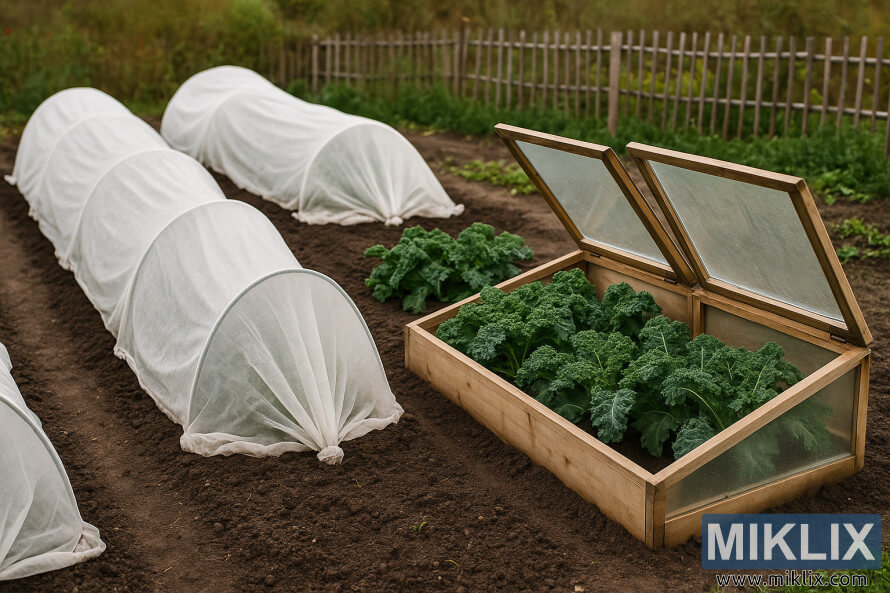
Row Covers
Lightweight fabric that allows light, air, and water to pass through while providing 4-8°F of frost protection.
- Easy to install and remove
- Can be used with hoops for better protection
- Protects from pests as well as cold
Cold Frames
Box-like structures with transparent tops that create a microclimate for plants.
- Provides 10-15°F of frost protection
- Can be purchased or DIY with old windows
- Requires ventilation on sunny days
Low Tunnels
Plastic-covered hoops that create a greenhouse-like environment.
- Provides 5-10°F of frost protection
- Inexpensive and easy to construct
- Can cover larger areas than cold frames
Continuous Harvest Strategies
- Succession Planting: Sow new kale seeds every 2-3 weeks for continuous harvests.
- Multiple Varieties: Plant early, mid, and late-season varieties to extend the harvest window.
- Indoor Growing: Grow kale in containers under grow lights during extreme weather.
- Cut-and-Come-Again: Harvest outer leaves regularly to encourage continuous production.
In many regions, kale can survive temperatures down to 10°F (-12°C) with minimal protection, making it one of the most cold-hardy vegetables you can grow.
Click or tap the image for more information and higher resolutions.
Conclusion: Enjoying the Fruits of Your Labor
Growing kale is a rewarding experience that provides nutritious, versatile greens for your kitchen while adding beauty to your garden. By following the guidelines in this comprehensive guide, you'll be well on your way to growing abundant, healthy kale plants that can provide harvests across multiple seasons.
Remember that gardening is always a learning process. Each growing season brings new insights and opportunities to refine your techniques. Don't be discouraged by occasional setbacks—even experienced gardeners face challenges. The key is to observe your plants closely, respond to their needs, and enjoy the process of growing your own food.
Whether you're enjoying fresh kale salads in spring, smoothies in summer, soups in fall, or stir-fries in winter, your homegrown kale will provide superior flavor and nutrition compared to store-bought alternatives. Your efforts not only reward you with delicious food but also connect you to the natural cycles of growth and the satisfaction of self-sufficiency.
Further Reading
If you enjoyed this post, you may also like these suggestions:
- Growing Onions: A Complete Guide for Home Gardeners
- Growing Asparagus: A Complete Guide for Home Gardeners
- Growing Blackberries: A Guide for Home Gardeners