
Hops in Beer Brewing: Fuggle Tetraploid
Published: December 9, 2025 at 8:35:56 PM UTC
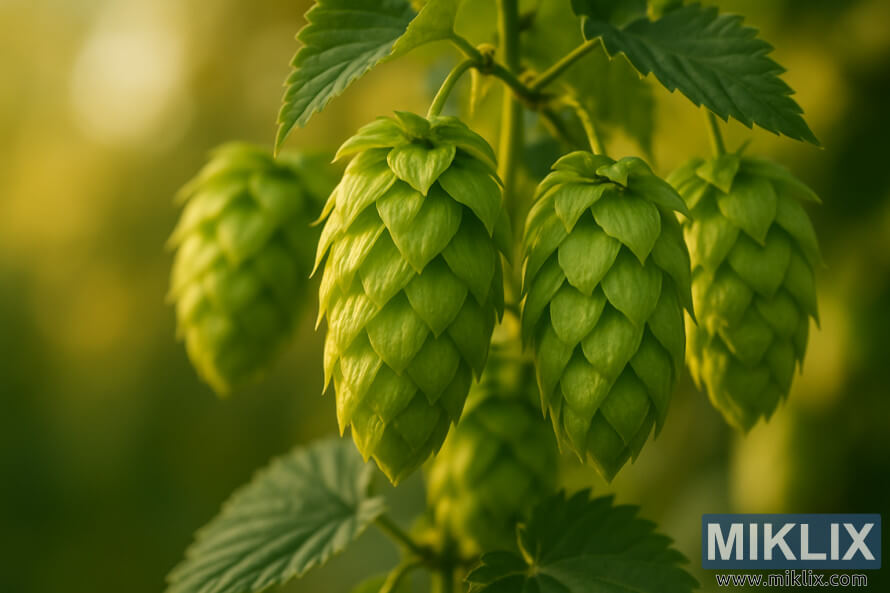
Fuggle Tetraploid hops have their origins in Kent, England, where the classic Fuggle aroma hop was first cultivated in Horsmonden in 1861. Tetraploid breeding aimed to increase alpha acids, reduce seed formation, and enhance agronomic traits. This was done while preserving the delicate aroma that brewers cherish.
Click or tap the image for more information and higher resolutions.
Richard Fuggle commercialized the original Fuggle in 1875. It became a key component in traditional ales, known for its earthy and floral notes. Breeding efforts at Wye College and later by the USDA and Oregon State University expanded this legacy into new genetic forms.
In the United States, hop breeding led to the creation of a tetraploid Fuggle version. This version was a parent to important cultivars. For instance, Willamette hops, a triploid hybrid, were developed from this tetraploid Fuggle line and a Fuggle seedling. Released by USDA/OSU in 1976, Willamette combines the Fuggle aroma with moderate bittering. It quickly became a staple in U.S. hop yards.
Understanding the genetics of Humulus lupulus tetraploid is key to appreciating the significance of these hops in brewing. Tetraploid breeding aimed to increase alpha acids, reduce seed formation, and enhance agronomic traits. This was done while preserving the delicate aroma that brewers cherish. The outcome is a family of hops that marries classic English character with U.S. growing conditions and contemporary brewing demands.
Key Takeaways
- Fuggle originated in Kent and was commercialized in the 19th century.
- Tetraploid Fuggle lines were developed through formal hop breeding programs.
- Willamette hops are a triploid descendant released by USDA/OSU in 1976.
- Humulus lupulus tetraploid work aimed to enhance alpha acids and agronomics.
- Fuggle Tetraploid hops bridge English aroma tradition and U.S. cultivation.
Introduction to Fuggle Tetraploid hops and their role in brewing
The introduction of Fuggle Tetraploid hops represents a significant advancement in the realm of English aroma hops for brewing. This innovation was driven by the need for a Fuggle-derived hop that could thrive under U.S. farm conditions. It had to offer higher yields and consistent alpha levels, all while preserving the distinctive earthy aroma. To achieve this, breeders employed a technique called doubling chromosomes, creating tetraploid lines. These were easier to cultivate on a large scale.
In the world of brewing, the role of hop aroma is critical. It's about finding a balance between traditional brewing methods and the demands of commercial production. Fuggle Tetraploid hops fulfill this need by retaining the woodsy, floral, and mild spice notes that brewers adore. At the same time, they provide a more stable source of these aromas, essential for session ales, bitters, and craft lagers.
Exploring the world of brewing aroma hops reveals their dual nature. They serve as both sensory tools and the result of careful breeding. The development of tetraploid hops allowed for the creation of new cultivars, such as Willamette. This hop variety has become a staple in the U.S., known for its floral and fruity notes layered over a rich, earthy base.
- Fuggle Tetraploid introduction: created to scale classic aroma traits for commercial agriculture.
- Hop aroma role: supplies the fragrant top notes that define many ale styles.
- Brewing aroma hops: used late in the brew or in dry hopping to preserve volatile oils.
- Hop variants: derived lines let brewers choose subtler or more pronounced aroma profiles.
The journey from traditional English garden hops to modern field-grown cultivars highlights the impact of breeding on sensory options. Fuggle Tetraploid played a foundational role in the development of hop variants. These variants maintain the heritage aroma while adapting to the demands of mechanized harvesting and U.S. production systems. As a result, brewers can access consistent aroma hops that meet the needs of contemporary brewing recipes.
Botanical background of hop genetics and ploidy
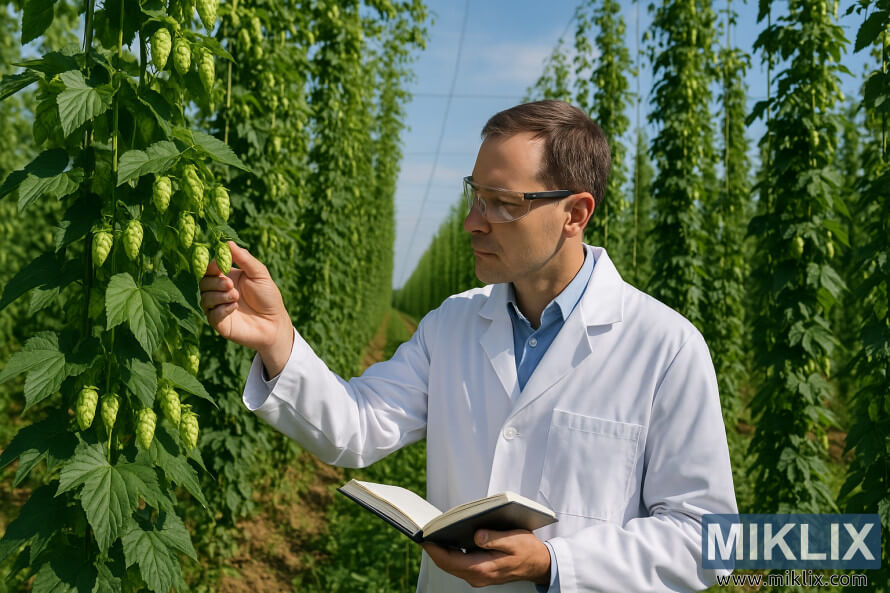
Hops are dioecious plants, with separate male and female individuals. Female cones develop lupulin glands used in brewing when not pollinated. Each hop seed represents a unique genetic mix from pollen and ovule.
Standard cultivated varieties of Humulus lupulus are diploid, carrying 20 chromosomes per cell. This baseline influences breeding, vigor, and the synthesis of compounds in cones.
Breeders manipulate ploidy in hops to change traits like seedlessness, cone size, and chemistry. Colchicine treatment can double chromosomes to create tetraploid lines with 40 chromosomes. Crossing a tetraploid with a diploid produces triploid offspring with about 30 chromosomes.
Triploid plants are often sterile, which reduces seed formation and can concentrate oils and acids. Examples include Willamette, a triploid descendant from tetraploid Fuggle crossed with a diploid seedling. Ultra is a colchicine-induced tetraploid derived from Hallertau stock.
Practical effects of changing ploidy in hops include shifts in alpha acid levels, oil and resin profiles, and yield. Understanding hop genetics helps breeders target Humulus lupulus chromosome counts to meet brewing and agronomic goals.
- Diploid: 20 chromosomes; standard cultivated forms.
- Tetraploid: 40 chromosomes; created by chromosome doubling to alter traits.
- Triploid: ~30 chromosomes; result of tetraploid × diploid crosses, often seedless.
Click or tap the image for more information and higher resolutions.
History of Fuggle: from Kent gardens to global influence
The journey of Fuggle started in Horsmonden, Kent, in 1861. A wild hop plant caught the attention of local growers. Richard Fuggle then commercialized the variety in 1875. This origin is rooted in a small Kent garden and the Victorian era's amateur growers.
Kent hops played a significant role in shaping Fuggle's character. The wet Wealden clay around Horsmonden imparted a fresh, crisp bite. This was distinct from East Kent Goldings grown on chalky soils. This contrast helped define British hop heritage and the flavor profile brewers sought for traditional ales.
Wye College and breeders like Ernest Salmon initiated formal breeding programs in the early 20th century. Their efforts led to intentional crosses like Brewer’s Gold and refined many cultivars. Despite these advancements, Fuggle's origin kept it valued for its aroma and disease resistance.
Fuggle became a parent in many breeding lines. Its genetics influenced varieties such as Willamette. It also played a role in transatlantic programs that produced Cascade and Centennial. This legacy connects Fuggle's history to a broader story of hops spreading globally.
The influence of Fuggle in British hop heritage is evident in craft breweries and commercial blends. Brewers continue to use these Kent hops for their classic English character, aroma depth, and connection to the region's brewing traditions.
The development of tetraploid Fuggle at USDA and OSU
In 1967, a significant USDA OSU hop breeding effort transformed Fuggle breeding. Dr. Al Haunold at Oregon State University employed colchicine to double hop chromosomes. This process converted diploid Fuggle plants into tetraploids with 40 chromosomes.
The goal of tetraploid Fuggle development was to retain classic Fuggle aroma while improving field traits. Breeders sought higher yields, better machine harvesting compatibility, and alpha-acid levels fitting U.S. commercial brewing standards.
Following the creation of tetraploid lines, the program crossed them with diploid Fuggle seedlings. This cross produced triploid selections, mostly seedless with larger cones. USDA accession records list the tetraploid Fuggle as USDA 21003 and note Willamette as selection No. 6761-117 from a 1967 cross with USDA accession 21041.
USDA OSU hop breeding combined cytogenetics with practical goals. Hop chromosome doubling enabled the creation of novel ploidy levels. These preserved the Fuggle sensory profile while adding agronomic strength. Breeders described the result as a genetically enhanced Fuggle, adapted to modern U.S. production.
These breeding outcomes influenced later commercial releases and selections used by growers and brewers. The approach demonstrated how targeted colchicine-induced chromosome doubling and careful crossing can transform a heritage variety. It makes it better suited for large-scale American brewing and cultivation.
Willamette and other descendants: practical outcomes of Fuggle tetraploids
Fuggle tetraploid breeding revolutionized American hop production by introducing new parents for varieties. The USDA and Oregon State University worked together to create lines that met U.S. acreage needs and brewer preferences. This effort transformed a British aroma hop into a viable U.S. crop.
Willamette hops were a direct result of this work, released in 1976. Growers in Oregon quickly adopted it for its aroma similar to English Fuggle and consistent yields. This made Willamette a staple in the U.S., expanding plantings in the Willamette Valley.
Breeding also led to the development of Fuggle descendants with varied uses. The Cascade pedigree, which dates back to the 1950s, involved Fuggle and Serebrianka. This led to the 1972 release of Cascade. Many modern aroma hops, including Centennial, trace back to Fuggle in their lineage.
These outcomes brought about improved agronomics and clearer market identity for U.S. brewers. Tetraploid manipulations allowed breeders to focus on disease tolerance, yield, and aroma stability. Some U.S. clones were later marketed under familiar European names, causing confusion about origins and quality.
- Breeding result: Aroma types with better yield and regional fit.
- Commercial impact: Willamette hops replaced imports and supported domestic production.
- Lineage note: Cascade pedigree and other lines kept Fuggle traits while adding American character.
These outcomes significantly reshaped hop supply and brewing choices in the late 20th century. Brewers now had reliable domestic sources tracing back to classic English genetics. This blend of traditional flavor and New World cultivation practices has become a hallmark of modern brewing.
Aroma and flavor profile of Fuggle Tetraploid hops
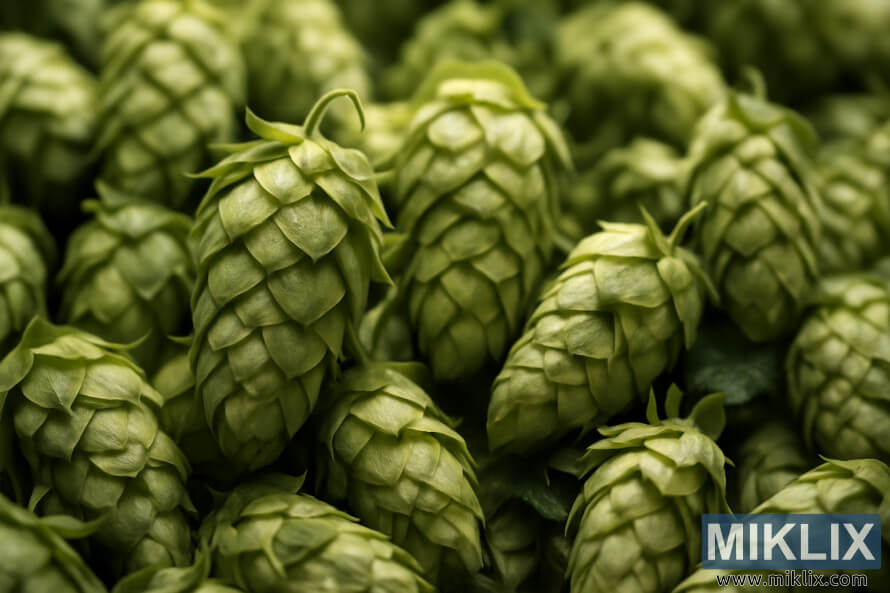
Fuggle Tetraploid aroma is quintessentially English, with a focus on earthiness. It brings a sense of damp soil, leaves, and a dry herbal taste. This combination grounds beers without adding sweetness.
The hop's flavor extends to include woody and bitter herb notes. As a foundation hop, it supports malt and adds a crisp freshness to traditional ales.
Descendants like Willamette add floral spice and light fruit notes. Willamette's analysis shows total oils near 0.8–1.2 ml/100 g. Myrcene dominates, with humulene, caryophyllene, and farnesene adding to the complex scent.
Terroir and breeding influence the final taste. Kent-grown Fuggle has a clean, crisp earthy tone from Wealden clay soils. U.S. grown lines often have brighter floral and faint citrus notes from Willamette Valley.
Using Fuggle Tetraploid aroma is all about balance. It's ideal for those seeking earthy hops as a backbone. For more floral notes, blend it with Willamette to enhance spice without losing earthiness.
- Primary: earthy hops and dry herbal notes
- Secondary: woody, bitter herbs, and mild fruit
- Variation: floral spice hop notes in U.S. descendants
Click or tap the image for more information and higher resolutions.
Bittering characteristics and alpha/beta acid ranges
Traditional English hops, such as Fuggle and Goldings, are renowned for their balanced bitterness. Fuggle's alpha acids fall within the moderate range, highlighting their value in aroma over harsh bitterness.
In the United States and the United Kingdom, breeders have successfully increased hop resin content. Their goal was to enhance alpha acids slightly while preserving the distinctive earthy oils of Fuggle's aroma.
Related varieties, like Willamette, typically have alpha acid ranges from 4 to 6.5 percent. Beta acids usually range from 3.5 to 4.5 percent. USDA data reveals some variability, with Willamette's alpha values occasionally reaching up to 11 percent. Beta acids can vary from 2.9 to 5.0 percent in certain years.
Cohumulone plays a key role in determining bitterness quality. Willamette and Fuggle-derived lines generally have moderate cohumulone levels, often between the high 20s and mid-30s percent of total alpha. This contributes to a softer, more rounded bitterness compared to hops with very high cohumulone.
- Alpha acids: modest in traditional Fuggle types, often 4–7% in tetraploid selections.
- Beta acids: contribute to aging stability and aroma; commonly 3–4.5% in related cultivars.
- Cohumulone: a significant fraction of alpha that influences bite and smoothness.
- Hop resin content: the combined resins determine bittering and preservative value.
For brewers, consistent hop bitterness is more important than peak values. Selecting Fuggle tetraploid or Willamette clones allows brewers to add measured bitterness while maintaining classic English aromas.
Agronomic traits: yield, disease resistance, and harvest behavior
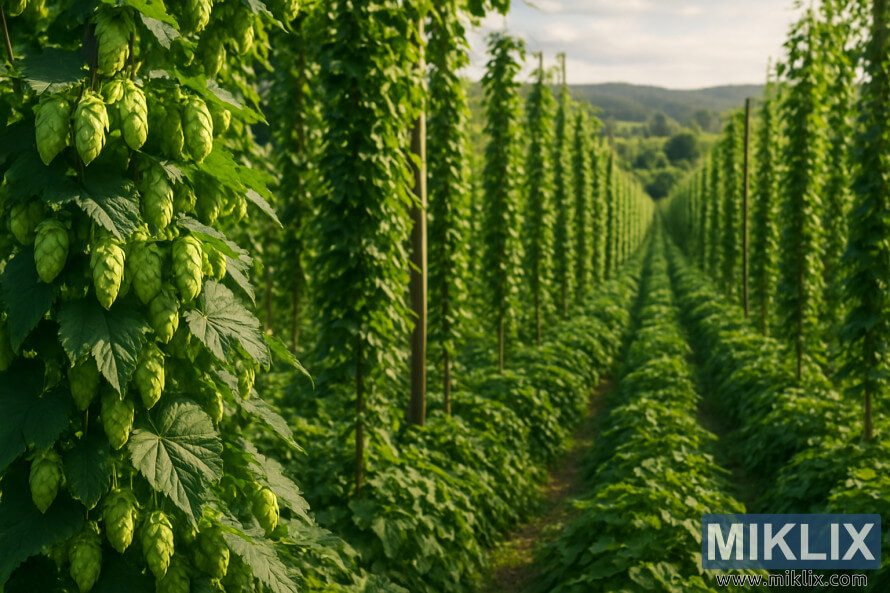
The shift to tetraploid hop agronomics significantly enhanced field performance, drawing from Fuggle-derived lines. Growers rate Willamette yield as very good, with common ranges near 1,700–2,200 lbs per acre under managed conditions. Records from the 1980s and 1990s highlight rapid acreage expansion and strong total production. This reflects the reliable vigor and harvest returns of these varieties.
Plant habit and side arm length are critical for mechanical harvest planning. Willamette produces side arms of about 24–40 inches and reaches medium maturity. These traits ease timing and reduce crop losses, which is vital when coordinating crews and machines during short harvest windows.
Disease resistance is a top priority in breeding. Tetraploid hop agronomics included selection for improved disease resistance to downy mildew and tolerance to Verticillium wilt. Historical breeding at Wye College, USDA, and Oregon State University targeted wilt tolerance and lower virus incidence. This resulted in lines free of common mosaic viruses.
Mechanical harvesters posed a challenge to older Fuggle types due to delicate flowers and higher seed content. The tetraploid conversion aimed to improve harvest machine compatibility by producing denser cones and more robust plant architecture. This change reduced cone damage and improved handling during pickup and processing.
Storage stability and post-harvest handling significantly influence commercial value. Willamette shows good storage stability, maintaining aroma and alpha profiles when dried and packed correctly. This stability supports wider distribution across U.S. markets and aligns with commercial production standards.
Practical grower choices are influenced by site and management. Soil health, trellis systems, and integrated pest management shape final outcomes for yield and disease resistance. Farmers balancing these factors tend to see the best returns from tetraploid hop agronomics and greater ease with harvest machine compatibility.
Click or tap the image for more information and higher resolutions.
Regional terroir effects: Kent vs. Willamette Valley comparisons
Soil, climate, and local practices significantly influence hop terroir. East Kent's chalk soils and its rain shadow create a unique environment. Here, summers are warm, winters cool, and salt-laden winds add a subtle maritime note to Kent hops.
Fuggle and East Kent Goldings exemplify how terroir impacts aroma. Goldings from East Kent often have warm, honeyed, and dried spice notes. In contrast, Fuggle from the Weald, grown on heavier clay, tastes fresher and crisper.
Willamette Valley hops reflect a distinct climate. Oregon's soils and a milder, wetter growing season promote floral and fruity oil expressions. U.S. breeding programs at Oregon State University and USDA focused on varieties that retain Fuggle-like aroma while adapting to local disease pressure and soil types.
Geographic adaptation can alter alpha acids and essential oil balance. This shift explains the regional hop flavor differences between Kent-grown and Willamette-grown material. Brewers take note of these shifts when selecting hops for aroma or bittering roles.
- East Kent: chalk, rain shadow, salt winds — warmer, honey and spice in East Kent Goldings.
- Weald of Kent: clay soils — cleaner, crisper Fuggle character.
- Willamette Valley: Oregon soils and climate — more floral and fruity in Willamette Valley hops.
Understanding hop terroir aids brewers in predicting how a hop will express oils and flavors in beer. Regional hop flavor differences are critical when substituting Kent hops with Willamette Valley hops or vice versa.
Brewing applications: styles, hopping schedules, and substitutions
Fuggle Tetraploid is a perfect fit for classic British ales, where its earthy and herbal notes complement malt sweetness. It's used for balanced bittering and late additions to enhance aroma. When brewing, aim for modest alpha-acid rates to maintain balance and preserve its woody character.
In American craft brewing, Willamette is often used as a substitute for Fuggle Tetraploid. It offers a cleaner supply and a slightly brighter floral tone. Willamette brings similar earthiness with a touch more rose and spice, making it ideal for traditional English-style bitters, milds, and brown ales.
When planning hopping schedules, consider your desired outcome. Use early kettle additions for backbone bitterness, mid-boil for flavor shaping, and late-kettle, whirlpool, or dry-hop for aroma. For session beers, favor late additions and lower IBUs to showcase the hop's fragrance without overpowering the malt.
For lagers and hybrid ales, treat Fuggle-derived hops as dual-purpose. Use small bittering charges and reserve most of the hop for aroma. This preserves subtle herbal and floral facets that can deepen a lager's complexity without increasing bitterness.
Substitution guidance is practical: swap Fuggle for Willamette at a one-to-one ratio when aroma is the priority. For a lighter floral profile, consider Hallertau or Liberty as alternative aroma choices. Adjust addition timing based on alpha-acid differences, not just weight.
- Traditional bittering: 60–75% early additions, remainder late for aroma.
- Aroma-focused ales: heavy whirlpool and dry-hop with small initial bittering charge.
- Hybrid schedules: split additions across start, middle, and whirlpool to build layered spice and earth notes.
Commercial tetraploid breeding aimed to improve yield and reduce seeds, making brewing with Fuggle Tetraploid more consistent for large-scale producers. Modern hopping schedules often place Fuggle derivatives in late-boil and whirlpool positions to maximize aroma while keeping bittering rates modest.
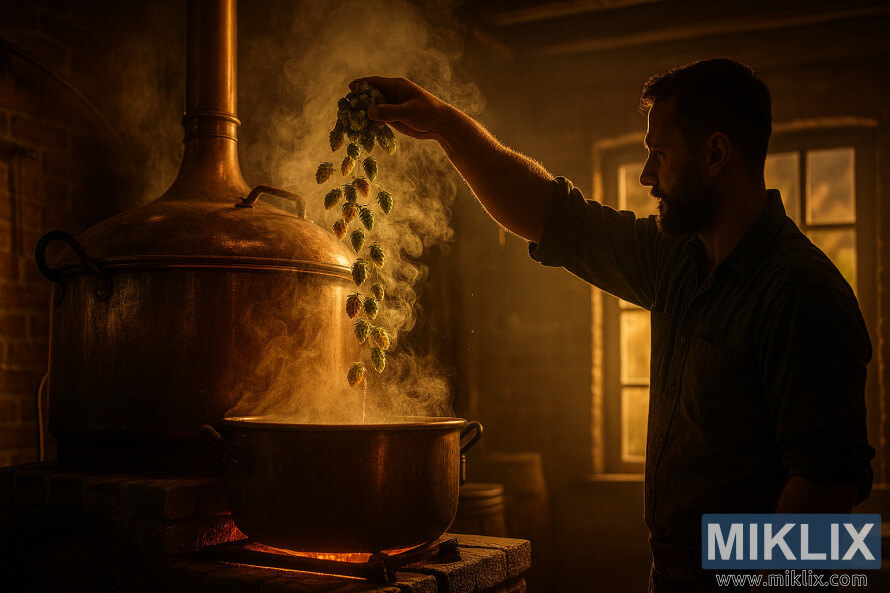
Click or tap the image for more information and higher resolutions.
Commercial production and availability in the United States
Willamette production started in 1976 and quickly expanded in Oregon. Growers were drawn to its unique traits, including seedless cones and higher yields. These characteristics were ideal for mechanized harvests.
By 1986, Willamette covered about 2,100 acres, producing around 3.4 million pounds. This accounted for nearly 6.9% of U.S. hop output. The variety's popularity continued to grow through the 1990s.
In 1997, Willamette became the third most planted hop variety in the U.S. It covered about 7,578 acres and yielded 11.144 million pounds. This marked a significant milestone in U.S. hop production.
U.S. hop acreage trends show the impact of market demand and new cultivars. The USDA and Oregon State University have been key in developing these new varieties. Their work has made tetraploid and triploid selections from English stock more common.
Hop variety availability changes yearly and varies by region. Companies like Yakima Chief Ranches, John I. Haas, and CLS Farms play a big role in distributing these varieties. They help make Willamette and similar varieties more accessible to brewers.
The USDA lists Willamette as a commercial cultivar without restrictions. This makes it easier for growers and distributors to work with the variety.
- Grower adoption: mechanized harvesting favored tetraploid-derived types.
- Market share: Willamette became a staple for aroma hops in many U.S. breweries.
- Distribution: seedless triploid forms improved commercial Fuggle tetraploid availability nationwide.
Brewers should plan their orders well in advance for Willamette hops. Regional demand and annual yield changes can impact availability and prices. Keeping an eye on U.S. hop acreage reports can help predict these trends.
Laboratory and quality metrics for hop buyers and brewers
Hop lab metrics are essential for making informed decisions in both purchasing and brewing. Laboratories provide alpha acid testing results, which indicate the hop's bittering capacity. Brewers rely on this data to calculate the necessary amount of hops to achieve their desired International Bitterness Units (IBU).
When evaluating hops, buyers also focus on total oils and their composition. This information is critical for predicting the hop's aroma impact. The percentages of myrcene, humulene, caryophyllene, and farnesene are key in determining the wet-hop character and planning for dry-hop additions.
Cohumulone, a component of alpha acids, is another metric of interest. It is believed by many brewers to contribute to a firmer, sharper bitterness. This characteristic is often compared when evaluating Willamette hops against other Fuggle-derived varieties.
Standard methods for analyzing hops include the ASBC spectrophotometric method and gas chromatography for oil composition. Reliable laboratories provide a complete picture by combining alpha acid testing with cohumulone percentage and a detailed oil profile.
Over the past decade, Willamette hops have shown consistent alpha acid levels near 6.6% and beta acids around 3.8%. Total oils have ranged from 0.8 to 1.2 ml/100 g. Myrcene, the dominant oil, has been reported between 30% and 51%, depending on the source.
Hop quality control encompasses both chemical analysis and plant health. Commercial suppliers and institutions like the USDA and Oregon State University verify virus-free status, varietal identity, and consistent lab metrics for each hop accession.
Practical steps for buyers include:
- Reviewing alpha acid testing certificates to confirm bittering strength.
- Comparing cohumulone percentage to anticipate bitterness character.
- Examining total oils and myrcene proportion for aroma planning.
- Requesting virus and disease testing as part of hop quality control.
Breeding programs aim to balance alpha acids for preservative value with oil profiles for aroma. This balance is documented in USDA and university records, aiding buyers in assessing consistency across harvests.
Breeding legacy: Fuggle Tetraploid hops influence on modern varieties
Fuggle has seeded a wide hop pedigree that reaches many contemporary cultivars. Breeders at Wye College, the USDA, and Oregon State University used Fuggle and Golding genetics. They aimed to create lines with higher alpha acids and stronger disease tolerance. This hop breeding influence shows up in aroma, yield, and resilience traits across regions.
Willamette stands as a clear example of Fuggle legacy in the United States. Bred from Fuggle-related stock and adapted for American acreage, Willamette offered seedlessness, steady yields, and preserved aroma. Growers adopted it as a practical Fuggle replacement, shaping hop acreage and beer flavor profiles.
Tetraploid conversion and triploid techniques moved desirable Fuggle aromas into commercially viable varieties. These methods helped fix traits such as floral and earthy notes while improving agronomic performance. The hop pedigree from these programs underpins many modern hop varieties descent pathways.
Modern hop varieties descent reflects deliberate selection for brewer needs. Cascade and Centennial trace part of their genetic story back to traditional European lines that include Fuggle influence. This lineage explains why certain aroma families recur in brews from pale ales to traditional bitters.
Breeders continue to mine Fuggle-derived genes for disease resistance and aroma stability. Ongoing crosses aim to blend classic Fuggle character with traits suited for large-scale production. The resulting hop breeding influence keeps traditional profiles relevant in today’s craft and commercial beer markets.
Conclusion
Fuggle Tetraploid conclusion highlights the evolution of a classic English aroma hop into a modern brewing tool. Its earthy, stable aroma remains essential in traditional ales. Tetraploid breeding preserved these qualities, improving alpha acids, seedlessness, and yield. This made Fuggle relevant for both craft and commercial brewers.
The hop breeding summary showcases the USDA and Oregon State University's work. They transformed diploid Fuggle genetics into tetraploid lines, creating triploid descendants like Willamette. Willamette summary reveals its success: it offers Fuggle-style aroma with enhanced agronomics. It became a key U.S. aroma hop, fitting regional terroir and large-scale production.
Brewing implications are evident for brewers seeking aroma hops that blend tradition with consistency. Tetraploid-derived cultivars provide Fuggle-like notes while addressing modern needs. They ensure alpha stability, disease tolerance, and reliable harvests. This makes them ideal for recipe design and sourcing, bridging heritage flavor with contemporary supply demands.
Further Reading
If you enjoyed this post, you may also like these suggestions: