
Growing Bell Peppers: A Complete Guide from Seed to Harvest
Published: December 13, 2025 at 10:03:08 PM UTC
Bell peppers are one of the most rewarding vegetables to grow in your home garden. With their crisp texture, sweet flavor, and rainbow of colors from green to red, yellow, and orange, these versatile fruits add both beauty and nutrition to your garden and kitchen.
Click or tap the image for more information and higher resolutions.
While growing bell peppers requires some patience, the right techniques will help you achieve a bountiful harvest. This comprehensive guide will walk you through every step of growing bell peppers, from selecting the best varieties to harvesting and storing your homegrown peppers.
Choosing the Right Bell Pepper Varieties
Bell peppers come in numerous varieties, each with unique characteristics. When selecting which types to grow, consider your growing season length, available space, and taste preferences.
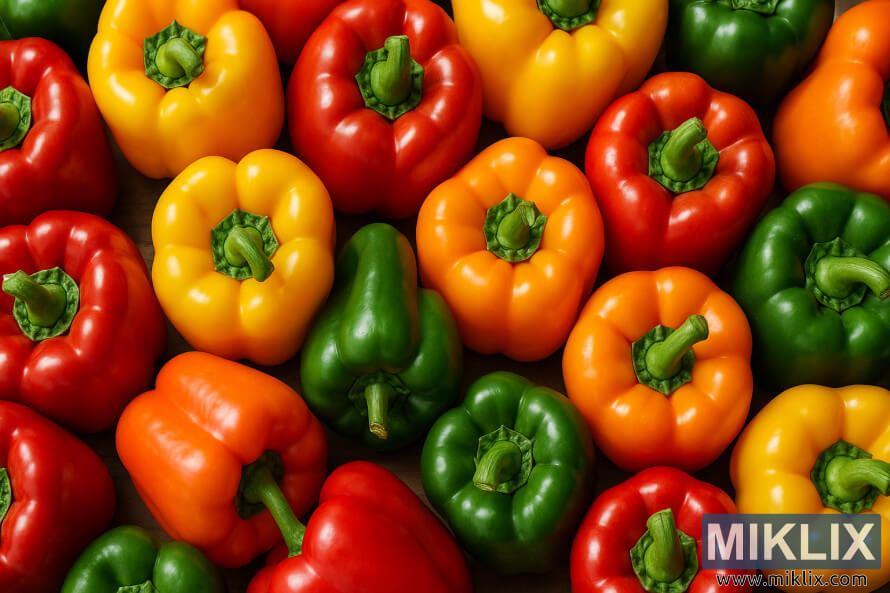
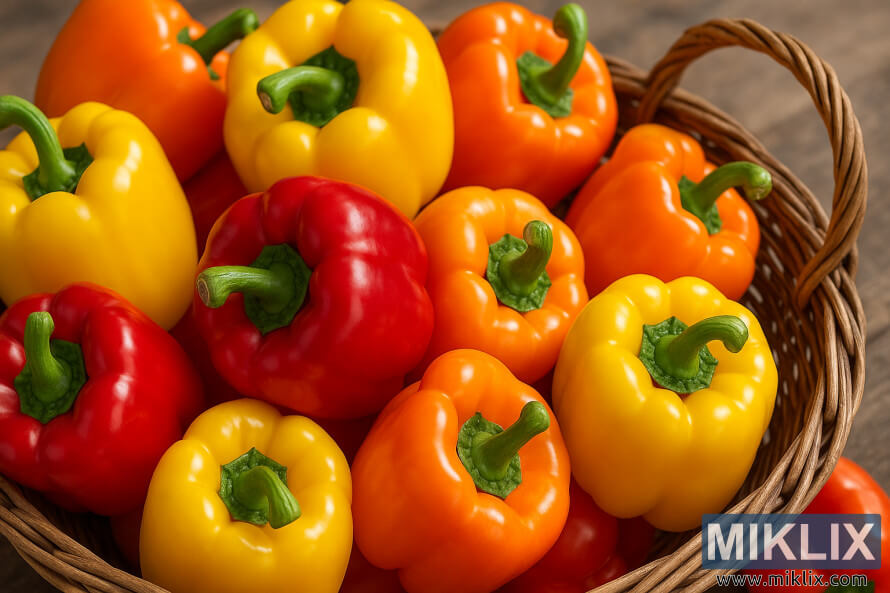
Bell peppers come in a rainbow of colors, each with different flavor profiles and maturity times.
Popular Bell Pepper Varieties for Home Gardens
| Variety | Days to Maturity | Color | Special Features |
| California Wonder | 70-75 | Green to Red | Classic bell shape, thick walls, disease resistant |
| Golden California Wonder | 70-75 | Green to Yellow | Sweet flavor, productive in most climates |
| Purple Beauty | 70-75 | Purple | Unique color, compact plants, good for containers |
| Orange Sun | 75-80 | Green to Orange | Sweet taste, high vitamin C content |
| Gypsy | 60-65 | Yellow to Red | Early producer, smaller fruits, high yield |
| Big Bertha | 70-75 | Green to Red | Extra large fruits, excellent for stuffing |
Selecting the Best Varieties for Your Garden
- For shorter growing seasons, choose early-maturing varieties like Gypsy or Ace.
- If you have limited space, look for compact varieties like Purple Beauty or Sweet Banana.
- For maximum color variety, plant a mix of peppers that mature to different colors.
- Consider disease-resistant varieties if you've had issues with pepper diseases in the past.
Starting Bell Peppers from Seed
Bell peppers have a long growing season (60-90 days), so starting seeds indoors gives you a head start, especially in regions with shorter summers. For best results, begin seeds 8-10 weeks before your last spring frost date.
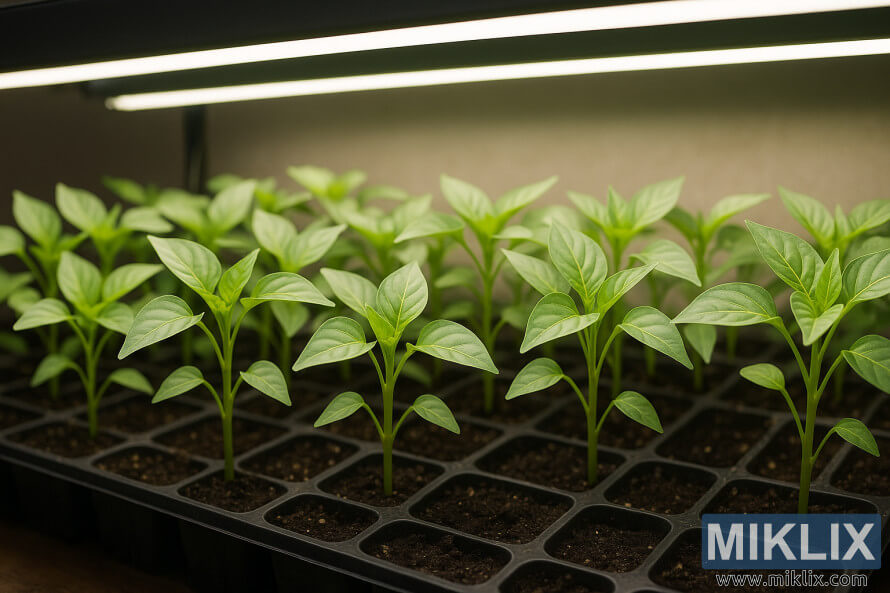
Start pepper seeds indoors 8-10 weeks before your last frost date for a head start on the growing season.
Seed Starting Supplies
- High-quality bell pepper seeds
- Seed starting mix or potting soil
- Seed trays or small pots with drainage holes
- Heat mat (peppers germinate best at 70-80°F)
- Grow lights or a sunny window
- Plant labels
- Spray bottle for watering
Step-by-Step Seed Starting Process
- Fill seed trays with moistened seed starting mix.
- Plant seeds ¼ inch deep, placing 2-3 seeds per cell.
- Cover lightly with soil, mist with water, and cover with a humidity dome.
- Place on a heat mat set to 70-80°F.
- Once seedlings emerge (7-21 days), remove the dome and place under grow lights.
- Keep lights 2-3 inches above seedlings for 14-16 hours daily.
- When seedlings have 2-3 sets of true leaves, thin to the strongest plant per cell.
- Transplant to larger pots when seedlings are 3-4 inches tall.
Tip: Bell peppers can be slow to germinate, sometimes taking up to 3 weeks. Be patient and maintain consistent moisture and warmth during this period.
Click or tap the image for more information and higher resolutions.
Transplanting Bell Peppers to the Garden
Timing is crucial when transplanting bell peppers outdoors. These heat-loving plants can be damaged by cold temperatures, so wait until all danger of frost has passed and soil temperatures reach at least 65°F.
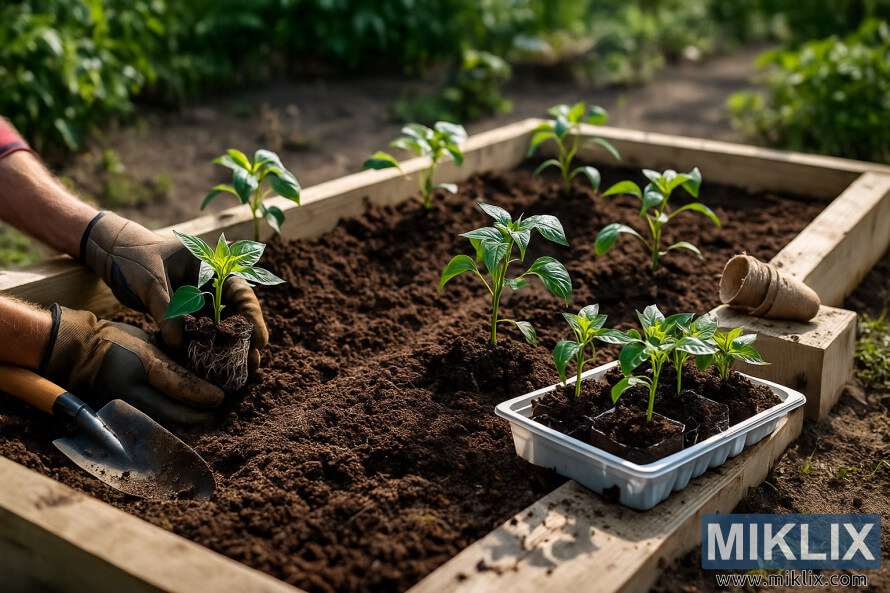
Transplant pepper seedlings after all danger of frost has passed and soil has warmed.
Hardening Off Seedlings
Before transplanting, gradually acclimate your seedlings to outdoor conditions through a process called hardening off:
- Begin 7-10 days before transplanting.
- Start by placing seedlings in a sheltered, shaded location for 1-2 hours.
- Gradually increase outdoor time by 1-2 hours daily.
- Slowly introduce more sunlight and less protected conditions.
- By day 7-10, plants should be able to stay outside all day and night (if temperatures permit).
Transplanting Process
- Choose a planting site with full sun (6-8 hours daily) and well-draining soil.
- Prepare the soil by incorporating 2-3 inches of compost.
- Dig holes 18-24 inches apart, slightly deeper than the root ball.
- Add a tablespoon of balanced organic fertilizer to each hole.
- Carefully remove seedlings from their containers, disturbing roots as little as possible.
- Place plants in holes at the same depth they were growing previously.
- Backfill with soil, firming gently around the base.
- Water thoroughly after planting.
- Add stakes or cages for support as plants grow.
Spacing Guide: Space bell pepper plants 18-24 inches apart in rows that are 24-36 inches apart. In raised beds or square foot gardens, you can space them slightly closer (12-18 inches) if you provide adequate support.
Click or tap the image for more information and higher resolutions.
Optimal Growing Conditions for Bell Peppers
Bell peppers thrive under specific conditions. Understanding and providing these requirements will help your plants produce the maximum yield of healthy, delicious peppers.
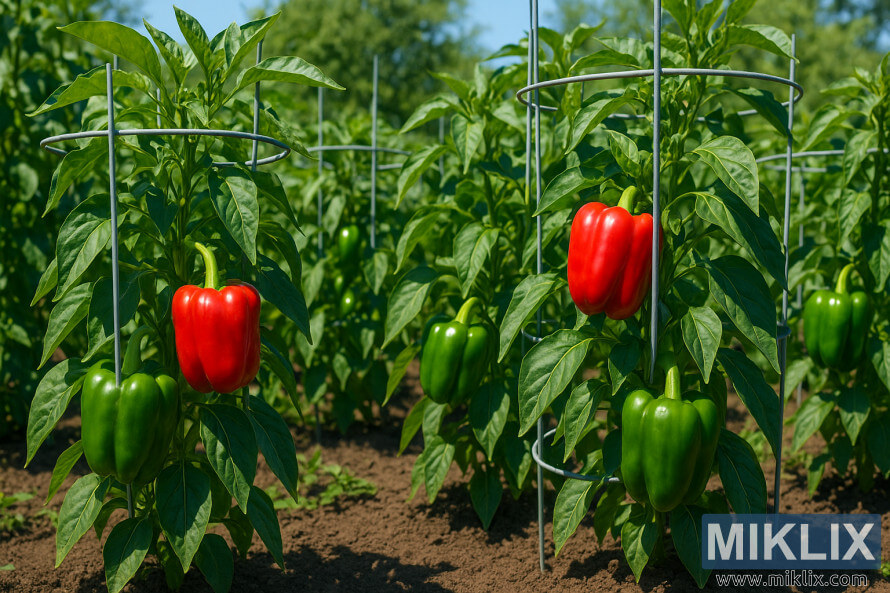
Bell peppers thrive in full sun with consistent moisture and rich, well-draining soil.
Sunlight Requirements
Bell peppers need plenty of sunlight to produce abundant fruit:
- Provide at least 6-8 hours of direct sunlight daily.
- In very hot climates (above 90°F regularly), provide afternoon shade to prevent sunscald.
- South-facing garden beds typically offer optimal sun exposure.
Soil Requirements
The right soil conditions are crucial for healthy pepper growth:
- Well-draining, loamy soil with plenty of organic matter.
- Soil pH between 6.0 and 7.0 (slightly acidic to neutral).
- Rich in nutrients, especially phosphorus and calcium.
- Warm soil temperatures (above 65°F) for optimal root development.
Temperature and Climate
Bell peppers are sensitive to temperature extremes:
- Optimal daytime temperatures: 70-85°F.
- Night temperatures should stay above 60°F for proper fruit set.
- Plants may drop flowers when temperatures exceed 90°F or drop below 60°F.
- Protect plants from cold snaps with row covers or cloches.
Warning: Bell peppers are extremely sensitive to frost. Even a light frost can damage or kill plants. If unexpected cold weather threatens, cover plants with frost cloth or bring container-grown peppers indoors.
Click or tap the image for more information and higher resolutions.
Watering and Fertilizing Bell Peppers
Proper watering and fertilization are essential for healthy growth and abundant fruit production. Bell peppers need consistent moisture and regular feeding throughout the growing season.
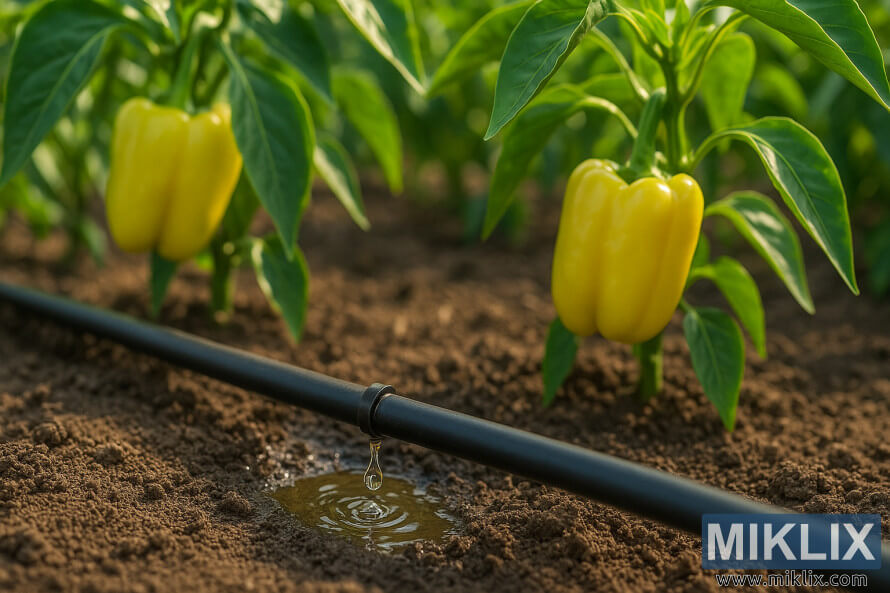
Drip irrigation provides consistent moisture directly to the roots while keeping foliage dry.
Watering Guidelines
- Water deeply and consistently, providing 1-2 inches of water per week.
- Increase watering during hot, dry periods or when plants are setting fruit.
- Water at the base of plants to keep foliage dry and prevent disease.
- Maintain even soil moisture – inconsistent watering can cause blossom end rot.
- Mulch around plants with straw or compost to retain moisture and suppress weeds.
Click or tap the image for more information and higher resolutions.
Fertilizing Schedule
Bell peppers are moderate to heavy feeders that benefit from regular fertilization:
- Before planting, incorporate compost and a balanced organic fertilizer into the soil.
- When transplanting, add a phosphorus-rich starter fertilizer to encourage root development.
- When plants begin flowering, apply a side dressing of balanced organic fertilizer.
- Feed every 3-4 weeks throughout the growing season.
- Avoid high-nitrogen fertilizers, which promote leafy growth at the expense of fruit production.
Supporting and Pruning Bell Pepper Plants
As bell pepper plants grow and begin producing fruit, they often need support to prevent branches from breaking under the weight. Strategic pruning can also improve air circulation and direct the plant's energy toward fruit production.
Support Options
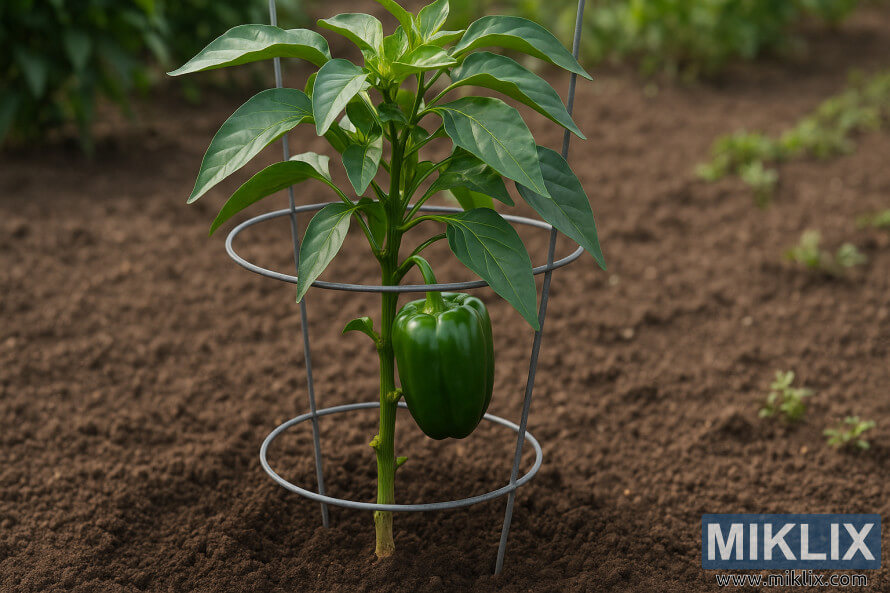
- Tomato cages: Provide all-around support for pepper plants.
- Stakes: Single stakes (2-3 feet tall) can support smaller varieties.
- Florida weave: For row planting, run twine between stakes to support multiple plants.
- Obelisk trellises: Decorative and functional for garden beds.
Pruning Techniques
While not strictly necessary, strategic pruning can benefit bell pepper plants:
- Remove lower leaves that touch the soil to prevent disease spread.
- Pinch off the growing tips when plants are 8-12 inches tall to encourage bushier growth.
- Remove any diseased or damaged leaves promptly.
- For plants with heavy fruit set, consider removing some blossoms to direct energy to remaining fruit.
- In cooler climates with short seasons, remove late-season flowers that won't have time to mature.
Tip: Install supports at planting time to avoid damaging roots later. Place cages or stakes about 2-3 inches away from the plant stem.
Click or tap the image for more information and higher resolutions.
Companion Planting for Bell Peppers
Strategic companion planting can help deter pests, attract beneficial insects, and create a healthier growing environment for your bell peppers.
Good Companions
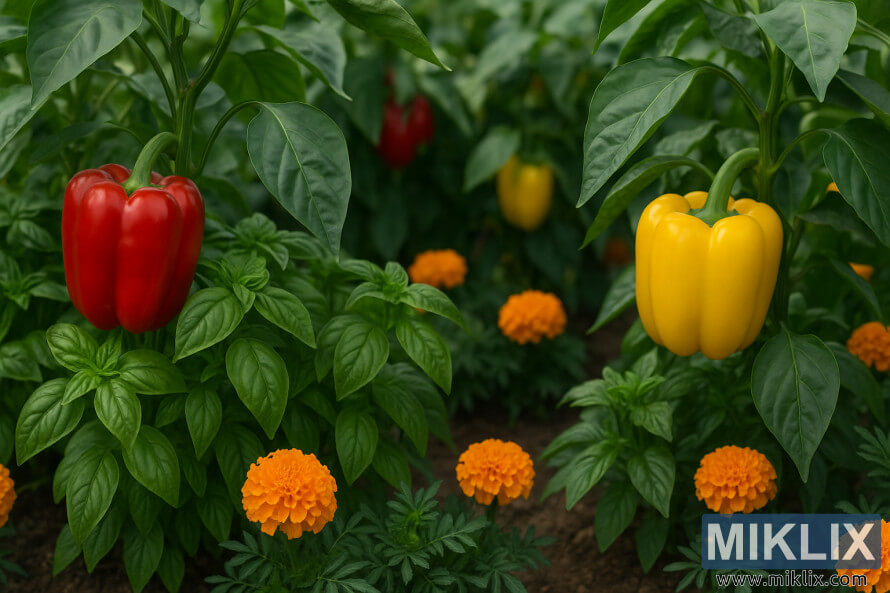
- Basil: Repels flies and mosquitoes, improves flavor and growth.
- Marigolds: Deter nematodes and other soil pests.
- Onions & Garlic: Help repel aphids and other insects.
- Carrots: Use space efficiently as they grow below ground.
- Spinach & Lettuce: Provide ground cover and use space efficiently.
- Petunias: Repel aphids, leafhoppers, and other pests.
Plants to Avoid
- Fennel: Inhibits growth of most garden vegetables.
- Brassicas: Cabbage, broccoli, and kale compete for nutrients.
- Beans: May compete with peppers and stunt growth.
- Apricot Trees: Can transmit diseases to pepper plants.
- Corn: Attracts pests that can damage pepper plants.
Companion Planting Layout
When designing your garden, consider these companion planting arrangements:
- Plant basil between pepper plants to improve flavor and repel pests.
- Edge pepper beds with marigolds to create a protective barrier.
- Interplant with low-growing herbs like thyme or oregano as living mulch.
- Alternate rows of peppers with rows of compatible vegetables.
Click or tap the image for more information and higher resolutions.
Managing Pests and Diseases
Bell peppers can be affected by various pests and diseases, but with proper prevention and early intervention, you can keep your plants healthy and productive.
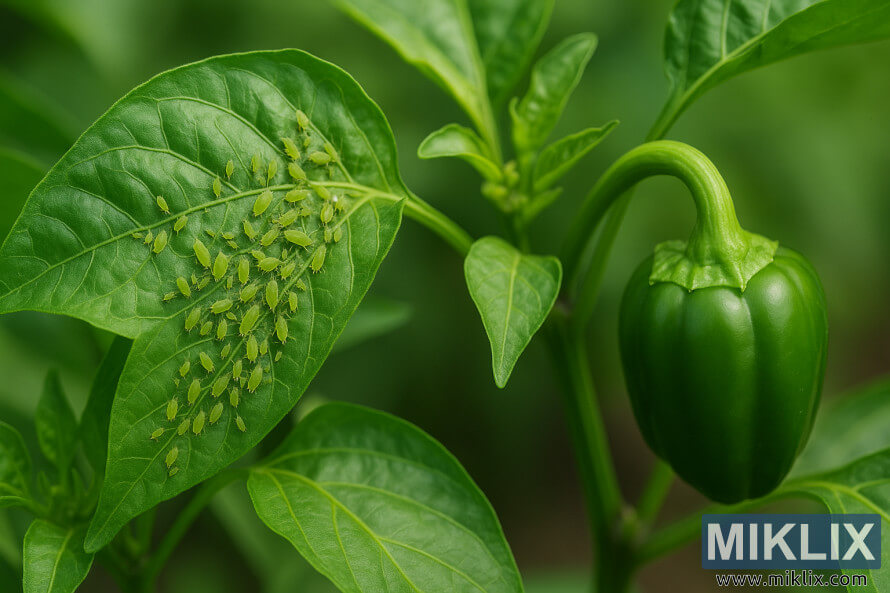
Regular inspection helps catch pest problems early before they cause significant damage.
Common Pests
| Pest | Symptoms | Organic Control Methods |
| Aphids | Curled leaves, sticky residue, small green/black insects on leaf undersides | Strong water spray, insecticidal soap, neem oil, ladybugs |
| Spider Mites | Fine webbing, stippled yellow leaves, tiny moving dots | Increase humidity, insecticidal soap, neem oil |
| Cutworms | Plants cut off at soil level | Cardboard collars around stems, diatomaceous earth |
| Hornworms | Defoliation, large green caterpillars | Hand picking, Bt (Bacillus thuringiensis) |
| Pepper Weevils | Small holes in peppers, premature fruit drop | Row covers, crop rotation, remove fallen fruit |
Common Diseases
| Disease | Symptoms | Prevention/Treatment |
| Bacterial Leaf Spot | Dark, water-soaked spots on leaves | Copper fungicide, crop rotation, avoid overhead watering |
| Powdery Mildew | White powdery coating on leaves | Improve air circulation, baking soda spray, neem oil |
| Blossom End Rot | Dark, sunken areas on bottom of fruits | Consistent watering, calcium supplementation |
| Fusarium Wilt | Yellowing leaves, wilting despite adequate water | Resistant varieties, crop rotation, remove infected plants |
| Tobacco Mosaic Virus | Mottled leaves, stunted growth | Resistant varieties, sanitize tools, remove infected plants |
Preventative Measures
- Maintain proper spacing for good air circulation.
- Water at the base of plants to keep foliage dry.
- Practice crop rotation, avoiding planting peppers where other nightshades (tomatoes, eggplants) grew previously.
- Remove plant debris at the end of the season.
- Use floating row covers to protect young plants from pests.
- Attract beneficial insects with flowering plants like sweet alyssum and calendula.
Click or tap the image for more information and higher resolutions.
Growing Bell Peppers in Containers
Don't have garden space? Bell peppers grow excellently in containers, making them perfect for patios, balconies, or small yards. Container growing also allows you to control soil conditions and move plants to optimal locations.
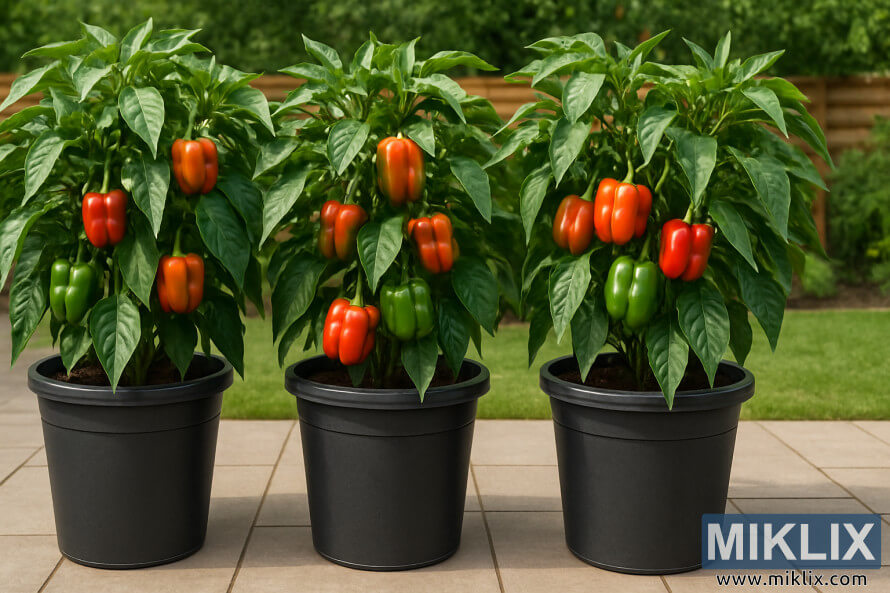
Container-grown bell peppers thrive on patios and balconies with proper care.
Container Requirements
- Choose containers at least 12 inches deep and 12 inches in diameter (5-gallon minimum).
- Ensure containers have adequate drainage holes.
- Use high-quality potting mix formulated for vegetables, not garden soil.
- Select containers made of fabric, clay, or plastic – each has advantages.
Container Growing Tips
- Fill containers with high-quality potting mix enriched with compost.
- Plant one pepper plant per 5-gallon container, or two in larger containers.
- Position containers where they'll receive 6-8 hours of sunlight.
- Water more frequently than in-ground plants, possibly daily during hot weather.
- Fertilize every 2 weeks with a balanced liquid fertilizer.
- Provide support with stakes or small cages.
- Move containers to protected areas during extreme weather.
Container Selection Tip: Dark-colored containers absorb heat, warming the soil faster in spring but potentially overheating in summer. Consider light-colored containers for hot climates or provide afternoon shade.
Click or tap the image for more information and higher resolutions.
Harvesting and Storing Bell Peppers
After months of care, it's time to enjoy the fruits of your labor! Knowing when and how to harvest bell peppers ensures you'll get the best flavor and maximum yield from your plants.
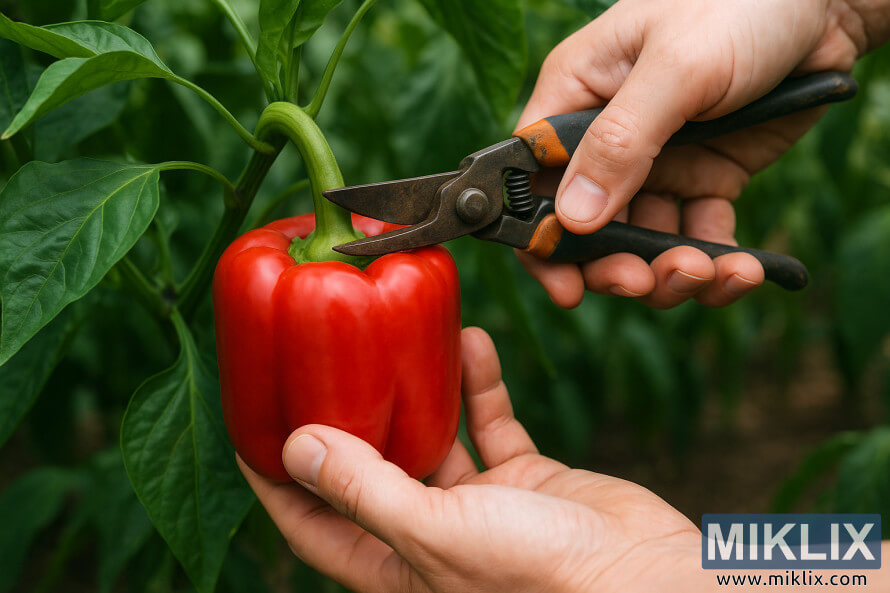
Use pruning shears to cut peppers from the plant, leaving a short stem attached.
When to Harvest
- Bell peppers can be harvested at any stage once they reach full size.
- Green peppers are technically unripe peppers that will eventually change color.
- For sweeter flavor and higher vitamin content, allow peppers to fully ripen to their mature color (red, yellow, orange, etc.).
- Peppers typically take 60-90 days from transplanting to first harvest.
- Regular harvesting encourages plants to produce more fruit.
How to Harvest
- Use sharp pruning shears or scissors to cut peppers from the plant.
- Leave a short stem (about ½ inch) attached to the pepper.
- Avoid pulling peppers off by hand, which can damage the plant.
- Harvest in the morning when temperatures are cooler for best flavor.
- Handle peppers gently to avoid bruising.
Storing Bell Peppers
- Short-term storage: Unwashed peppers will keep in the refrigerator for 1-2 weeks in the crisper drawer.
- Freezing: Wash, remove seeds, and slice peppers. Freeze on a tray, then transfer to freezer bags.
- Drying: Slice peppers thinly and dry in a dehydrator or oven at low temperature.
- Roasting: Roast peppers, remove skins, and freeze or store in oil.
- Pickling: Preserve peppers in vinegar brine for long-term storage.
Click or tap the image for more information and higher resolutions.
Troubleshooting Common Bell Pepper Problems
Even experienced gardeners occasionally encounter issues with bell peppers. Here are solutions to common problems you might face.
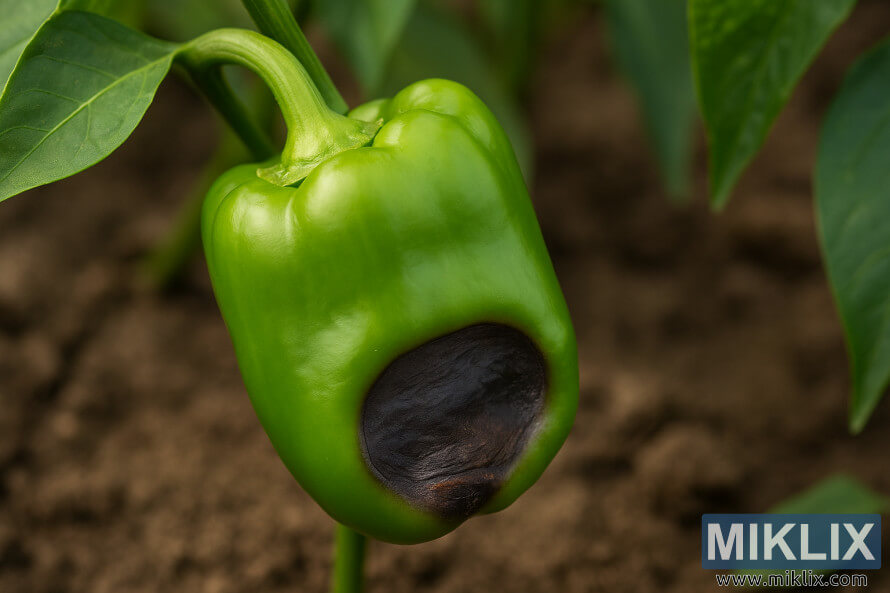
Blossom end rot is caused by calcium deficiency, often due to inconsistent watering.
Why aren't my pepper plants producing fruit?
Several factors can cause poor fruit set:
- Temperature extremes (above 90°F or below 60°F) cause blossom drop
- Insufficient pollination (try hand pollinating with a small brush)
- Too much nitrogen fertilizer (promotes leafy growth at expense of fruit)
- Insufficient sunlight (peppers need 6-8 hours daily)
- Overcrowding (ensure proper spacing between plants)
Why do my peppers have black spots on the bottom?
This is blossom end rot, caused by calcium deficiency, usually due to inconsistent watering. To fix:
- Maintain consistent soil moisture
- Add calcium to the soil (crushed eggshells, lime, or gypsum)
- Apply a calcium spray directly to plants
- Mulch to maintain even soil moisture
Why are my pepper leaves turning yellow?
Yellowing leaves can indicate several issues:
- Overwatering or poor drainage (roots can't access oxygen)
- Nutrient deficiency (especially nitrogen or magnesium)
- Pest infestation (check leaf undersides for aphids or mites)
- Disease (viral or bacterial)
- Natural aging (lower leaves may yellow as plant matures)
Why are my peppers small or deformed?
Small or misshapen peppers can result from:
- Poor pollination (try hand pollinating)
- Pest damage (especially from pepper weevils)
- Nutrient deficiencies
- Temperature stress
- Overcrowding
Can I save seeds from my bell peppers?
Yes, but with some caveats:
- Only save seeds from open-pollinated or heirloom varieties, not hybrids
- Allow peppers to fully ripen before collecting seeds
- Rinse seeds and dry thoroughly before storing
- Store in a cool, dry place in paper envelopes
- Be aware that cross-pollination can occur if growing multiple pepper varieties
Click or tap the image for more information and higher resolutions.
Conclusion: Enjoying Your Bell Pepper Harvest
Growing bell peppers requires some patience and attention to detail, but the reward of harvesting your own colorful, nutritious peppers makes it well worth the effort. From the first tiny seedling to the final harvest, each stage of growing bell peppers offers its own satisfaction and learning opportunities. A colorful harvest of homegrown bell peppers is the ultimate reward for your gardening efforts.
Whether you're a beginner gardener or a seasoned pro, growing bell peppers connects you to the rhythms of nature and provides nutritious food for your table. Use the techniques in this guide to grow healthy, productive pepper plants, and don't be afraid to experiment with different varieties and growing methods to find what works best in your unique garden.
Remember that each growing season brings new knowledge and experience. Keep notes on what worked well and what you might change next year. With time, you'll develop your own expertise in growing these versatile and delicious vegetables.
Click or tap the image for more information and higher resolutions.
Further Reading
If you enjoyed this post, you may also like these suggestions:
- A Guide to Growing Celery in Your Own Garden
- A Complete Guide to Growing Grapes in Your Home Garden
- A Complete Guide to Growing Limes in Your Home Garden