
A Complete Guide to Growing Leeks at Home Successfully
Published: December 25, 2025 at 11:18:17 AM UTC
Leeks are one of the most rewarding vegetables you can grow in your home garden. These elegant alliums offer a milder, sweeter flavor than onions and can be harvested over an extended period. Whether you're a beginner or experienced gardener, growing leeks at home is surprisingly simple and yields delicious results that store well and elevate countless dishes.
Click or tap the image for more information and higher resolutions.
In this comprehensive guide, we'll walk through everything you need to know to successfully grow, harvest, and enjoy your own homegrown leeks.
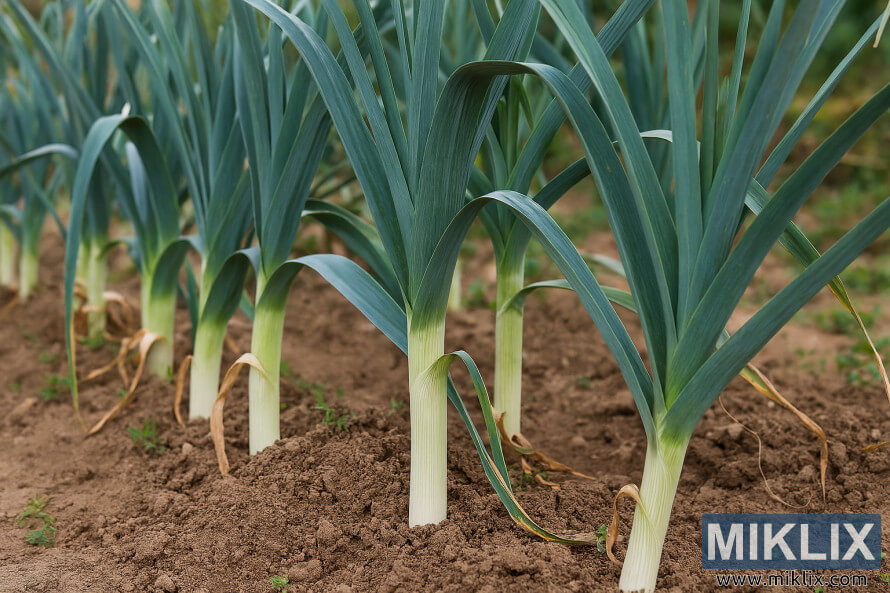
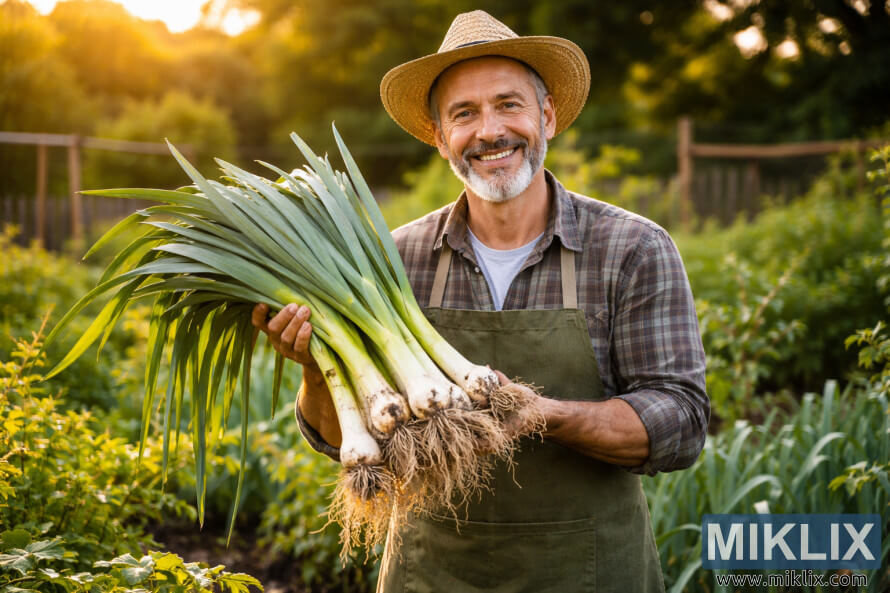
Healthy leeks growing in a home garden with their distinctive white stalks and blue-green leaves
About Leeks: The Gourmet's Onion
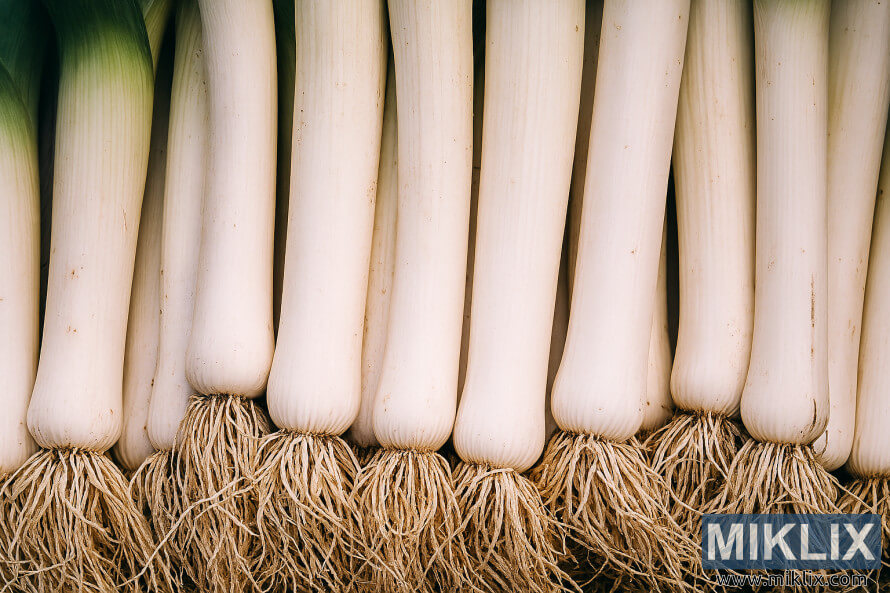
Leeks (Allium porrum or A. ampeloprasum var. porrum) are members of the allium family alongside onions, garlic, and chives. Unlike their cousins, leeks don't form bulbs but instead produce a long, cylindrical white shaft topped with flat, blue-green leaves. Often called "the gourmet's onion," leeks have been cultivated for thousands of years and are particularly popular in European cuisine.
What makes leeks special for home gardeners is their exceptional cold tolerance and long harvest window. Many varieties can withstand frost and be harvested throughout fall and winter in milder climates. Their mild, sweet flavor makes them versatile in the kitchen, perfect for soups, stews, roasted dishes, and more.
Benefits of Growing Leeks at Home
- Cost-effective compared to store prices
- Harvest over an extended period
- Frost-tolerant and low-maintenance
- Few pest and disease problems
- Versatile in cooking applications
- Rich in vitamins A, C, K and minerals
- Beautiful addition to garden beds
Click or tap the image for more information and higher resolutions.
Best Leek Varieties for Home Gardens
Leek varieties fall into two main categories: short-season (early) and long-season types. Your choice depends on your climate and when you want to harvest. Here are some excellent varieties for home gardeners:
Early Season Varieties (60-100 days)
- King Richard - Long, slender stalks up to 12 inches, ready in 75 days
- Varna - Fast-growing "bunching" type, ideal for baby leeks
- Rally - Uniform growth with good disease resistance
- Lancelot - Short with large cylindrical shaft
Mid-Season Varieties (100-120 days)
- Dawn Giant - Grows up to 15 inches long and 2 inches in diameter
- Jolant - Medium-sized with blue-green leaves, winter hardy
- Columbus - Stays long and tall with minimal bulbing
- Splendid - Rapid grower with 7-8 inch stalks
Long Season Varieties (120-180 days)
- Giant Musselburgh - Heritage variety, extremely hardy
- American Flag - Classic variety with excellent winter hardiness
- Bandit - Short, sweet leek that grows thick
- Tadorna - Blue-green foliage, overwinters in mild climates
Planting Leeks: From Seed to Garden
Leeks have a long growing season, so starting seeds indoors is recommended in most regions. Here's a step-by-step guide to planting leeks successfully:
Starting Leek Seeds Indoors
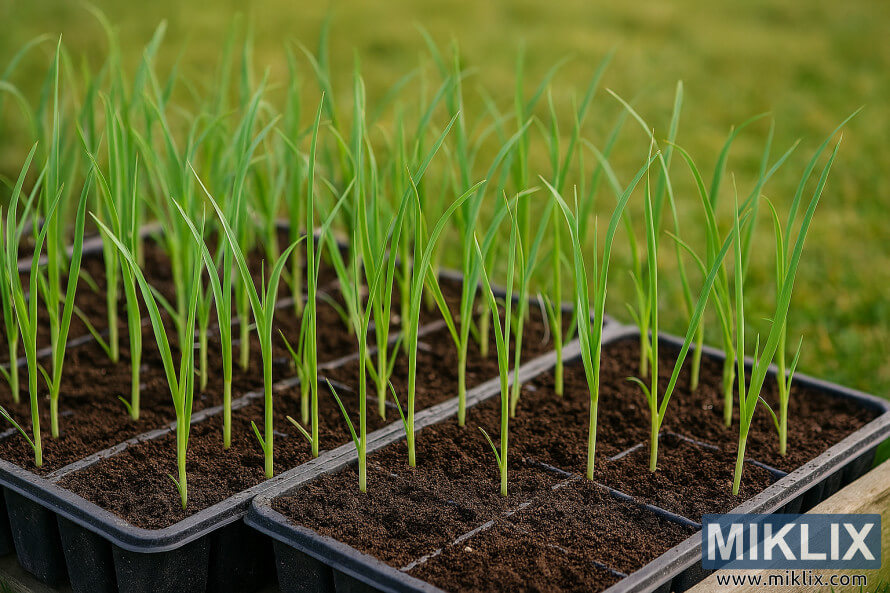
- Start seeds 8-10 weeks before your last spring frost date (typically January-March in northern climates).
- Fill seed trays with fresh seed-starting mix and moisten thoroughly.
- Sow seeds ¼ inch deep, spacing them about ½ inch apart.
- Cover lightly with soil or vermiculite and keep consistently moist.
- Maintain soil temperature around 70°F for optimal germination.
- Expect germination within 7-14 days.
- Once sprouted, provide 12-16 hours of light daily using grow lights or a sunny window.
- When seedlings reach 6-8 inches tall, trim them back to about 2-3 inches to encourage stronger growth.
Pro Tip: Haircuts for Leeks
Giving your leek seedlings regular "haircuts" by trimming the tops to 2-3 inches encourages thicker, stronger growth. Don't waste the trimmings - they make a great garnish similar to chives!
Click or tap the image for more information and higher resolutions.
Timing is Everything
In warmer southern climates (zones 7+), you can also start leeks in late summer for a winter/spring harvest. Check your local frost dates to determine the best planting time for your region.
Transplanting Leek Seedlings Outdoors
Once your seedlings are pencil-lead thickness and at least 6-8 inches tall, and after your last frost date has passed, they're ready for transplanting:
- Harden off seedlings by gradually exposing them to outdoor conditions over 5-7 days.
- Choose a location with full sun (at least 6-8 hours daily) and well-draining soil.
- Prepare the soil by incorporating 2-3 inches of compost or aged manure.
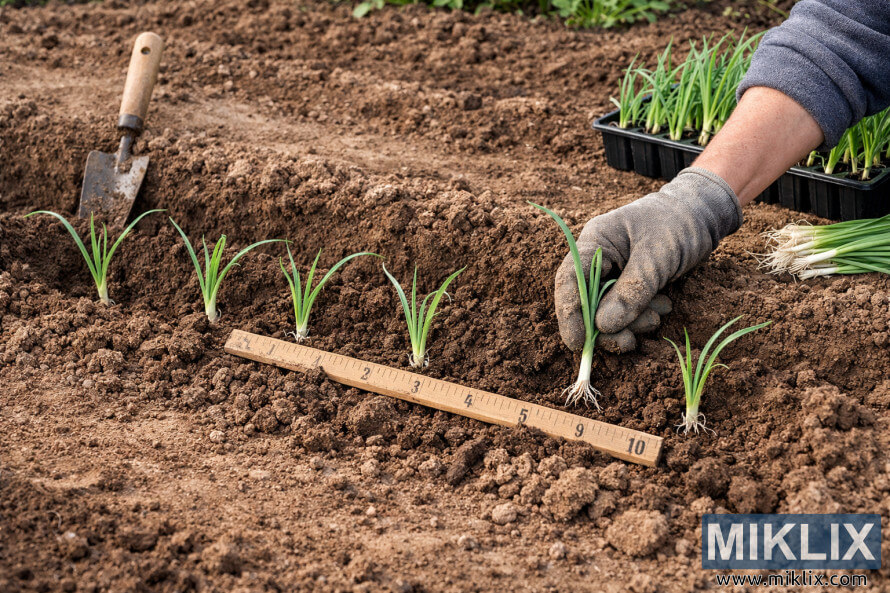
- Dig a trench 6 inches deep or individual holes using a dibble or dowel.
- Space plants 6 inches apart in rows 12-24 inches apart.
- Gently separate seedlings and trim roots to about 1 inch if necessary.
- Plant seedlings deeply, with only 2-3 inches of green showing above soil level.
- Water thoroughly after planting with a gentle stream.
Click or tap the image for more information and higher resolutions.
Ideal Growing Conditions for Leeks
Soil Requirements
Leeks thrive in rich, well-draining soil with plenty of organic matter:
- Soil pH between 6.0 and 7.0 (slightly acidic to neutral)
- High in organic matter (add compost before planting)
- Well-draining but moisture-retentive
- Loamy soil texture is ideal
- Avoid heavy clay soils unless amended
Light and Temperature
Leeks are cool-season crops with specific light and temperature preferences:
- Full sun (minimum 6 hours, preferably 8+ hours)
- Optimal growing temperature: 55-75°F (13-24°C)
- Can tolerate light frost once established
- Growth slows in hot weather above 85°F (29°C)
- Many varieties can withstand temperatures down to 20°F (-6°C)
Click or tap the image for more information and higher resolutions.
Watering, Fertilizing, and Maintenance
Watering Requirements
Leeks have shallow root systems and need consistent moisture:
- Provide 1-1.5 inches of water weekly
- Water at soil level to avoid leaf diseases
- Maintain even soil moisture (never soggy)
- Increase watering during dry periods
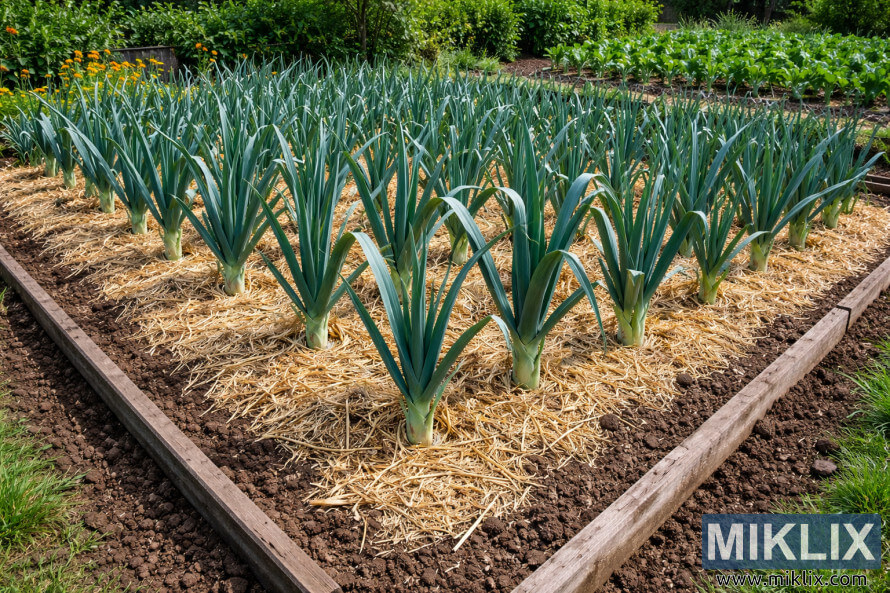
- Mulch to retain soil moisture
Fertilizing Schedule
Leeks are moderate to heavy feeders that benefit from:
- Initial application of balanced fertilizer at planting
- Side-dress with nitrogen-rich fertilizer mid-season
- Apply compost tea every 3-4 weeks
- Avoid high-phosphorus fertilizers (can trigger bolting)
- Final feeding about 1 month before harvest
Ongoing Maintenance
Regular care ensures healthy, productive leeks:
- Weed carefully to avoid root damage
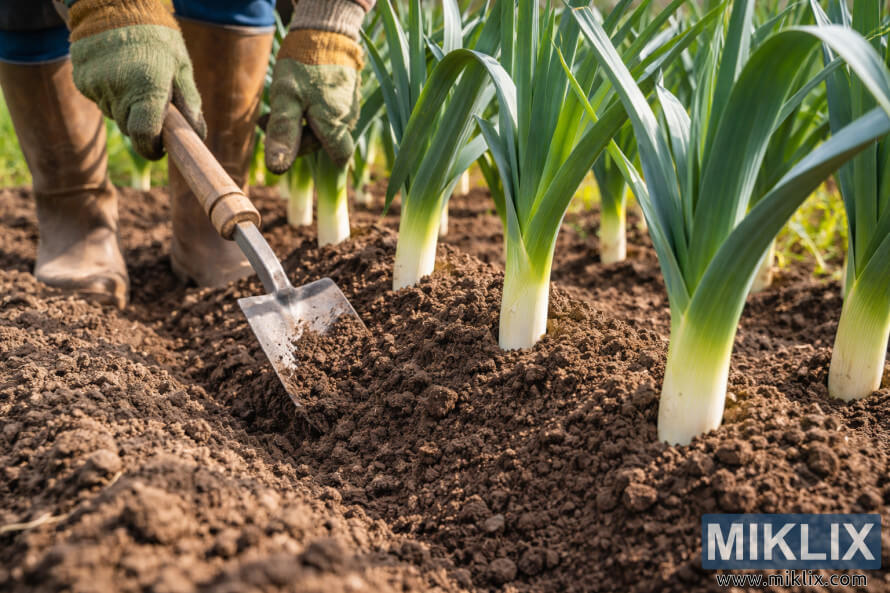
- Hill soil around stems every 2-3 weeks
- Apply 2-3 inches of mulch between rows
- Remove any flower stalks that develop
- Inspect regularly for pests and diseases
Blanching: The Secret to White Leek Stalks
Blanching is the process of blocking light from the leek stems to produce longer, whiter, and more tender stalks. There are several effective methods:
- Hilling Method: Gradually mound soil around the growing stalks, leaving just the green tops exposed. Add more soil every few weeks as plants grow.
- Trench Method: Plant in a deep trench and gradually fill it in as plants grow taller.
- Collar Method: Place cardboard tubes or pipe sections around the stems to block light.
- Mulch Method: Apply a thick layer of mulch around the base of plants.
Click or tap the image for more information and higher resolutions.
Common Pests and Diseases with Organic Solutions
Fortunately, leeks are relatively pest and disease resistant compared to many garden vegetables. However, they can still face some challenges. Here are the most common issues and organic solutions:
Pest Management
| Pest | Symptoms | Organic Solutions |
| Onion Thrips | Silvery streaks on leaves, stunted growth | Neem oil spray, introduce beneficial insects like lacewings, reflective mulch |
| Onion Maggots | Wilting, yellowing, root damage | Beneficial nematodes, crop rotation, row covers |
| Leek Moth | Tunneling in leaves, whitish patches | Row covers, Bt (Bacillus thuringiensis) spray, companion planting |
Disease Management
| Disease | Symptoms | Organic Solutions |
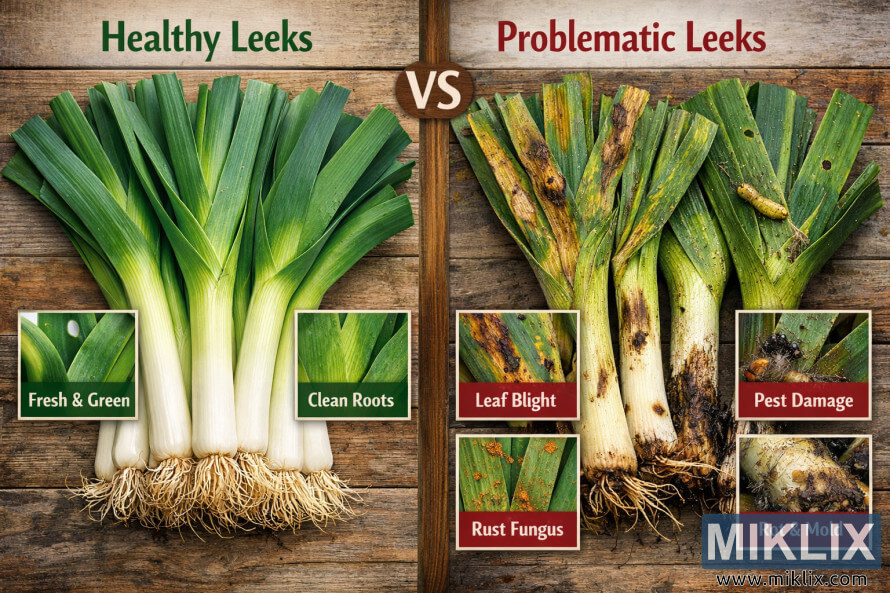
| Leek Rust | Orange pustules on leaves | Proper spacing, remove affected foliage, choose resistant varieties |
| White Rot | Yellowing leaves, rotting base | Crop rotation (4+ years), avoid planting in infected soil |
| Downy Mildew | Pale patches, fuzzy growth | Improve air circulation, copper fungicide, water at soil level |
Click or tap the image for more information and higher resolutions.
Companion Planting for Pest Control
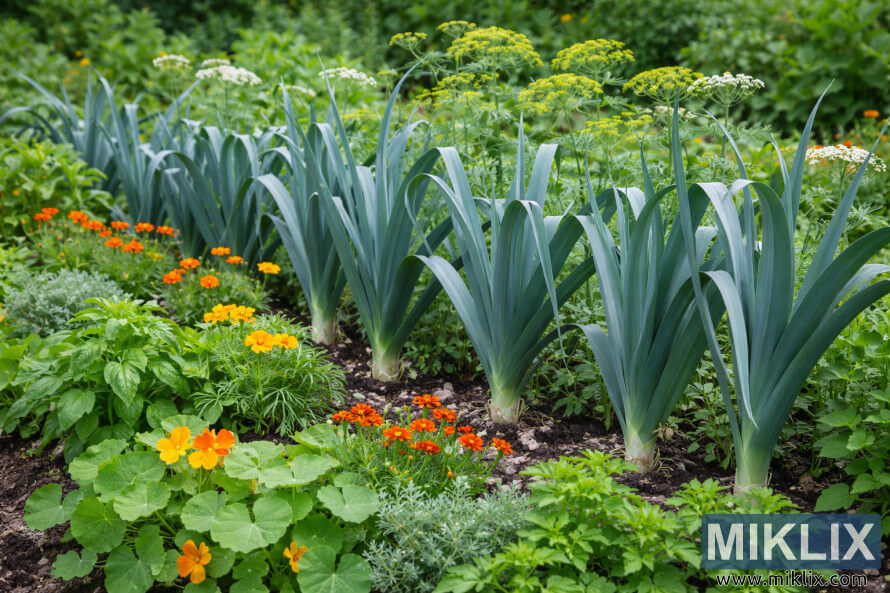
Plant leeks alongside carrots, strawberries, tomatoes, or celery for mutual pest protection. Avoid planting with beans and other legumes, as leeks can inhibit their growth.
Harvesting Techniques and Timing
When to Harvest Leeks
One of the great advantages of growing leeks is their flexible harvest window:
- Early varieties can be harvested 60-90 days after transplanting
- Mid-season varieties typically mature in 100-120 days
- Long-season varieties need 120-180 days to reach full size
- Harvest when stalks reach at least 1 inch in diameter
- Baby leeks can be harvested earlier for a milder flavor
- Many varieties can remain in the ground through light frosts
- In mild climates, harvest can continue through winter
Click or tap the image for more information and higher resolutions.
How to Harvest Leeks Properly
Proper harvesting technique prevents damage to the leeks and surrounding plants:
- Water the soil around leeks the day before harvesting to loosen the soil.
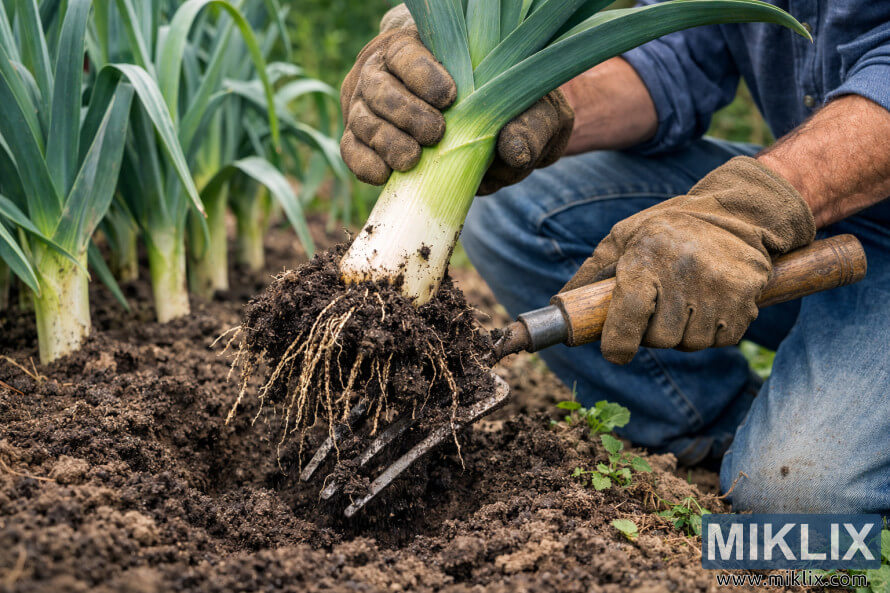
- Use a garden fork or spade to gently loosen the soil around the leek.
- Insert the tool straight down near the leek and lever it slightly to loosen the roots.
- Grasp the leek at the base and gently lift upward - don't pull from the top!
- Shake off excess soil and rinse if needed.
- Trim roots and remove any damaged outer leaves.
- For winter harvests in cold regions, mulch heavily and harvest before the ground freezes solid.
Important Harvesting Tip
Never pull leeks directly from the top! This can break the stalk and leave the root portion in the ground. Always loosen the soil first and lift from below.
Successive Harvesting
For a continuous supply, harvest every other leek in a row first, giving remaining leeks more space to continue growing.
Storage and Preservation Methods
Fresh Storage
- Refrigerate unwashed leeks in a plastic bag for 1-2 weeks
- Store with roots attached for longer freshness
- Keep leeks away from ethylene-producing fruits
- In mild climates, leave leeks in the garden and harvest as needed
- For cold climates, mulch heavily to extend harvest into winter
Root Cellar Storage
- Harvest with roots intact
- Stand upright in buckets with sand or soil covering roots
- Maintain temperature between 32-40°F (0-4°C)
- Keep humidity high (80-90%)
- Properly stored leeks can last 2-3 months
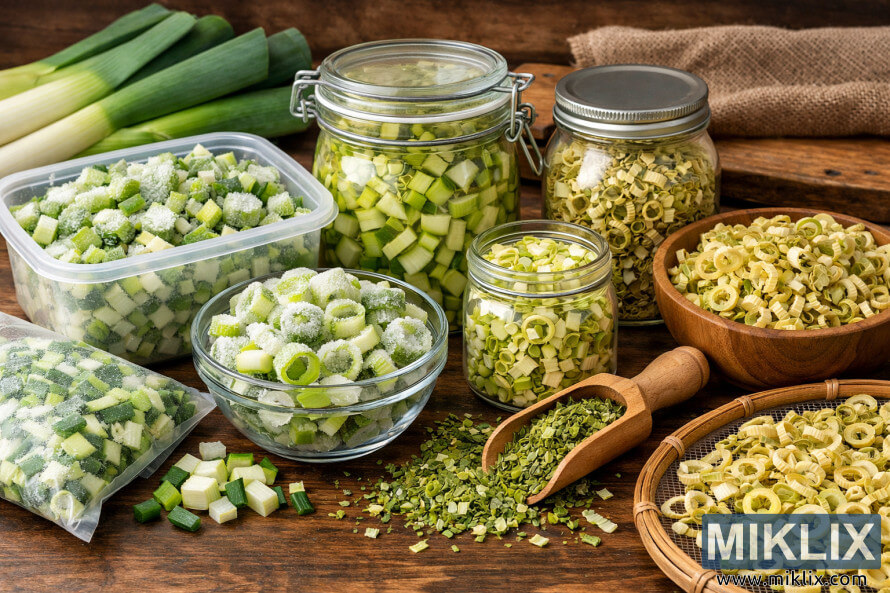
Preservation Methods
- Freezing: Slice, blanch for 1-2 minutes, cool, and freeze
- Drying: Dehydrate sliced leeks for soups and seasonings
- Fermenting: Lacto-ferment for probiotic preservation
- Leek powder: Dry and grind green tops for seasoning
- Soup base: Make and freeze leek and potato soup
Click or tap the image for more information and higher resolutions.
Cooking with Homegrown Leeks
Homegrown leeks offer exceptional flavor that store-bought varieties can't match. Here are some delicious ways to enjoy your harvest:
Classic Leek Dishes
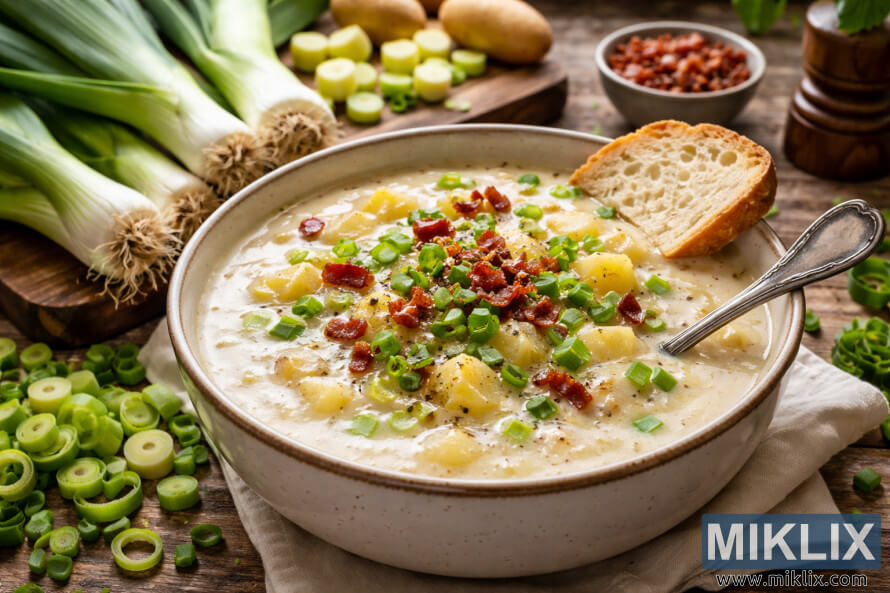
- Potato Leek Soup: The quintessential leek dish combining creamy potatoes with sweet leeks
- Leeks Vinaigrette: Blanched leeks dressed with a simple vinaigrette
- Braised Leeks: Slow-cooked in broth until meltingly tender
- Leek and Gruyère Tart: Savory pastry filled with leeks and cheese
- Cock-a-Leekie Soup: Traditional Scottish chicken and leek soup
- Vichyssoise: Chilled potato and leek soup
Creative Uses for Leeks
- Grilled Leeks: Halved lengthwise and grilled for a smoky flavor
- Leek Pesto: Blend sautéed leeks with nuts, cheese, and oil
- Leek Confit: Slow-cooked in olive oil as a condiment
- Leek Ash: Burn outer leaves to create a flavorful black powder
- Pickled Leeks: Preserve in vinegar with herbs and spices
- Leek Greens: Use tougher tops in stocks or dry for seasoning
Click or tap the image for more information and higher resolutions.
Cleaning Leeks Properly
Leeks can trap soil between their layers. To clean thoroughly, trim roots and dark green tops, slice lengthwise, and rinse under running water, fanning the layers to remove all dirt. For sliced leeks, soak in a bowl of water - dirt will sink while leeks float.
Troubleshooting Common Growing Problems
Why are my leeks thin and spindly?
Thin leeks usually indicate insufficient spacing, inadequate nutrition, or competition from weeds. Ensure plants are spaced at least 6 inches apart, fertilize regularly with nitrogen-rich fertilizer, and keep the area weed-free. Also check that they're receiving at least 6 hours of sunlight daily.
My leeks are forming flower stalks. What should I do?
Flowering (bolting) is triggered by stress, typically from temperature fluctuations, drought, or age. Once a leek begins to form a flower stalk, harvest it promptly as the quality will decline. To prevent bolting, maintain consistent watering, avoid high-phosphorus fertilizers, and harvest at appropriate maturity.
Why do my leeks have yellow or brown leaf tips?
Yellowing or browning leaf tips can indicate drought stress, nutrient deficiency, or fungal disease. Ensure consistent watering, especially during dry periods. Apply a balanced fertilizer and check for signs of disease like rust (orange pustules). Remove affected leaves and improve air circulation if disease is present.
Can I grow leeks in containers?
Yes! Choose a deep container (at least 12 inches) with drainage holes. Use high-quality potting mix amended with compost. Space plants 4-6 inches apart in containers. Deep containers allow for proper blanching and root development. Water more frequently than in-ground plants as containers dry out faster.
How do I save leek seeds?
Leeks are biennial, producing seeds in their second year. Select your best leeks and leave them in the ground over winter (in mild climates) or replant in spring. They'll produce tall flower stalks with round purple/white flower heads. Allow flowers to dry on the plant, then collect seeds in paper bags. Properly dried and stored seeds remain viable for 1-2 years.
Click or tap the image for more information and higher resolutions.
Conclusion
Growing leeks at home is a rewarding experience that provides delicious, nutritious vegetables over an extended harvest period. With proper planning, care, and patience, you'll be enjoying homegrown leeks that far surpass anything available in stores. The mild, sweet flavor of freshly harvested leeks will elevate your cooking and provide satisfaction throughout the growing season.
Remember that leeks are relatively forgiving plants that tolerate a range of conditions. Even if you encounter challenges along the way, the learning experience and eventual harvest make it all worthwhile. Start with just a few plants your first season, and you'll likely find yourself expanding your leek patch in years to come.
Click or tap the image for more information and higher resolutions.
Further Reading
If you enjoyed this post, you may also like these suggestions:
- Growing Honeyberries in Your Garden: A Guide to a Sweet Spring Harvest
- A Guide to Growing the Best Kale in Your Garden
- The Best Cherry Varieties to Grow in Your Garden