
Hops in Beer Brewing: Styrian Wolf
Published: December 11, 2025 at 9:57:38 PM UTC
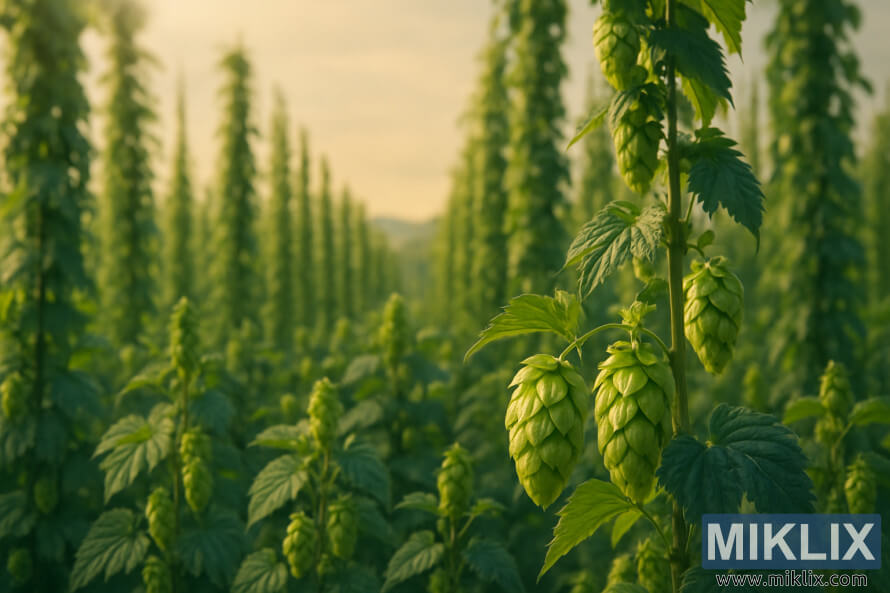
Styrian Wolf is a modern Slovenian hops variety, bred for brewers seeking floral and fruity notes with reliable bittering. Developed at the Slovenian Institute of Hop Research and Brewing in Žalec, its trademarked status highlights the institute’s dedication to this variety, placing it among the notable Slovenian hops.
Click or tap the image for more information and higher resolutions.
Styrian Wolf is a modern Slovenian hops variety, bred for brewers seeking floral and fruity notes with reliable bittering. Developed at the Slovenian Institute of Hop Research and Brewing in Žalec, it carries cultivar IDs 74/134 and HUL035. It is documented under international code WLF. Its trademarked status highlights the institute’s dedication to this variety, placing it among the notable Slovenian hops.
This article delves into Styrian Wolf hops and their significance in beer brewing. It provides practical data on alpha and beta acids, essential oil makeup, and aroma impact. It offers clear guidance for using Styrian Wolf as a dual-purpose hop in pale ales, IPAs, and other styles.
The information here combines breeding institute records, variety pages, and experienced brewing write-ups from sources like Brülosophy, The Hop Chronicles, and Yakima Valley Hops. This blend aims to merge lab profiles with real-world performance. It helps you determine how Styrian Wolf fits your recipe goals.
Key Takeaways
- Styrian Wolf is a Slovenian hops cultivar developed in Žalec, identified as WLF and HUL035.
- It functions well as a dual-purpose hop for both bittering and late-aroma additions.
- Expect floral and fruity notes that suit pale ales and IPAs.
- Data here blends institute records with practical brewing reports for reliable guidance.
- Target audience: brewers, homebrewers, and beer professionals in the United States.
What are Styrian Wolf hops
Styrian Wolf hops were developed at the Slovenian Institute of Hop Research and Brewing in Žalec. They trace their roots to a focused breeding effort. This effort combined European and American hop lineages to merge their best traits.
The cultivar is known by the international code WLF and also as 74/134 and HUL035. The Slovenian Institute retains ownership, while several distributors and hop marketplaces in the U.S. and abroad provide commercial supply.
Styrian Wolf is classified as a dual-purpose hop. It excels in bittering during the early boil and in adding aroma and flavor in late additions. Currently, no commercial lupulin, Cryo, or LUPOMAX extracts are available for this variety.
- Breeding: hybrid parentage from European and American lines
- Purpose: dual-purpose hop suitable for both bittering and aroma
- Identifiers: WLF, 74/134, HUL035; bred in Žalec, Slovenia
Brewers looking for hops with clear lineage and versatility will find Styrian Wolf appealing. It is a practical choice for those exploring Slovenian origin varieties and modern hop cultivars in their craft beer recipes.
Alpha acids, beta acids, and cohumulone profile
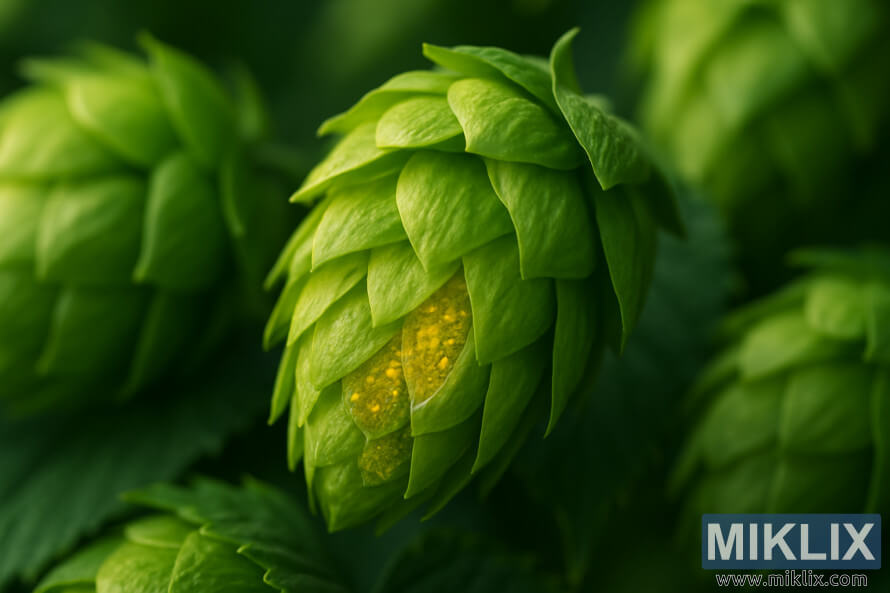
Styrian Wolf's alpha acids range is what brewers look for in calculating IBUs. Reports show a range of 10–15% to 10–18.5%, averaging around 14.3%. This variation is due to crop differences and harvest swings.
Beta acids contribute to hop stability and aging behavior. They range from 2.1–6%, averaging 4.1%. Some crops have been noted to have 5–6% beta acids, fitting within the broader range.
The cohumulone percentage is around 22–23% of alpha acids. An average of 22.5% indicates a moderate cohumulone fraction. This level can soften the bitterness, making it less sharp than hops with very high cohumulone.
- Alpha-beta ratio: documented values span about 2:1 up to 9:1, with a practical mean near 5:1.
- Bitterness persistence: the alpha-beta balance helps predict bitterness longevity and aging behavior.
- Formulation note: cohumulone percentage should be considered when setting IBUs to match a target hop bitterness profile.
For practical brewing, Styrian Wolf's moderate-to-high alpha acids make it a good choice for kettle bittering and early additions. The cohumulone percentage suggests a balanced bitterness, not sharp.
When designing a recipe, consider beta acids and the alpha-beta ratio for stability over time. Adjust IBUs to ensure the final hop bitterness profile aligns with the beer style and desired aging behavior.
Click or tap the image for more information and higher resolutions.
Essential oil composition and aroma compounds
Styrian Wolf essential oils have a dominant profile that highlights the hop's bright fruit character. The total oil content varies, with averages near 2.6 to 4.5 mL per 100 g of hops. This variation affects how intensely the oils impact beer during late additions.
The myrcene content is the largest fraction, ranging from 60–70%, with an average of 65%. This high myrcene content gives Styrian Wolf a fruity, resinous, and citrusy backbone. It becomes more pronounced in whirlpool and dry-hop additions.
Humulene is present at lower but significant levels, between 5 and 10 percent, often around 7 percent. It adds woody, spicy, and slightly noble notes, balancing the tropical lift from myrcene.
Caryophyllene contributes a peppery, herbal edge, present at about 2–3 percent on average. This presence adds a subtle spicy complexity, noticeable in late boil or dry hopping.
Farnesene, or β-farnesene, is found at mid-single digit levels, between 4.5 and 6.5 percent, averaging 5.5 percent. It brings green, floral freshness, improving the beer's perceived brightness.
Linalool is present at lower concentrations, roughly 0.8–1.3 percent. Its floral and citrusy aromatic lift sharpens hop bouquets, complementing the heavier myrcene fraction for layered aroma.
Minor terpenes, including geraniol and β-pinene, make up the remaining fractions. These oils range from 11 to 29 percent, adding floral and fruity nuances without overpowering the profile.
The practical implications of this oil mix are significant. High myrcene content, along with farnesene and linalool, creates the tropical, citrus, and floral aromas brewers seek. These volatile oils are best preserved through late boil, whirlpool, or dry-hop additions. This approach ensures the cleanest expression of Styrian Wolf essential oils in beer.
Aroma and flavor profile of Styrian Wolf hops
The aroma of Styrian Wolf hops is a symphony of tropical fruit, with mango and passion fruit taking center stage. It also boasts citrus notes reminiscent of lemongrass and lime. This combination creates a vibrant and refreshing scent.
Upon closer inspection, floral elements emerge. Elderflower and violet introduce a delicate perfume, with a hint of lavender in some varieties. This floral layer softens the fruitiness, creating a balanced aroma.
The flavor profile, while less intense than the aroma, is no less captivating. The palate experiences a cleaner taste, with tropical fruit and subtle coconut notes lingering. This finish is both refreshing and complex.
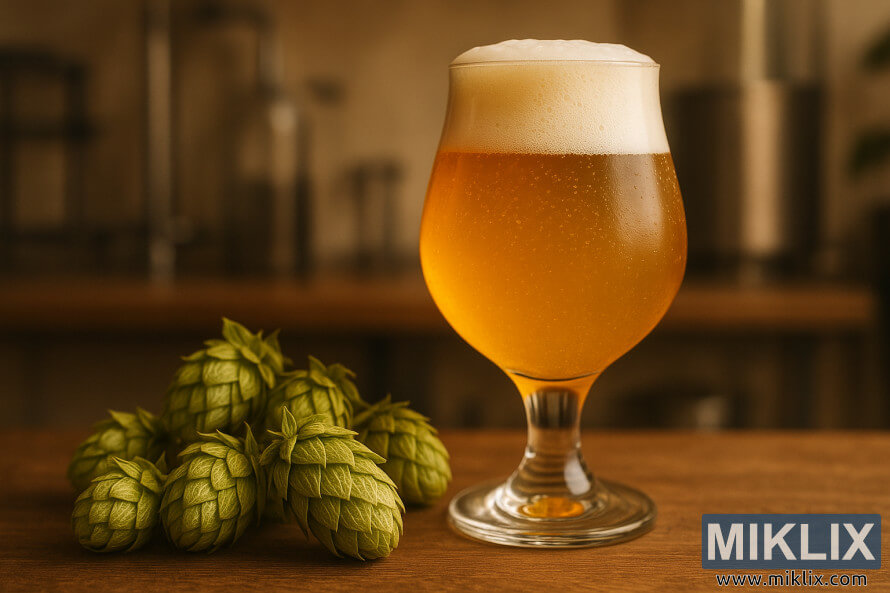
Brewers often choose Styrian Wolf for late additions and dry-hopping. This approach allows the hop's floral and mango characteristics to shine without overpowering the beer. It's perfect for hop-forward IPAs and pale ales, where aroma is key.
- Primary: mango, tropical fruit, lemongrass
- Secondary: elderflower, violet, floral
- Additional: coconut, light coconut-lavender nuance
When blending, pairing Styrian Wolf with citrus or floral hops enhances its elderflower and violet notes. Use it sparingly in the boil and focus on late additions to maintain its aromatic integrity.
Click or tap the image for more information and higher resolutions.
Brewing values and usage throughout the boil
Styrian Wolf is a versatile hop, suitable for both bittering and late additions. Its moderate-high alpha acids make it ideal for early boil additions. On the other hand, its high total oil content is perfect for late additions and dry hopping.
When calculating IBUs, consider the alpha range of 10–18.5%. Many brewers aim for a recipe value of 16% alpha for consistency. Remember to adjust calculations if using pellets instead of whole-leaf hops.
Boil additions are critical in determining the beer's final flavor. Volatile aroma oils can evaporate during long boils. Add small bittering charges at 60 minutes for firm bitterness. Reserve 30–0 minute additions for flavor and softer bitterness.
For delicate fruity and floral notes, use a lower-temperature whirlpool or whirlpool rest. Steeping hops at 160–170°F for 10–30 minutes can extract aroma without losing volatile oils.
Dry hopping is the most effective method for maximizing aroma. In a single-hop pale ale trial, a 5.5-gallon batch received a 56 g dry hop, resulting in pronounced aroma. Dry hop during active fermentation or after fermentation to capture different aromatic profiles.
There are no commercial lupulin or cryo versions of Styrian Wolf. Plan quantities for whole-leaf or pellet formats. Pellets often yield higher utilization; scale additions to account for this when setting IBU and aroma targets.
- 60-minute addition: small bittering charge if needed for bitterness control.
- 30–0 minute: key window for flavor and aroma retention.
- Whirlpool: low-temp hop rest to preserve oils.
- Dry hopping: maximize fruity and floral aroma after fermentation.
Follow these timing strategies to get the most from Styrian Wolf. Match boil additions and dry hopping to your style goal and bitterness preference. This will highlight the hop’s floral, stone-fruit, and herbal character.
Styrian Wolf hops in beer styles
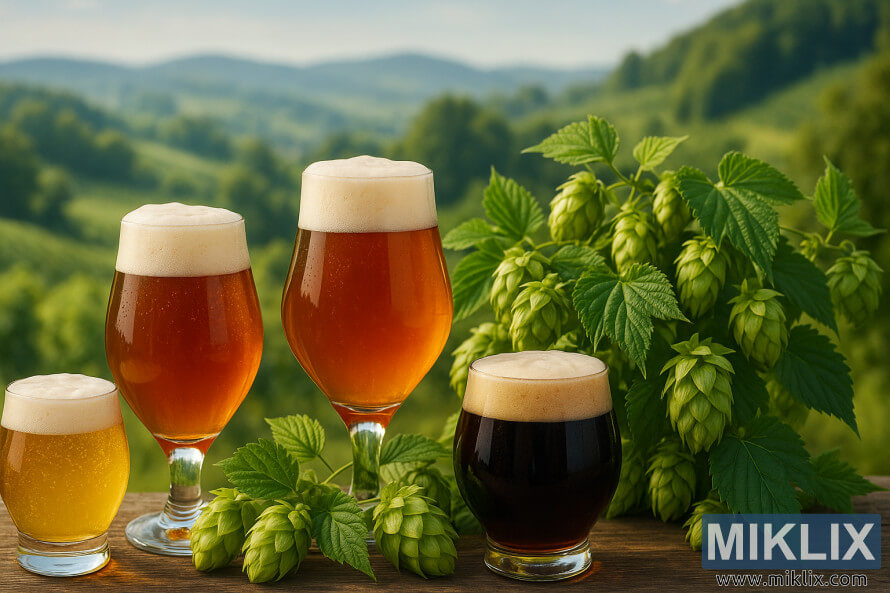
Styrian Wolf excels in hop-forward ales, bringing tropical, citrus, and floral notes to the forefront. It's a favorite in IPA and Pale Ale recipes, adding bright fruit and resinous aroma without overshadowing malt or yeast.
Its dual-purpose nature allows for early kettle additions to balance bitterness and late additions for aroma. This versatility makes Styrian Wolf adaptable across various recipe goals.
In American-style IPA, use Styrian Wolf for late-boil additions and generous dry hopping. Its pungency pairs well with Nelson Sauvin or Citra, creating a layered tropical and citrus complexity.
For Pale Ale and APA, focus on late additions to enhance pineapple and grapefruit notes. Use moderate bittering hops like Magnum or Warrior early, then showcase Styrian Wolf at ten minutes or flameout for a clear aromatic impact.
In British Ale or Belgian Ale, reduce the hop load and time additions later in the boil. Small amounts add a floral, fruity lift that complements English malts and Belgian yeast esters without overpowering traditional profiles.
- IPA: emphasize late additions and dry hop for maximum pungency.
- Pale Ale: highlight fruity aromatics with balanced bitterness.
- British Ale: use lighter, late additions to support yeast character.
- Belgian Ale: add sparingly to enhance esters and floral notes.
Practical trials show Styrian Wolf works well as a single-hop option in experimental pale ales. Tasters often recommend it for IPA and APA applications when a clean, tropical-floral signature is desired.
Click or tap the image for more information and higher resolutions.
Single-hop experiment: pale ale case study
This Brülosophy case study documents a Styrian Wolf single-hop pale ale brewed from a Brülosophy / Hop Chronicles recipe. It used Imperial Yeast A07 Flagship. The batch size was 5.5 gallons with a 60-minute boil. Target numbers read OG 1.053, FG 1.009, ABV about 5.78%, SRM near 4.3 and IBUs around 38.4.
The grain bill kept the malt backbone simple: Pale Malt 2-Row at 10 lb (83.33%) and Vienna at 2 lb (16.67%). Water chemistry leaned toward a hop-forward profile with calcium 97 ppm, sulfate 150 ppm and chloride 61 ppm.
All hop additions used Styrian Wolf pellet hops at an assumed 16% alpha acid. The schedule was 4 g at 60 minutes, 10 g at 30 minutes, 21 g at 5 minutes, 56 g at 2 minutes and 56 g for a three-day dry hop. Brewers following this single-hop pale ale approach should note the late additions and heavy dry hop aimed at aroma extraction.
Fermentation employed Imperial Yeast Flagship (A07) with roughly 77% attenuation. Fermentation temperature held around 66°F. Brewers cold crashed, pressure transferred to keg and burst carbonated before conditioning for a couple weeks prior to tasting.
- Aroma: pronounced mango, lime and lavender presence was reported by multiple tasters.
- Flavor: citrus, grassy and pine notes came through, though less pungent than the nose.
- Style fit: tasters recommended American IPA or APA as suitable vehicles for this hop.
Those reproducing the Hop Chronicles single-hop trial should balance late-hop weight with malt strength and water salts to showcase Styrian Wolf single-hop character. Adjustments to dry hop duration or yeast strain will shift esters and hop interplay.
Sensory testing and consumer perception
A blind tasting panel of 20 tasters evaluated a single-hop Styrian Wolf Pale Ale. The study prioritized aroma first, then flavor. Panelists scored intensity on a 0–9 scale during sensory testing Styrian Wolf sessions.
Top aroma descriptors by average rating were tropical fruit, citrus, and floral. Flavor notes that scored highest included citrus, grassy, and pine. These shifts illustrate a gap between aroma perception and on-palate intensity.
Least perceived descriptors included onion/garlic for both aroma and flavor, along with earthy/woody, berry, resinous, and melon. Panelists flagged pungency as moderate-to-strong, shaping consumer perception of the hop's presence in beer.
The brewer reported pronounced aromas of mango, lime, and lavender with less intense flavor than expected. This observation aligns with the blind tasting results, supporting the use of Styrian Wolf in aroma-focused recipes.
Practical implications suggest a strong aromatic appeal in aroma-focused preparations like late additions, dry hopping, or hop-forward ales. Brewers should anticipate discrepancies between aroma perception and palate impact when designing formulas.
Click or tap the image for more information and higher resolutions.
Substitutions and complementary hop pairings
When Styrian Wolf is unavailable, turn to hop databases for alternatives. Seek out hops with tropical-fruit and citrus profiles. These resources help identify hops with similar oil composition and aroma, guiding you to suitable substitutes.
Currently, no major suppliers offer cryo or lupulin products for Styrian Wolf. Yakima Chief Hops, BarthHaas Lupomax, and Hopsteiner do not have direct cryo equivalents. Brewers must plan recipes without a concentrated substitute, opting for whole-cone or pellet forms instead.
For pairing, choose fruit-forward hops to enhance mango and citrus notes. Citra, Mosaic, and El Dorado are excellent choices to boost tropical and stone-fruit flavors. These pairings help sharpen the aroma while preserving Styrian Wolf's softer floral aspects.
To add complexity, balance fruit with delicate noble and floral hops. Saaz, Hallertau Mittelfrüh, East Kent Goldings, and Styrian Golding introduce subtle spice and floral nuances. These hops temper the tropical notes, creating a more rounded profile.
Practical blending steps are key to perfecting the mix. Begin with small percentages of Styrian Wolf alongside a dominant hop, then run bench trials. Focus on late additions and dry-hop to emphasize aroma and preserve volatile esters.
- Try 70/30 splits: primary fruit hop / Styrian Wolf for added floral lift.
- Use 10–20% noble hops in the dry-hop to add delicate spice.
- Adjust dry-hop time and temperature to protect delicate aromatics.
Document aroma changes across trials and taste at multiple intervals. This approach refines substitutions and hop pairings, ensuring the signature notes brewers expect from Styrian Wolf are preserved.
Availability, supply and purchasing tips
Styrian Wolf hops are available from various hop suppliers and online platforms. You can find them at specialty dealers, homebrew shops, and big distributors like Yakima Valley Hops. They also show up on aggregated hop databases and sites like Amazon for your convenience.
The availability of Styrian Wolf hops changes with the harvest and demand. Crop variations affect alpha acids, beta acids, and essential oils each year. Always ask for the lot-specific certificate of analysis from hop suppliers to confirm these values before planning your beer's IBU or aroma.
When it comes to packaging, Styrian Wolf is mostly sold as pellet hops. You won't often find lupulin powder or cryogenic concentrates for this variety. Keep in mind that pellet hops are more compact than whole-leaf hops, so adjust your dosages appropriately.
- Verify the alpha percentage on the lot for accurate bittering calculations.
- Request current COAs from the supplier to check oil and cohumulone data.
- Factor in pellet versus whole-leaf utilization and adjust dry-hop amounts for potency.
When purchasing Styrian Wolf hops, it's important to compare prices and shipping times. Confirm the harvest year and storage conditions to ensure the oils haven't degraded, which can harm the aroma.
Reputable sellers offer secure payment options. They accept various cards and PayPal. Make sure to check their payment policies to ensure your security.
For small brewers, start with test batches to verify the hops' aroma and alpha values. For larger batches, secure contracts or pre-orders to ensure availability for the desired harvest.
Agronomy and regional information
Styrian Wolf agronomy showcases meticulous breeding and local heritage. Developed by the Slovenian Institute of Hop Research and Brewing in Žalec, it was chosen for its aroma, yield, and disease resistance. This selection was guided by hop research Žalec.
Growers list the cultivar under IDs 74/134 and HUL035. The institute holds the trademark and manages intellectual property. International catalogs identify the variety with the code WLF.
The climate and soil in the cultivation region influence oil and acid composition. Slovenian hops from Styrian sites often exhibit floral and herbal notes, reminiscent of historic Styrian Golding lines. Harvest timing and local practices can alter the final chemistry from year to year.
- Site selection: sun exposure and drainage matter for consistent yields.
- Soil fertility: balanced nitrogen and potassium support cone development.
- Pest and disease: integrated control preserves oil integrity.
Exporters and brewers should check harvest-year analysis when sourcing shipments. Lab results provide alpha and oil ranges that impact brewing decisions. For brewers outside Europe, understanding the cultivation region aids in predicting aroma stability in finished beer.
Field trials at hop research Žalec continue to refine best practices. Local extension services share recommendations to optimize Styrian Wolf agronomy across different microclimates in Slovenia and Austria’s Styria.
Practical brewing tips and recipe adjustments
Before brewing, plan your recipe adjustments. Use the lab-reported alpha acid for accurate IBU calculations. Styrian Wolf's alpha acid ranges from 10–18.5%. Substitute the actual value to prevent excessive bitterness.
Most hops should be added late in the boil and after it. This protects delicate aromatics. A small early addition can provide base bitterness. Late kettle additions and whirlpool techniques capture myrcene- and farnesene-driven notes.
Set whirlpool temperatures between 160–180°F (71–82°C). This allows for oil extraction without excessive isomerization or volatile loss. The whirlpool technique is essential for this.
For aroma impact, use robust dry hop amounts. The example case used 56 g in 5.5 gal (roughly 10 g/gal). Scale dry hop amounts according to desired intensity and budget.
- Whirlpool: add most hop mass here or as late kettle additions to balance flavor and aroma.
- Dry-hop timing: try additions during active fermentation for biotransformation or after primary to preserve pure aroma.
- Early bitterness: a minimal early charge handles bittering so late additions can shine.
Match water and yeast to hop character. A sulfate-forward profile (for example SO4 150 ppm, Cl 61 ppm) accentuates hop bite. Choose clean ale yeasts like Imperial Yeast Flagship A07 to let Styrian Wolf aromatics stand forward.
Cold-conditioning and careful packaging are key for stability. Cold crash, carbonate under CO2, and allow a couple weeks of conditioning. This helps settle flavors after intensive hop workloads.
When finalizing recipes, document kettle additions, whirlpool technique, and dry hop amounts. This ensures repeatable results. Small, deliberate recipe adjustments yield the best aromatic clarity when brewing with Styrian Wolf.
Styrian Wolf hops
Styrian Wolf, a Slovenian dual-purpose hop, is celebrated for its bold aromatics and solid bittering. This brief overview reveals a scent profile rich with mango, passion fruit, lemongrass, elderflower, violet, and a subtle coconut note.
Brewers appreciate Styrian Wolf for its high oil content and moderate-to-high alpha acids. Alpha acids range from 10 to 18.5 percent, averaging around 14.3 percent. Beta acids are typically between 2.1 and 6 percent. Cohumulone levels are near 22–23 percent. Total oil content varies from 0.7 to 4.5 mL per 100 g, with myrcene being the dominant oil.
For optimal use, add Styrian Wolf hops late in the brewing process and during dry hopping. It excels in modern IPAs and pale ales, where tropical and citrus flavors should be prominent. Blind tastings often reveal its aroma to be more pronounced than its flavor.
- Alpha: commonly 10–18.5% (avg ~14.3%)
- Beta: ~2.1–6% (avg ~4.1%)
- Cohumulone: ~22–23%
- Total oil: typically 0.7–4.5 mL/100 g with myrcene 60–70%
Styrian Wolf is accessible through various hop suppliers. Currently, no cryo or lupulin-only products are available. Most are sold in whole-cone or pellet form. Brewers aiming for a strong aromatic profile should consider late additions and carefully manage dry-hop rates.
Conclusion
The Styrian Wolf summary reveals a Slovenian dual-purpose hop with intense tropical fruit and floral aromas. It also offers usable bittering. High myrcene content, along with notable farnesene and linalool fractions, creates a bright, complex nose. This makes it stand out in IPAs, pale ales, and other hop-forward styles.
For hop selection and brewing conclusions, focus on late-boil, whirlpool, and dry-hop additions. This preserves the hop's aroma. Measure alpha acids from the lot COA to calculate IBUs accurately. Adjust for pellet utilization. Pair Styrian Wolf with fruit-forward or floral hops to enhance its strengths in blends and small-batch trials.
On the commercial side, Styrian Wolf is available from multiple suppliers in pellet form. There is no widespread lupulin or cryogenic option. Check lot variability and COAs before scaling recipes. Brewers in the United States will find it valuable for single-hop experiments and as a distinctive component in house recipes.
Further Reading
If you enjoyed this post, you may also like these suggestions: